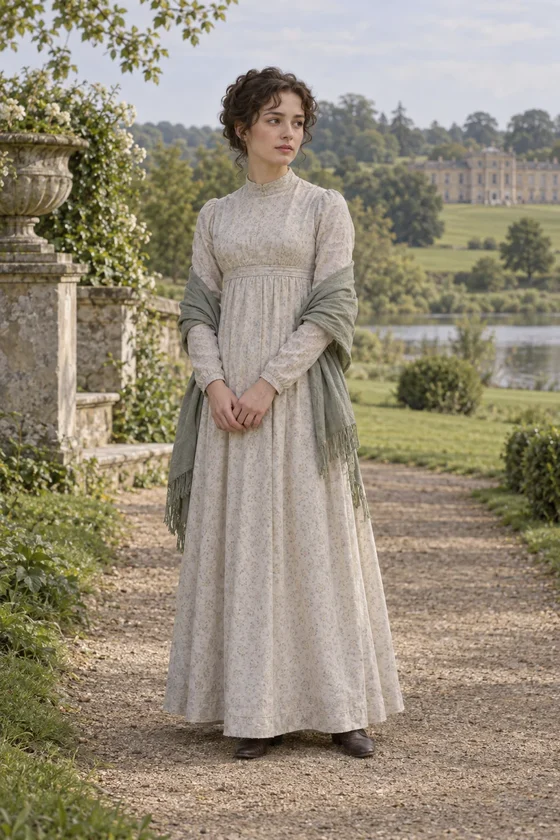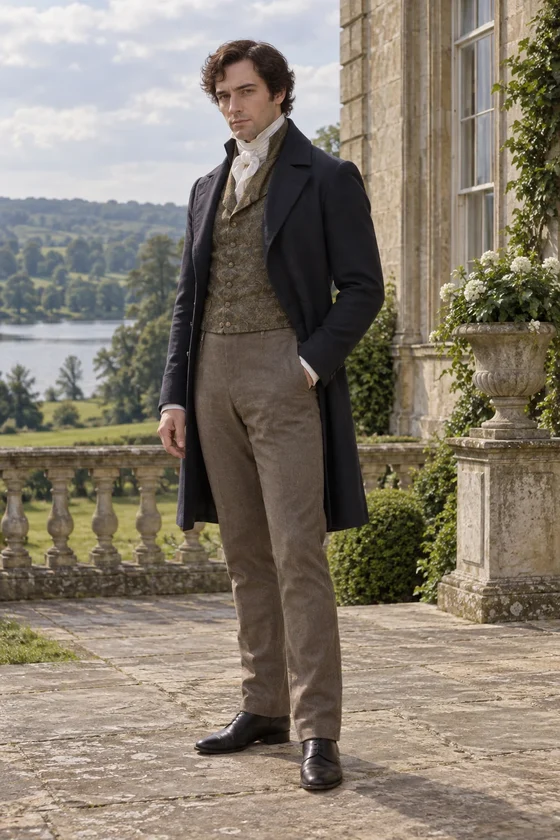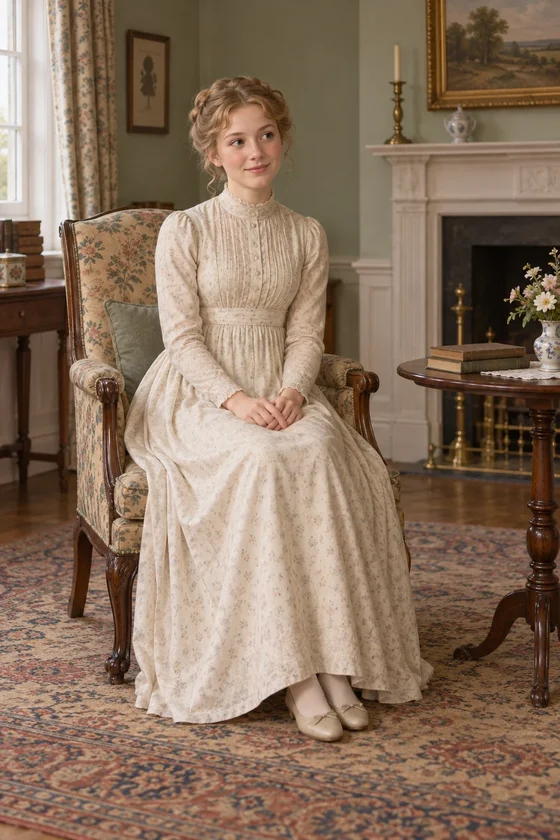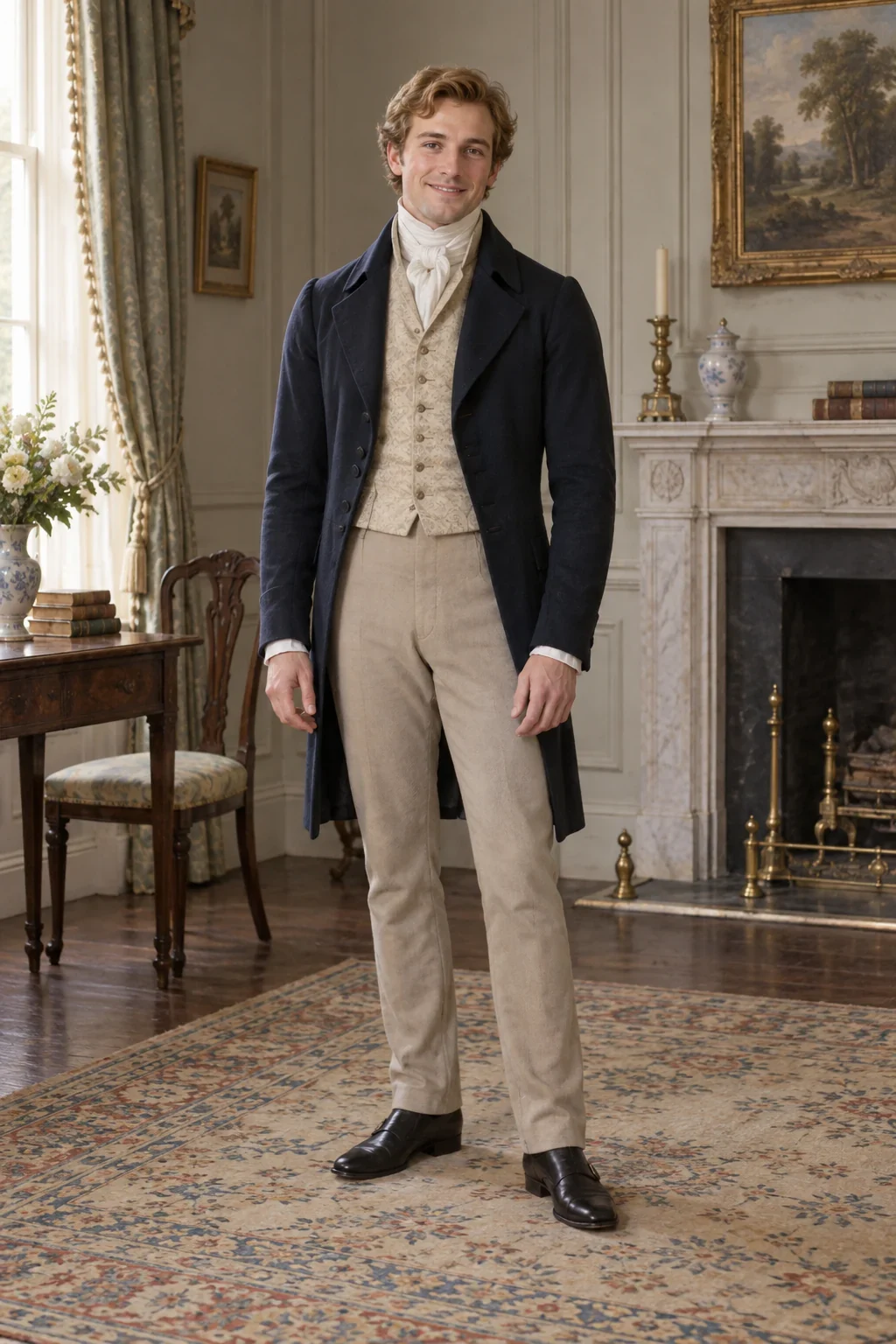
Imagined Charles Bingley in a quiet original-novel portrait.
Unofficial AI interpretation. Bingley pauses in a Netherfield room. Selected object or posture follows the original novel; exact portrait, unmentioned clothing and scene arrangement are imagined, without an adaptation likeness claim. Full-frame display derivative; no upscaling.
Overview
Charles Bingley is the young wealthy gentleman whose tenancy at Netherfield begins the chain of social encounters in Pride and Prejudice. Local interest in the arrival is immediately connected with marriage prospects for the Bennet daughters. At the assembly his pleasant appearance and easy manners contrast with Darcy’s reserve. He dances willingly and becomes particularly attentive to Jane. His friendly conduct is a narrated trait rather than proof that he understands every motive around him. Netherfield is a house he has taken, not evidence that he already owns the land or holds an aristocratic title.
His sisters, Caroline and Mrs. Hurst, and his friendship with Darcy shape the setting in which Jane and Elizabeth meet him. Jane’s illness prolongs her visit to Netherfield, and his concern helps sustain expectations of an attachment. He is inclined to admire people whom Darcy and his sisters assess more critically. The difference can make him an agreeable host, but it also leaves him receptive to the opinions of those he trusts. The novel does not make that receptiveness identical with indifference towards Jane. His later conduct shows that the affection survives separation even when he has accepted advice that the relationship would not be reciprocated.
After the Netherfield party he leaves for London. Darcy subsequently explains that he believed Jane’s manner showed little feeling and helped persuade his friend to give up the attachment. Caroline’s correspondence also encourages the impression of a different future. Bingley does not know that Jane is in London while she stays with the Gardiners, because Darcy withholds the information. These circumstances distinguish his absence from a fully informed rejection of her. They also explain why Elizabeth’s resentment is directed towards the interference surrounding him rather than towards a simple account in which he has freely ceased to care.
When Darcy revises his judgment and admits the concealment, Bingley returns to Hertfordshire and renews his visits to Longbourn. His engagement to Jane follows the renewed opportunity for direct contact. Their happiness gives Elizabeth a contrasting experience of courtship while her own relation to Darcy is still being resolved. The concluding account describes the couple’s later move near Pemberley, allowing both friendships and the sisters’ bond to continue. This profile stays within Austen’s original narrative, preserving Bingley’s warmth, genuine affection and reliance on advice without inventing a fixed numerical age, noble rank or unreported early biography. Exact hair colour, costume and adaptation likeness remain imagined details rather than facts supplied by the limited introductory portrait.
First appearances & development
Jane Austen’s Pride and Prejudice establishes this character through the Bennet sisters’ courtships and changing judgments. This profile follows the selected original narrative and does not combine adaptation continuity with it.
Canon & continuity
Original narrative.
Selected bibliography
Documented works and useful reading. This is not a list of every appearance.
- 01
Pride and Prejudice
Original.
Family & connections
A source-supported family tree or inspiration record has not yet been compiled for this profile. Related reading below indicates a connection in subject matter, not a proven lineage or creative influence.
References
Sources supporting this profile. Linked pages have their own scope and editorial standards.
- PrimaryPride and PrejudiceResearch access: 2026-10-12
Image credits
Unofficial modern AI interpretationImagined Charles Bingley in a quiet original-novel portrait.
Unofficial AI interpretation. Bingley pauses in a Netherfield room. Selected object or posture follows the original novel; exact portrait, unmentioned clothing and scene arrangement are imagined, without an adaptation likeness claim. Full-frame display derivative; no upscaling.