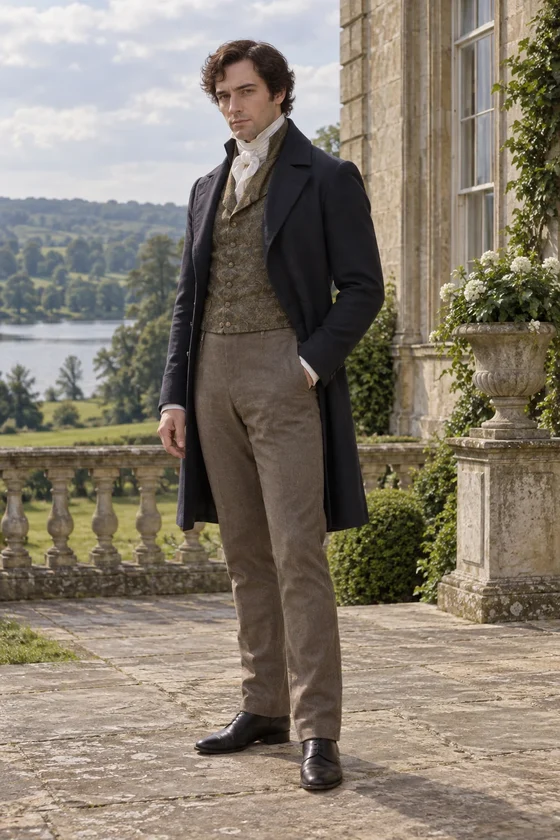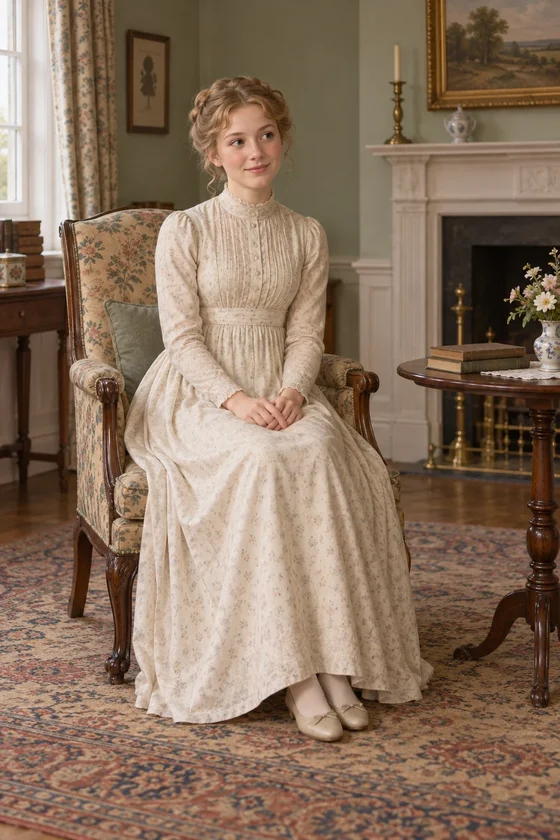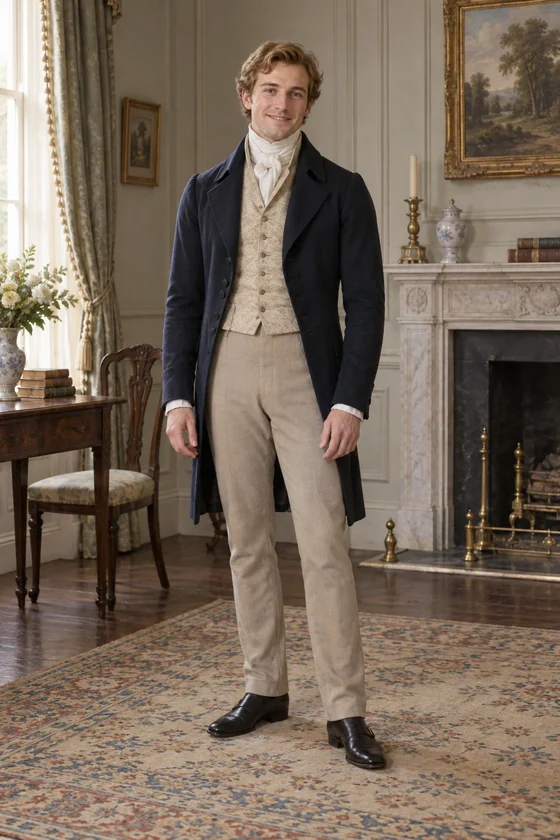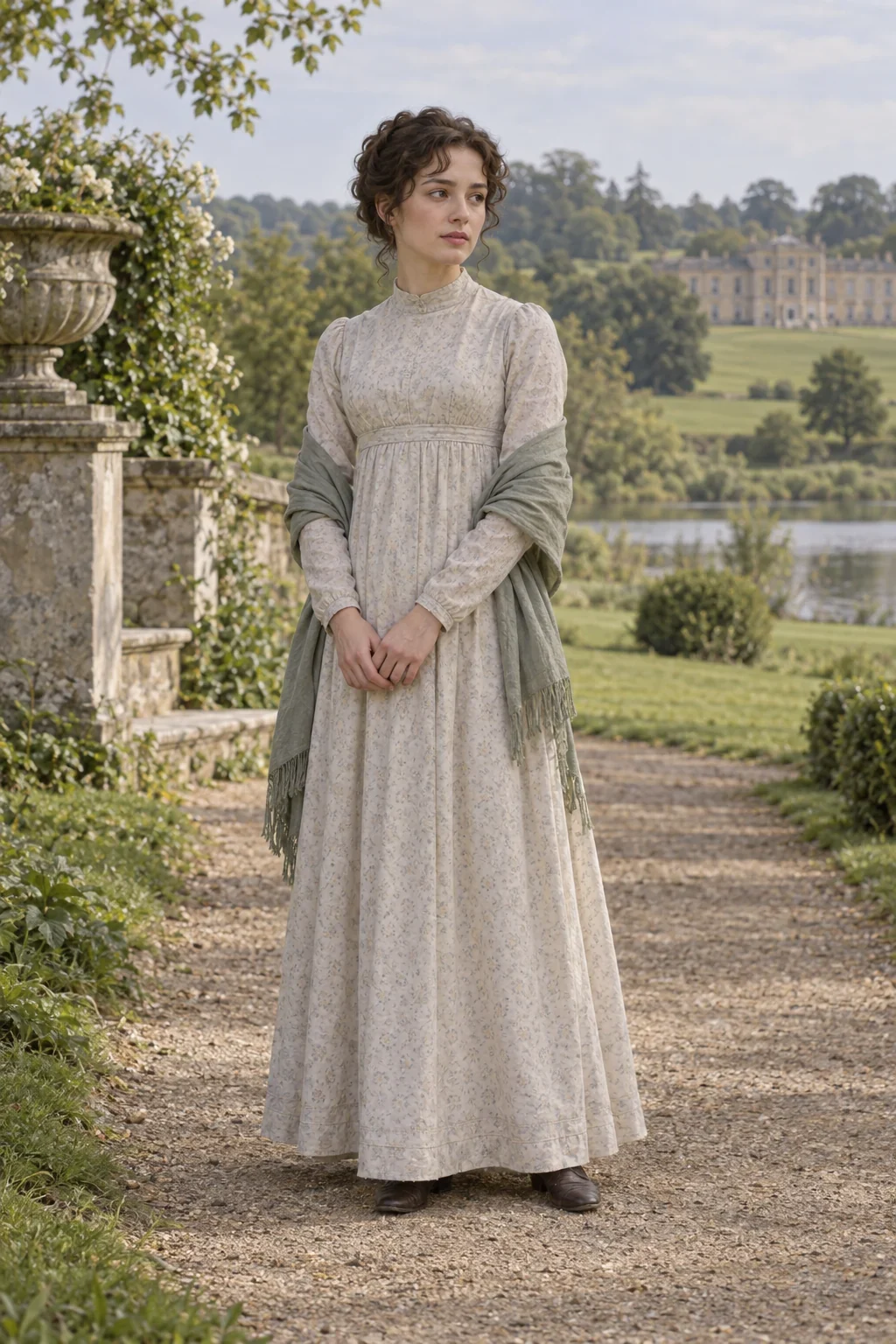
Imagined Elizabeth Bennet in a quiet original-novel portrait.
Unofficial AI interpretation. Elizabeth pauses during a walk near Rosings. Selected object or posture follows the original novel; exact portrait, unmentioned clothing and scene arrangement are imagined, without an adaptation likeness claim. Full-frame display derivative; no upscaling.
Overview
Elizabeth Bennet is the second of the five Bennet daughters and the central observer through whom much of Pride and Prejudice unfolds. She lives at Longbourn with a family whose social prospects are affected by the estate’s entail and the daughters’ limited fortunes. Her intelligence, humour and readiness to judge people give her independence of manner, but they do not make every judgment correct. At the early assembly Darcy’s refusal to dance with her becomes an injury she can retell with amusement. His later admiration of her eyes and conversation develops while she remains largely unaware of the change in his feelings.
Her close attachment to Jane makes Bingley’s conduct especially important. Elizabeth goes to Netherfield when Jane is ill and encounters the household’s mixture of hospitality, social comparison and criticism. She refuses Mr. Collins’s marriage proposal because she cannot respect or love him, despite the pressure created by her mother’s ambitions and the family’s position. Charlotte Lucas’s acceptance of Collins subsequently confronts her with a different calculation about security and marriage. The novel allows Elizabeth to dislike that choice without presenting her own expectations as a complete explanation of what every woman can afford to do.
Wickham’s account of Darcy’s treatment gains her confidence partly because it fits her existing dislike. At Hunsford, Darcy’s first proposal combines declared love with an offensive emphasis on her connections, and she rejects him. His letter addresses both the separation of Jane and Bingley and the history of Wickham, including Georgiana Darcy. Elizabeth’s reconsideration is gradual and painful: she recognises the influence of vanity and prejudice in what she believed. The letter is not a demand that she marry him, nor does accepting some of its evidence require her to approve every aspect of his earlier behaviour.
A visit to Pemberley with the Gardiners introduces testimony and conduct that further alter her view. Lydia’s flight with Wickham then threatens the family and brings Darcy into a practical intervention that Elizabeth learns of afterward. Lady Catherine’s attempt to prevent their marriage gives Elizabeth another occasion to defend her right to choose without promising obedience to rank. The later conversation with Darcy establishes that both have changed and allows a second proposal to succeed. This original-novel profile follows her affection, mistakes, reflection and decisions without turning independence into flawless foresight or adding a later adaptation’s adult biography. Exact hair colour, costume and a fixed screen portrait are outside the selected narrative’s limited physical description.
First appearances & development
Jane Austen’s Pride and Prejudice establishes this character through the Bennet sisters’ courtships and changing judgments. This profile follows the selected original narrative and does not combine adaptation continuity with it.
Canon & continuity
Original narrative.
Selected bibliography
Documented works and useful reading. This is not a list of every appearance.
- 01
Pride and Prejudice
Original.
Family & connections
A source-supported family tree or inspiration record has not yet been compiled for this profile. Related reading below indicates a connection in subject matter, not a proven lineage or creative influence.
References
Sources supporting this profile. Linked pages have their own scope and editorial standards.
- PrimaryPride and PrejudiceResearch access: 2026-10-12
Image credits
Unofficial modern AI interpretationImagined Elizabeth Bennet in a quiet original-novel portrait.
Unofficial AI interpretation. Elizabeth pauses during a walk near Rosings. Selected object or posture follows the original novel; exact portrait, unmentioned clothing and scene arrangement are imagined, without an adaptation likeness claim. Full-frame display derivative; no upscaling.