A sourced illustration has not yet been added. This gap is included in the coverage record.
Overview
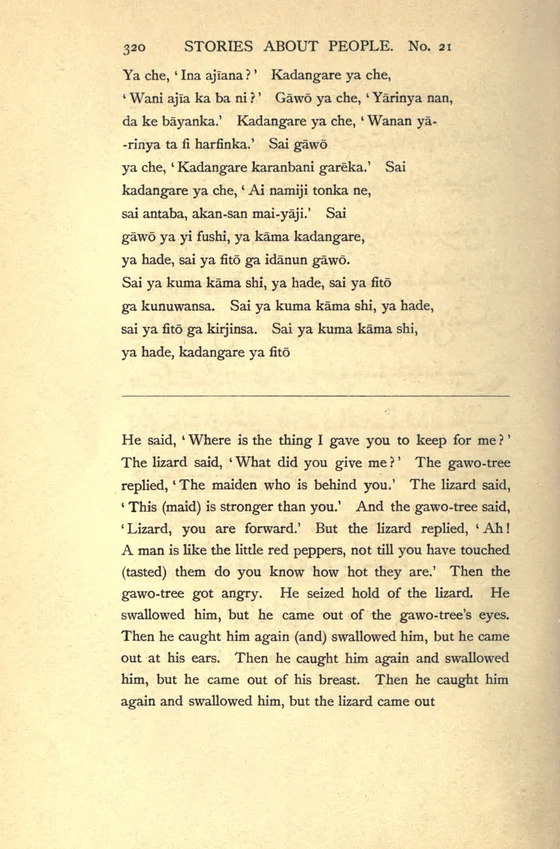
The dog shares a forest hut with a speaking thigh-bone and translates its signals for an orphan carried there by a whirlwind. He explains the invitations, asks whether she can cook and supplies a single grain of rice, an old bone and a grain of corn. These yield abundant meals under her preparation. He receives a share smaller than the bone’s but larger than the girl’s. When she is allowed to go home, he brings livestock, clothing and enslaved attendants, then guides her camel procession toward her town before turning back.
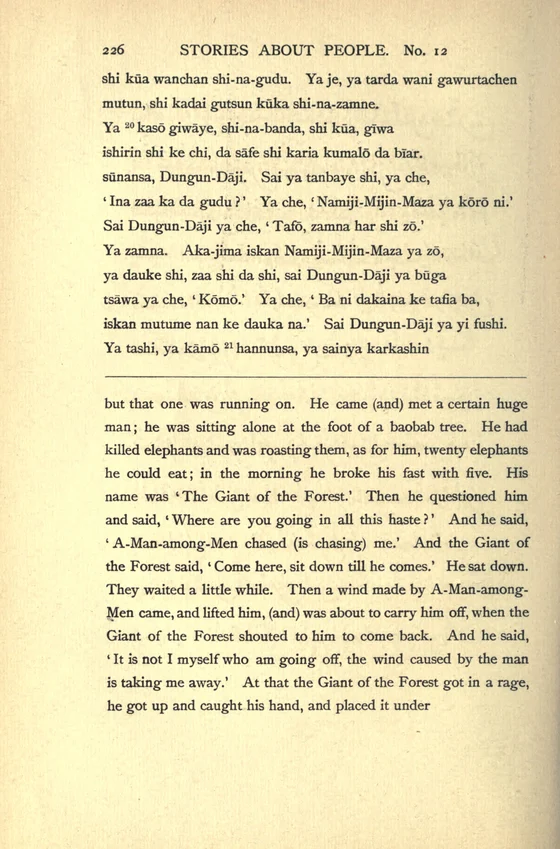
The second girl treats both hosts contemptuously and gives them small portions while keeping more for herself. The dog tries to protest without first obtaining the thigh-bone’s permission. His intended human exclamation becomes barking. The narrator explains him as a former court minister condemned for anger in the king’s presence. He can no longer translate the following morning’s instructions, but still assembles the girl’s contrasting retinue and leads her home.
When he tries to return to the forest, the thigh-bone drives him away. He catches up with the departing procession and follows it into the human settlement. The tale identifies this as the beginning of dogs living with people instead of in the bush. His loss of speech and relocation are separate consequences, and his helpful work for the first girl precedes his later breach of courtly restraint.
Origins & earliest records
Malam Shaihu supplies the written Hausa material translated and transliterated by R. Sutherland Rattray. The compiler’s Author’s Note describes a mixed written and Arabic-manuscript mediation process; this tale is not labeled a verbatim oral field transcription by a separately named narrator.
Records & interpretation
Shaihu/Rattray, Hausa Folk-Lore, Customs, Proverbs, etc., Volume I (1913), tale 7, complete pp. 130–160; compiler methodology p. xii.
Selected bibliography
Documented works and useful reading. This is not a list of every appearance.
- 01
Hausa Folk-Lore, Customs, Proverbs, etc., Volume I
Shaihu/Rattray, Hausa Folk-Lore, Customs, Proverbs, etc., Volume I (1913), tale 7, complete pp. 130–160; compiler methodology p. xii.
Family & connections
A source-supported family tree or inspiration record has not yet been compiled for this profile. Related reading below indicates a connection in subject matter, not a proven lineage or creative influence.
References
Sources supporting this profile. Linked pages have their own scope and editorial standards.
- Bilingual manuscript tale; digitized primary OCRShaihu/Rattray 1913 — Dog Interpreter of Shaihu’s Forest HutResearch access: 2026-10-05
- Compiler methodologyAuthor’s NoteResearch access: 2026-10-05
Image credits
A sourced illustration has not yet been added. This gap is included in the coverage record.