A sourced illustration has not yet been added. This gap is included in the coverage record.
Overview
Ravana summons Dhumraksha after learning that Rama and Lakshmana have escaped their serpent bonds. Ordered to kill Rama and the vanaras, the commander bows and gathers troops with swords, spears and maces, travelling with elephants, chariots and horses.
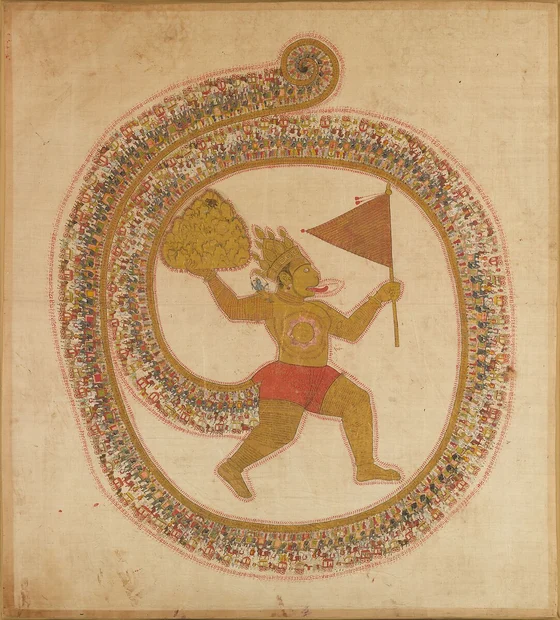
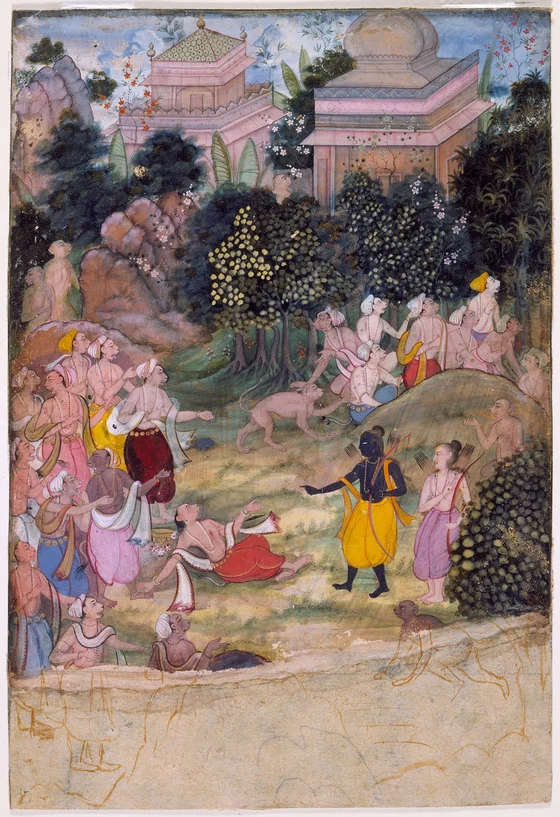
His sustained archery forces the vanara host into retreat. Hanuman answers by throwing a rock at his chariot; Dhumraksha jumps clear before it breaks. He then strikes Hanuman’s face with a mace, but Hanuman brings a mountain peak down upon his head and kills him. The directly read cantos describe a martial rakshasa through weapons, command and combat rather than supplying an animal hybrid body.
Origins & earliest records
South Asian epic religious narrative
Records & interpretation
Directly read historical English epic witness; translator’s abridgements explicitly identified where used.
Selected bibliography
Documented works and useful reading. This is not a list of every appearance.
- 01
The Ramayan of Valmiki
VI.51–52; title-page edition range, not epic composition date.
Family & connections
A source-supported family tree or inspiration record has not yet been compiled for this profile. Related reading below indicates a connection in subject matter, not a proven lineage or creative influence.
Primary records and illustrations
The Ramayan of Valmiki, Griffith translation
Hosted complete edition, title-page range 1870–1874. VI.51–52
Complete relevant passage read in downloaded Gutenberg HTML. Translator’s prose abridgement distinguished from translated verse. Public-domain historical translation; no image claimed.
References
Sources supporting this profile. Linked pages have their own scope and editorial standards.
- Historical primary epic translationGriffith, Ramayan — VI.51–52Research access: 2026-10-05
Image credits
A sourced illustration has not yet been added. This gap is included in the coverage record.