Capelobo
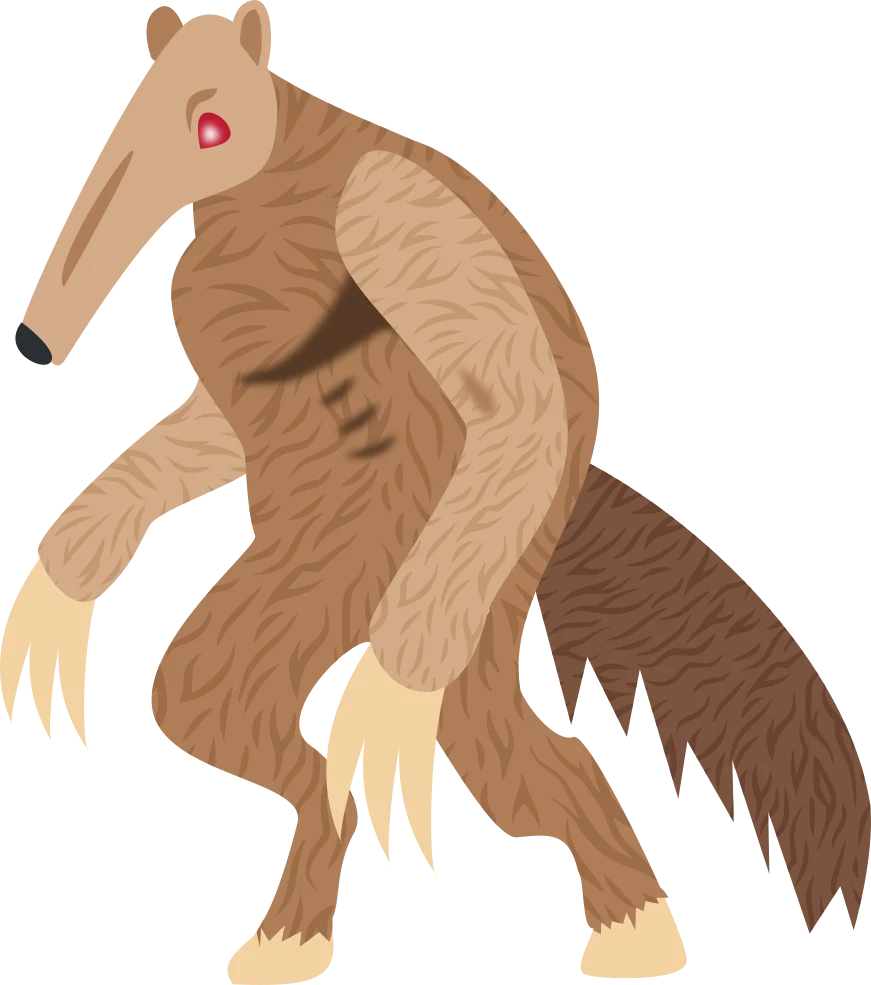
Image associated with the exact linked encyclopedia article; consult credited file description for its interpretation.
Overview
The 2014 Vegini, Vegini and Ferreira Netto comparison distinguishes a tapirlike Pará Capelobo from a more human-bodied Maranhão Cupelobo with an anteaterlike muzzle. A longer Cascudo passage, reproduced by Nara Amelia Melo da Silva in 2016, describes a nighttime predator circling forest camps, sheds and isolated homes, taking newborn dogs and cats. When it catches an animal or person, it tears the carotid artery and drinks blood; the navel is its vulnerable point. The Instituto Butantan’s 2023 public folklore feature instead emphasizes loud cries, a charge and an embrace before attack, alongside variable muzzles and a single bottle-base foot. These separately credited descriptions retain both the encounter and bodily differences. Silva also reproduces Cascudo’s report of a Xingu transformation: an exceptionally old person becomes Capelobo permanently. The quoted unnamed informant denies a ceremony but mentions drinking puçanga. That is a transmitted explanation from Cascudo’s account, not a claim about all present-day Xingu peoples.
Walmor Corrêa makes another body for the creature in his 2005 Unheimlich series. His portfolio identifies Capelobo as an acrylic-and-graphite canvas measuring 195 by 130 centimetres. In his first-person Dasartes account of 2023, he explains that the series graphically dissects five beings from Brazilian folklore and uses taxonomic drawing and persuasive scientific prose to give the hybrids apparent existence. He specifically invokes Capelobo when asking what might account for missing newborn cats and dogs. The project uses the familiar form of an anatomical atlas to make fantasy visually convincing; its proposed structures belong to his artistic invention. Its painting is a new authored portrayal alongside the regional stories, rather than a recovered photograph of their creature.
Origins & earliest records
The selected written descriptions reach this profile through Cascudo passages reproduced in a 2016 art-research paper and the 2014 regional comparison. Their quoted testimony does not establish the first oral telling. Corrêa independently dates his Unheimlich project to 2005, and Butantan’s public presentation was published on 21 August 2023.
Records & interpretation
Silva’s directly inspected pp. 1819–1821 reproduce Cascudo’s nocturnal predation and transformation passages, with the unnamed informant’s conflicting details preserved. Butantan’s indexed text supports its separate attack sequence; direct access returned 403. Corrêa’s portfolio and first-person 2023 article verify the artwork and intention. Original Cascudo editions remain indirect; artwork dates follow the artist’s 2005 account.
Selected bibliography
Documented works and useful reading. This is not a list of every appearance.
- 01
O monstruoso mapinguari pan-amazônico: uma sucessão de adaptações aloindígenas
Comparative book; indexed page 85 distinguishes Capelobo and Cupelobo descriptions.
- 02
Capelobo, Série Unheimlich
Acrylic and graphite on canvas, 195 × 130 cm; artwork verified in the artist's portfolio.
- 03
Fantasmas animais: uma leitura do estranhamente familiar homem-besta
ANPAP proceedings pp. 1813–1828; directly read Cascudo quotations on pp. 1819–1821. A passing series date 2006 differs from the figure’s own 2005 caption and artist’s date.
- 04
Walmor Correa
First-person Dasartes account, 30 August, explaining Unheimlich’s graphic dissection and atlas format.
Family & connections
A source-supported family tree or inspiration record has not yet been compiled for this profile. Related reading below indicates a connection in subject matter, not a proven lineage or creative influence.
References
Sources supporting this profile. Linked pages have their own scope and editorial standards.
- ResearchVegini, Vegini and Ferreira Netto: Capelobo and Cupelobo comparisonResearch access: 2026-10-05
- Primary textWalmor Corrêa: 2005 Série UnheimlichResearch access: 2026-10-05
- ResearchSilva 2016: quoted Capelobo accounts, pp. 1819–1821Research access: 2026-10-05
- MuseumInstituto Butantan 2023: separate Capelobo attack descriptionResearch access: 2026-10-05
- CommunityCorrêa 2023: first-person account of imaginary anatomyResearch access: 2026-10-05
Image credits
Reference illustrationCapelobo
Image associated with the exact linked encyclopedia article; consult credited file description for its interpretation.