Caladrius
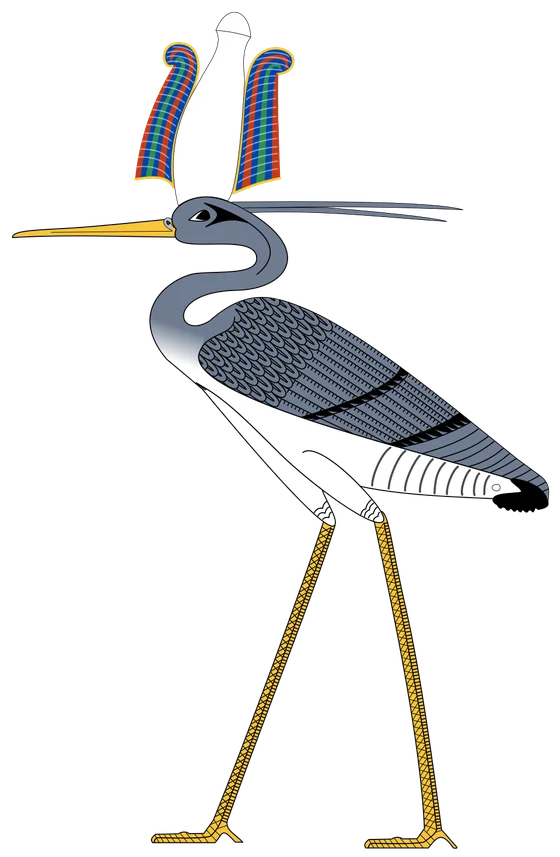
Image associated with the exact linked encyclopedia article; consult credited file description for its interpretation.
Overview
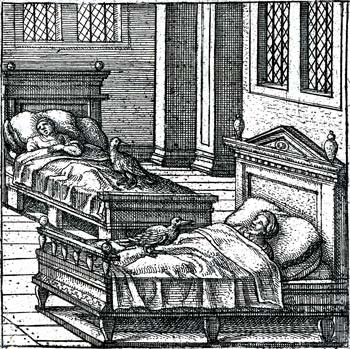
The account places the wholly white bird in royal residences. When confronted with a person whose illness is fatal, it turns away; when recovery is possible, it faces the patient and takes the illness into itself. It then flies upward and disperses the disease near the sun. The bird’s movement makes diagnosis and cure parts of one narrated sequence.
The manuscript interprets this action through Christ’s healing and salvation. Some of its accompanying exposition uses hostile language about Jews, which is historical evidence of the compiler’s religious framework and is not adopted as the compendium’s view. The pictured bird beside a sick ruler provides another witness to the scene. The profile describes a healing motif and its interpretation, rather than advice for predicting an actual patient’s outcome.
Origins & earliest records
Folios56v–57r of Aberdeen MS24 preserve the caladrius account, attributed within the manuscript to Physiologus. The English manuscript was made around1200; that is the selected surviving witness, not the beginning of the bird’s tradition. Earlier recensions and different translations should be inspected before assigning a precise first attestation.
Records & interpretation
The folios attest the white plumage, turning or facing, transfer of illness and upward flight. The miniature shows the bird looking toward a sick ruler. These are textual, religious and visual evidence of a healing narrative, rather than clinical data, a validated prognosis or proof of a bird capable of absorbing disease.
Selected bibliography
Documented works and useful reading. This is not a list of every appearance.
- 01
Aberdeen Bestiary, University Library MS24, 56v–57r
Selected surviving folios inspected; text and image are treated as distinct evidence.
Family & connections
A source-supported family tree or inspiration record has not yet been compiled for this profile. Related reading below indicates a connection in subject matter, not a proven lineage or creative influence.
Encyclopedia background
An additional attributed reference, separate from the editorial profile above.
Read the open encyclopedia overview
The caladrius (or charadrius), also known as the dhalion in Greek, according to Christian mythology in the Physiologus, is a snow-white bird that lives in the king's house. It is said to be able to take the sickness into itself and then fly away, dispersing the sickness and healing both itself and the sick person. The caladrius legend formed part of medieval bestiary materials, which typically provided a Christian moralization for the animals they discussed.
Text from Wikipedia contributors, “Caladrius”. CC BY-SA 4.0. Extracted introduction; formatting changed. Retrieved 5 October 2026. The source article may have changed since retrieval.
References
Sources supporting this profile. Linked pages have their own scope and editorial standards.
- Primary textUniversity of Aberdeen, MS24 folio56vResearch access: 2026-10-05
- Primary textUniversity of Aberdeen, MS24 folio57rResearch access: 2026-10-05
- ReferenceUniversity of Manchester, Aberdeen Bestiary project and manuscript datingResearch access: 2026-10-05
Image credits
Reference illustrationCaladrius
Image associated with the exact linked encyclopedia article; consult credited file description for its interpretation.