A sourced illustration has not yet been added. This gap is included in the coverage record.
Overview
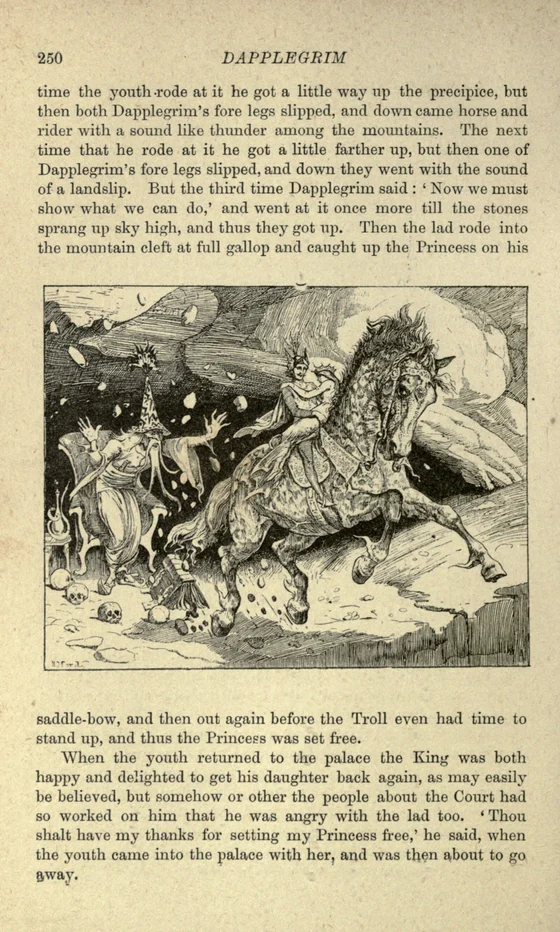
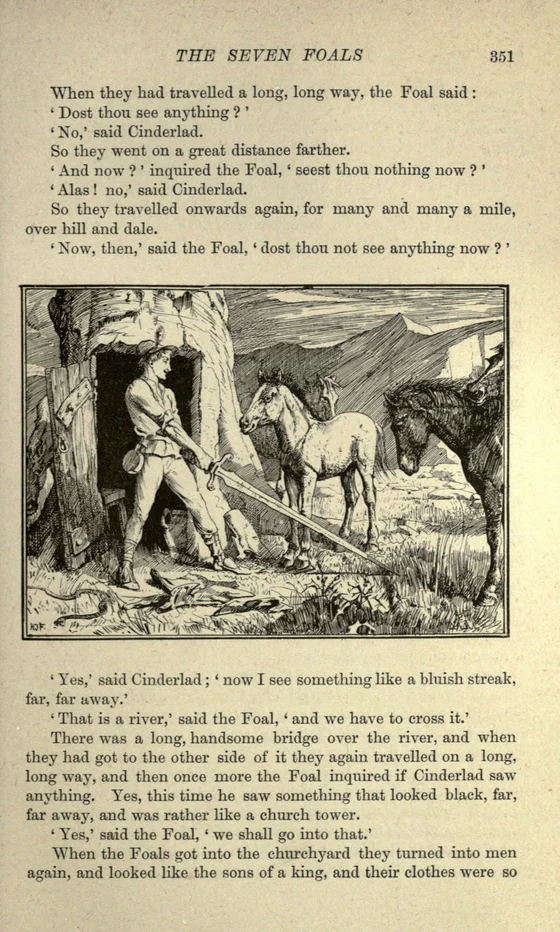
The widow's son enters forbidden rooms in a strange master's house and discovers a black horse tethered with burning coals at its head and hay behind it. When the boy makes the hay accessible, the horse speaks and offers escape from the troll. He directs the boy to choose rusty armour and weapons, gain supernatural strength, and carry several objects for their flight.
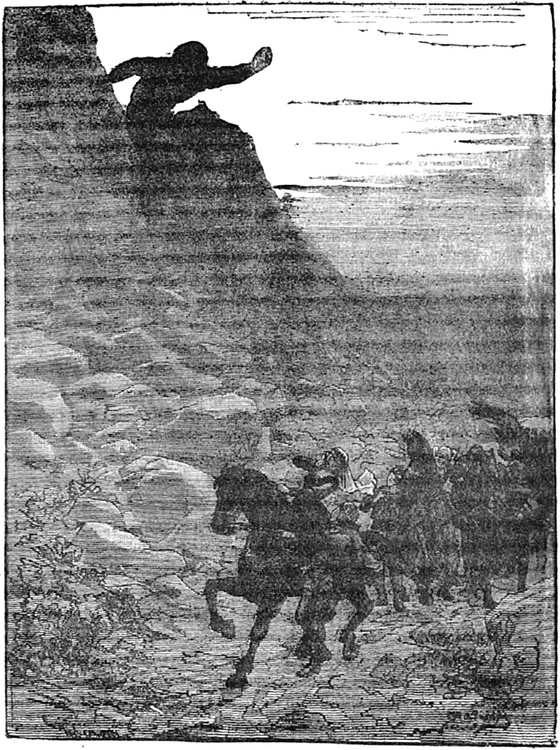
A bramble rod, stone and water create obstacles behind them. The pursuing trolls try to drink the resulting lake dry and burst; one spilled drop forces the horse himself to swim ashore. Later, he answers a shaken bridle and carries the boy to decisive battles. At the wedding, he demands a release that changes him back into a king. An enemy ruler had enchanted and sold him; the restored neighbours promise lasting peace.
Origins & earliest records
The Widow's Son is a Norwegian wonder tale collected by Asbjørnsen and Moe and translated by Dasent in a collection first published in 1859. The inspected electronic witness preserves a second-edition notice, not a securely dated print title page. This black horse's revealed royal identity belongs to that particular text and should not be imposed on other helpers.
Records & interpretation
The primary tale explicitly identifies the horse as a king after the final transformation and explains his sale to a troll. Objects becoming landscape barriers, responsive summoning and battle assistance establish his narrative powers. They provide textual evidence for an enchanted helper and reciprocal rescue, not veterinary evidence or proof of actual people assuming equine bodies.
In the literature
“a manger of red-hot coals at his head”
Tale XLIV, The Widow’s Son; The youth finds the black horse in the fourth room · George Webbe Dasent
The captive horse is prevented from eating until the youth moves hay to its head.
“I am the black horse”
The Black Horse; p.65, the restored man identifies the helper
After three years the rider remembers his neglected helper. The horse demands beheading and threatens him until he complies. A handsome man then greets the rider as brother-in-law, identifies himself as the horse and explains that retaining him let his spell’s allotted time run out. The caster and initial cause are not supplied.
Selected bibliography
Documented works and useful reading. This is not a list of every appearance.
- 01
The Widow’s Son (Popular Tales from the Norse)
Inspected named tale XLIV. Electronic witness includes a notice to the second edition; its exact print date is unresolved.
- 02
Popular Tales from the Norse — The Widow’s Son
Dasent historical English translation of Asbjørnsen and Moe; hosted PG8933 includes a Second Edition notice, but its exact selected print edition date and printed pages are unresolved. 1859 is the first English collection context only. Exact observed chapter anchors and episode locators used.
Family & connections
A source-supported family tree or inspiration record has not yet been compiled for this profile. Related reading below indicates a connection in subject matter, not a proven lineage or creative influence.
Located primary passages
Specific passages supporting details in this entry, grouped by their published witness.
Popular Tales from the Norse — The Widow’s Son
Dasent historical English translation of Asbjørnsen and Moe; hosted PG8933 includes a Second Edition notice, but its exact selected print edition date and printed pages are unresolved. 1859 is the first English collection context only. Exact observed chapter anchors and episode locators used.
- The youth reverses the black horse’s cruel feeding arrangement. In return it teaches him to choose rusty armour, sword and saddle and bathe in a magic cauldron to gain beauty and strength before escaping the Troll.
Tale XLIV, The Widow’s Son; Forbidden room and horse’s rescue instructions
- A bramble rod and stone become forest and rocky hill, delaying pursuers. Water becomes a lake; one spilled drop puts the horse in it, but it swims safely across while the Trolls burst trying to drink it dry.
Tale XLIV, The Widow’s Son; Mounted flight and pursuers destroyed at the lake
- The horse repeatedly carries its disguised rider into battle. After the youth wins the princess, the horse demands beheading and becomes a prince, explaining that the defeated enemy king enchanted and sold him to the Troll.
Tale XLIV, The Widow’s Son; Battle service and beheading releases the prince
Complete named tale read. Exact selected print date, page numbers and earliest attestations are not inferred.
References
Sources supporting this profile. Linked pages have their own scope and editorial standards.
- Primary textPopular Tales from the Norse — The Widow’s Son (tale XLIV)Research access: 2026-10-05
Image credits
A sourced illustration has not yet been added. This gap is included in the coverage record.