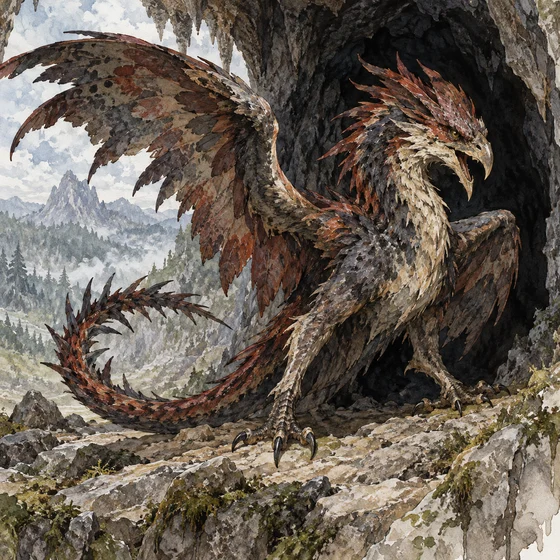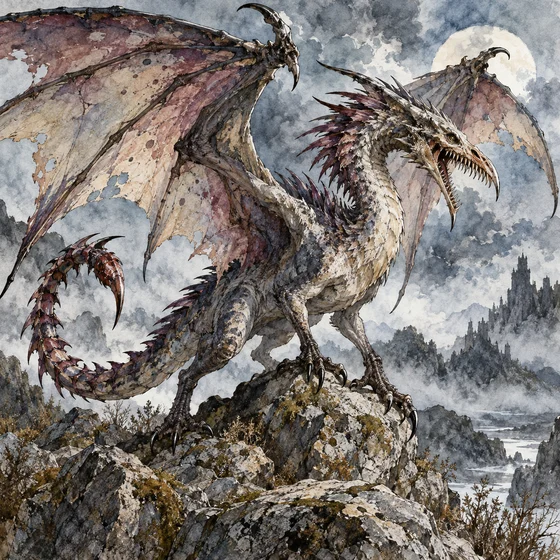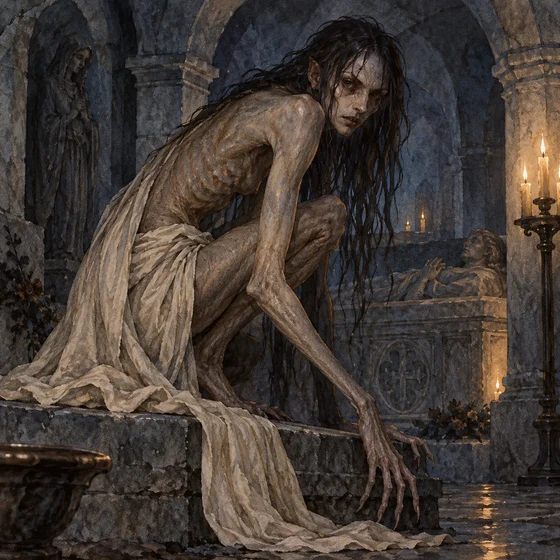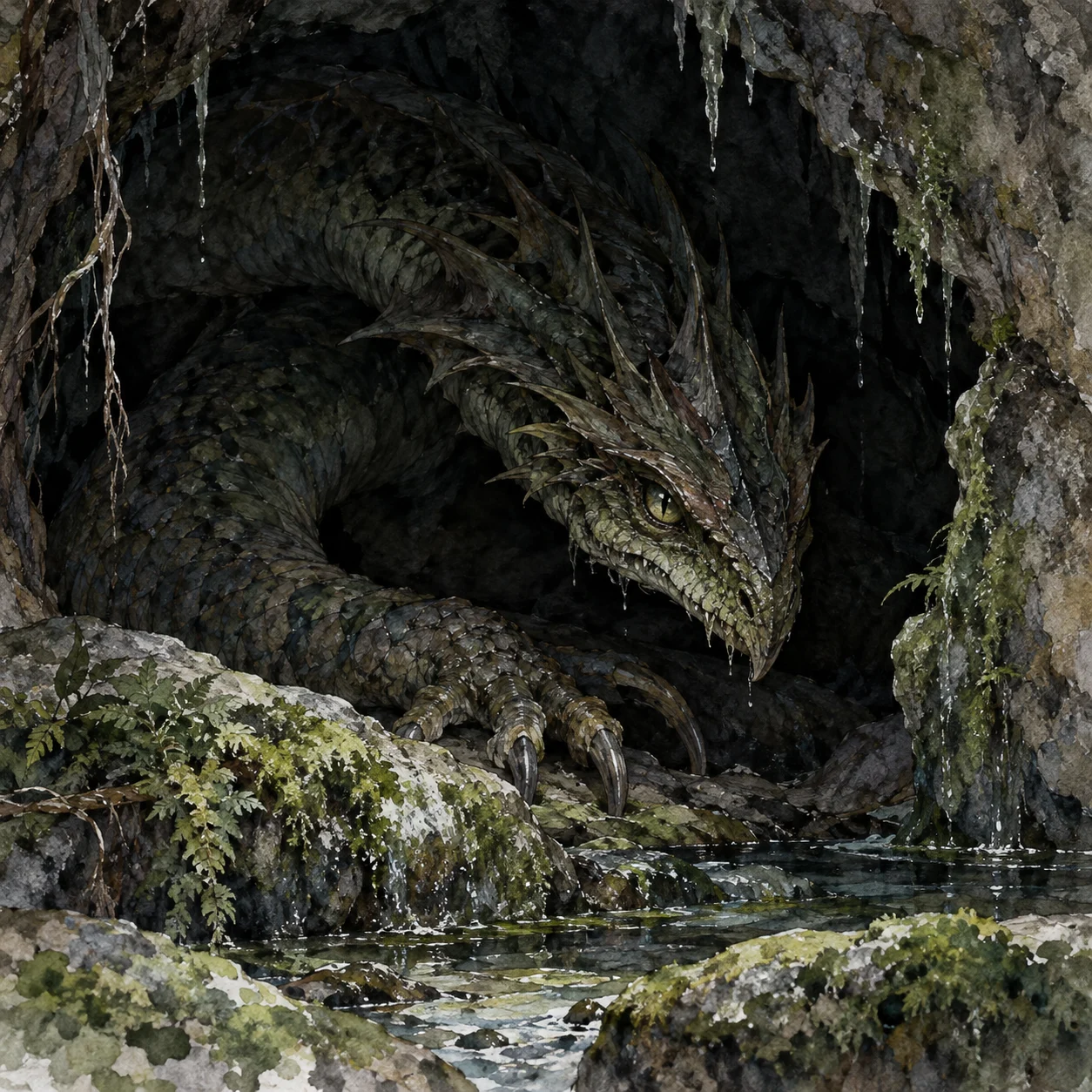
An imagined Wild Hunt basilisk partly concealed in a dark damp refuge.
Unofficial AI-generated interpretation; undefined appearance, colours and setting are imagined. Not official artwork.
Overview
Basilisks in the Witcher games are venomous predators whose claws, teeth and acidic attacks create real danger within the setting. Wild Hunt specifically denies that their gaze turns victims to stone. They favour dark, damp refuges such as caves, sewers and cellars, and can spring from concealment when prey comes close. This account therefore differs sharply from the immense serpent called a Basilisk in Harry Potter, as well as from several traditional versions.
Their valued leather connects predation with human hunting: the bestiary describes failed hunts and pressure on the animal's numbers, with some mages and druids favouring protection. The result is a creature threatened by commerce as well as a threat to people. This profile follows the games' selected treatments without making all legendary basilisk properties compatible. Variants and individual contract histories remain part of the family account unless they require a separately researched comparison.
First appearances & development
The selected version is 2007 and 2015 game. CD Projekt RED's games adapt Sapkowski's setting while adding their own creature designs, quest histories and combat classifications. This profile identifies those game treatments, rather than asserting that every detail originates in the novels. Spellings and named variants remain within the same account unless a substantive independent comparison is required.
Canon & continuity
The Witcher Wiki is an independent reference, and its public MediaWiki API supplied the version-labeled bestiary text and relevant quest accounts. Publisher-hosted Prima guide excerpts provide additional context where listed. The bibliography identifies the actual game or reference chapter; it does not imply a complete audit of every novel, expansion, patch, screen adaptation or full guidebook.
Selected bibliography
Documented works and useful reading. This is not a list of every appearance.
- 01
The Witcher
Earlier-game draconid encounter and bestiary.
- 02
The Witcher 3: Wild Hunt
Draconid account rejects petrification and discusses venom, ambushes and leather hunting.
Family, evolution & connections
Basilisk
These entries share the basilisk name. Compare the game's separately described creature with the medieval manuscript account; a shared name does not establish that the Aberdeen manuscript served as a direct design source.
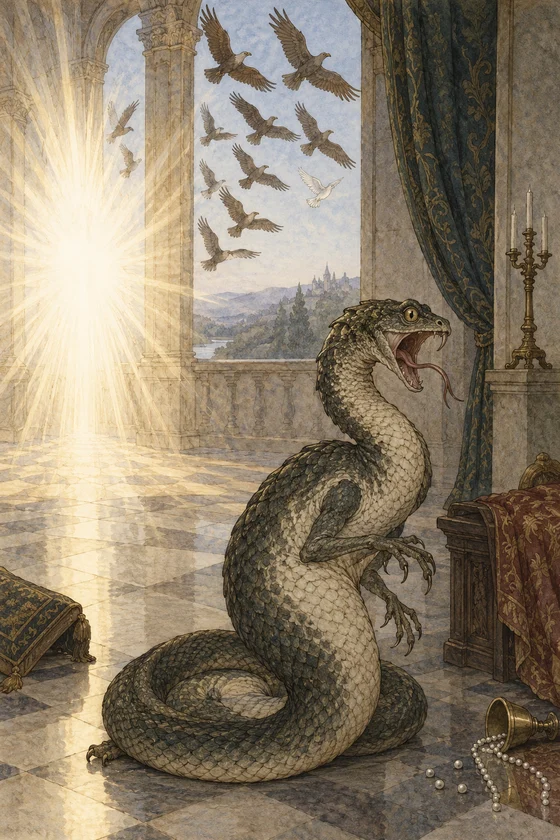
The Queen Changed into a Basilisk
In Biggs’s 1920 version of The Eagles, a queen becomes a basilisk after enchanting her stepchildren. Her deadly glance destroys the palace household, including her own son; later a mirror turns that glance against her. This is a specific transformed-human basilisk tale. The comparison records a historical namesake context, not the game creature’s zoology, a shared transformation rule or evidence of designer consultation.
References
Sources supporting this profile. Linked pages have their own scope and editorial standards.
- ReferenceBasilisk (The Witcher) — reference guideResearch access: 2026-10-05
Image credits
Modern interpretationAn imagined Wild Hunt basilisk partly concealed in a dark damp refuge.
Unofficial AI-generated interpretation; undefined appearance, colours and setting are imagined. Not official artwork.