Banshee
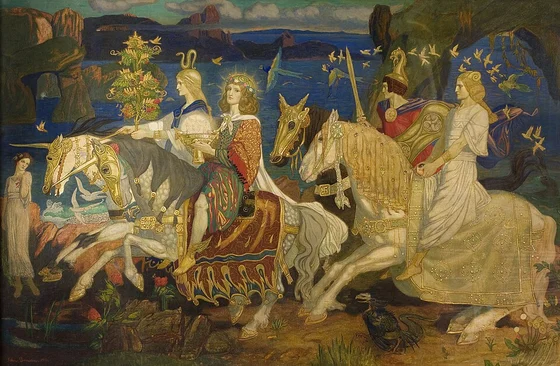
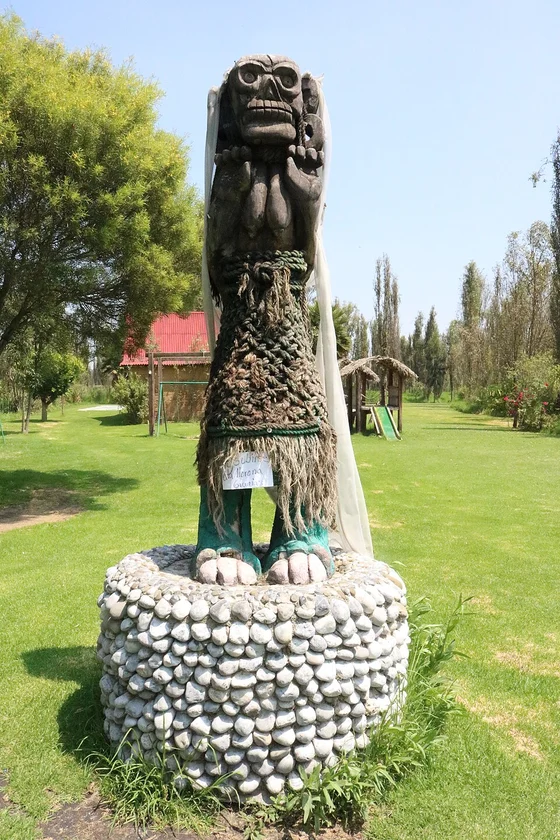
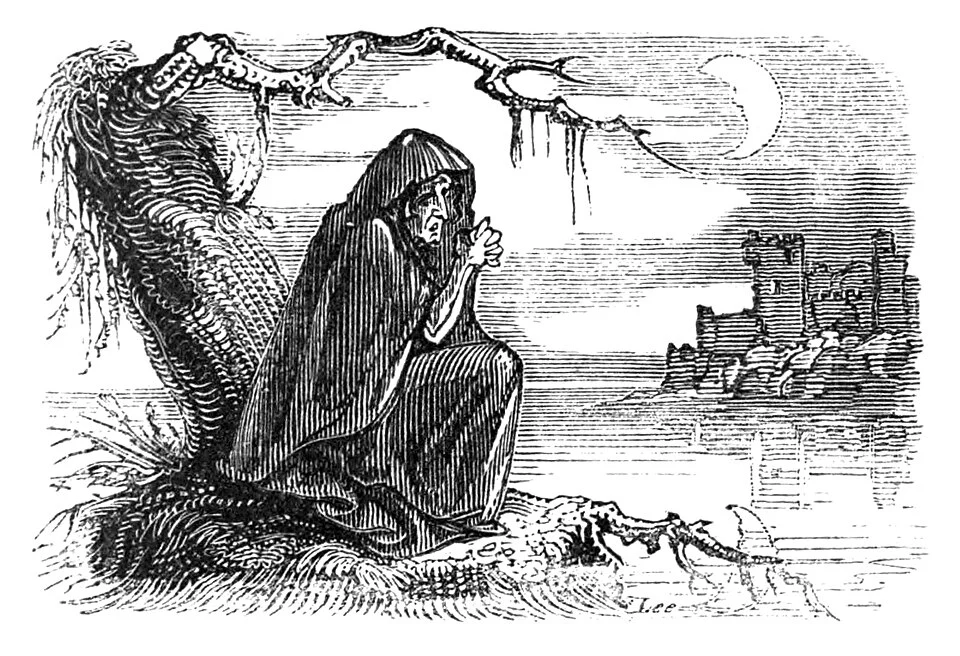
Image associated with the exact linked encyclopedia article; consult credited file description for its interpretation.
Overview
The Irish bean sí is associated with lamentation that announces a death, often within a particular family or circle. Her role is more accurately conveyed by individual accounts than by a fixed costume or a universal claim about ancestry. Croker's selected 1844 collection relates a warning before the death of the Reverend Charles Bunworth of Buttevant, a clergyman remembered in the story for helping neighbours and patronising travelling Irish harpers. His herdsman Kavanagh returns from fetching medicine visibly distressed, although Bunworth is not yet thought to be in immediate danger. Kavanagh says a figure accompanied him through Ballybeg, keening, clapping her hands and sometimes naming his master. He describes long white hair and a cloak before she leaves him near the abbey and burial ground. Bunworth's daughter questions the account and initially suspects drink, making doubt part of the narrative rather than an outside modern addition.
As Bunworth declines, people keeping watch later hear moaning and hand-clapping at the window beside his bed. A rose tree seems to have been moved, but two men who go out to investigate find neither a person nor marks in the freshly worked ground. The story builds its supernatural interpretation through several reported witnesses and an unsuccessful search for an ordinary intruder. These are narrative claims recorded by a collector, not independent proof that a being predicted the death. The figure is presented as a mourner and warning presence, rather than the physical killer. Yeats's later anthology provides another stage in the English-language collecting and literary presentation of banshee traditions. Comparison with the Welsh Gwrach y Rhibyn or the Scottish Bean Nighe can illuminate shared death-warning themes, while their names, encounter settings and local descriptions remain distinct.
John Todhunter’s How Thomas Connolly Met the Banshee, printed in Yeats’s anthology, gives a different encounter. Connolly narrates his return from work on a November evening along a road crossing a tributary of the Dodder. At the bridge he initially takes the crouching figure for a distressed older woman and offers assistance. Closer observation changes his interpretation: extraordinarily long hair, a grey cloak and green gown, a pale freckled face and eyes marked by crying make her uncanny to him. She rises, laments and glides into the stream. His comparison of her height to Nelson’s Pillar is part of his expressive narration, not a reliable physical measurement. He later treats the reported death of a visiting O’Nale, and keening heard around that visitor’s lodging, as confirmation. That later association is the narrator’s explanation of the encounter.
Croker’s The Banshee of the Mac Carthys, also reprinted by Yeats, embeds the apparition in a longer moral narrative. After an apparent death and recovery, Charles Mac Carthy says he was granted three years to repent; his mother initially considers whether this could still be delirium. Near the deadline, a woman fires at James Ryan, whom the story identifies as having deceived and abandoned her, but wounds Charles instead. The injury is first dismissed as slight, then worsens after treatment the narrative describes as mishandled. Meanwhile, relatives travelling toward Spring House hear cries and hand-clapping and see a tall, thin, long-haired woman in a white covering. She gestures toward Spring House and appears to block their proposed detour. The story ends with Charles’s death before sunset on his twenty-seventh birthday. The banshee directs the travellers and signals the approaching death; the narrated wound has a human cause.
The same anthology prints Clarence Mangan’s translated lament for Sir Maurice Fitzgerald, whose death in Flanders is dated1642 in its heading. Its chorus of place-named laments and claim of privileged lineage belong to the poem’s commemorative and social language. Yeats’s introductory restriction to old families is likewise an attributed collector’s formulation. Neither passage establishes a rule shared by every Irish account. These prose encounters, the poem and Bunworth’s vigil preserve different ways of connecting mourning, place and family memory.
Origins & earliest records
Printed Irish folklore collections preserve accounts already circulating among storytellers, alongside literary retellings. Yeats’s 1888 anthology is one accessible witness rather than an origin date. Family associations and descriptions differ, so claims that every Irish family has a banshee or that every version follows one rule exceed this evidence.
Records & interpretation
The evidence consists of narrated warnings, collectors’ records and literary adaptations. Such testimony reveals how death, kinship and mourning were understood and retold. It does not establish a biological being or a verified ability to predict deaths; the cultural significance of the lament can be described without making either claim. Further located witnesses include Todhunter’s first-person encounter, Croker’s letter-framed Mac Carthy tale and Mangan’s commemorative poem. The narrative letters, visionary claims and later interpretation of omens are not treated as independently authenticated contemporary records.
In the literature
“is an attendant fairy that follows the old families, and none but them, and wails before a death.”
The Banshee, editorial note; paragraph beginning “[The banshee (from ban [bean] , a woman, and…”
Yeats’s editorial note states a particular familial death-warning model; later and regional accounts vary.
“The likes of it I never seen on mortial woman, young or ould, before nor sense.”
HOW THOMAS CONNOLLY MET THE BANSHEE. / J. TODHUNTER.; paragraph beginning “Well, sir, I pitied the ould craythur, an' thought…”
John Todhunter’s stylized narrator marvels at the banshee’s extraordinary hair.
“the banshee was heard keening round the house that same night”
HOW THOMAS CONNOLLY MET THE BANSHEE. / J. TODHUNTER.; paragraph beginning “"Begor, sir, I knew the apparation of her well…”
Todhunter’s narrator connects the apparition with another household’s mourning.
Selected bibliography
Documented works and useful reading. This is not a list of every appearance.
- 01
Fairy Legends and Traditions of the South of Ireland
The Banshee, XII, pp. 81–86: Bunworth, Kavanagh and the window vigil. This hosted witness is the 1844 Philadelphia edition, not the first edition.
- 02
How Thomas Connolly Met the Banshee, in Fairy and Folk Tales of the Irish Peasantry
Complete tale, printed108–112, read with Yeats’s introductory note108. Connolly’s interpretation and the reported O’Nale death are narrative testimony, not independently verified prediction.
- 03
A Lamentation for the Death of Sir Maurice Fitzgerald, Knight, of Kerry
Complete poem, printed112–113, read. The date in its heading refers to the death, not the publication of this translation; original Irish text not collated.
- 04
The Banshee of the Mac Carthys, in Fairy and Folk Tales of the Irish Peasantry
Complete prose tale and both embedded letters, printed113–127, read through final death. Letters belong to the printed narrative; original family papers were not inspected. Apparition does not fire the shot.
- 05
Fairy and Folk Tales of the Irish Peasantry
Collection first published 1888; e-text represents an undated Walter Scott Publishing Co. reprint. Do not infer the reprint year.
Family & connections
A source-supported family tree or inspiration record has not yet been compiled for this profile. Related reading below indicates a connection in subject matter, not a proven lineage or creative influence.
Located primary passages
Specific passages supporting details in this entry, grouped by their published witness.
How Thomas Connolly Met the Banshee, in Fairy and Folk Tales of the Irish Peasantry
Collection first published 1888; e-text represents an undated Walter Scott Publishing Co. reprint. Do not infer the reprint year.
- Yeats’s editorial note states a particular familial death-warning model; later and regional accounts vary.
The Banshee, editorial note; paragraph beginning “[The banshee (from ban [bean] , a woman, and…”
- John Todhunter’s stylized narrator marvels at the banshee’s extraordinary hair.
- Todhunter’s narrator connects the apparition with another household’s mourning.
Attests this published account; does not establish zoological existence, consensus belief or earliest origin.
Encyclopedia background
An additional attributed reference, separate from the editorial profile above.
Read the open encyclopedia overview
A banshee ( BAN-shee; Modern Irish bean sí [bʲanˠ ˈʃiː], from Old Irish: ben síde [bʲen ˈʃiːðʲe], "woman of the fairy mound" or "fairy woman") is a female spirit in Irish folklore who heralds the death of a family member, usually by screaming, wailing, shrieking, or keening. Her name is connected to the mythologically important tumuli or "mounds" that dot the Irish countryside, which are known as síde (singular síd) in Old Irish.
Text from Wikipedia contributors, “Banshee”. CC BY-SA 4.0. Extracted introduction; formatting changed. Retrieved 5 October 2026. The source article may have changed since retrieval.
References
Sources supporting this profile. Linked pages have their own scope and editorial standards.
- Historical anthology; separately credited prose and poemYeats anthology, Banshee introduction108 and complete Todhunter/Mangan/Croker selections108–127Research access: 2026-10-05
- Primary textCroker, Fairy Legends, selected 1844 edition: The Banshee, XIIResearch access: 2026-10-05
Image credits
Reference illustrationBanshee
Image associated with the exact linked encyclopedia article; consult credited file description for its interpretation.