Aspidochelone
Image associated with the exact linked encyclopedia article; consult credited file description for its interpretation.
Overview
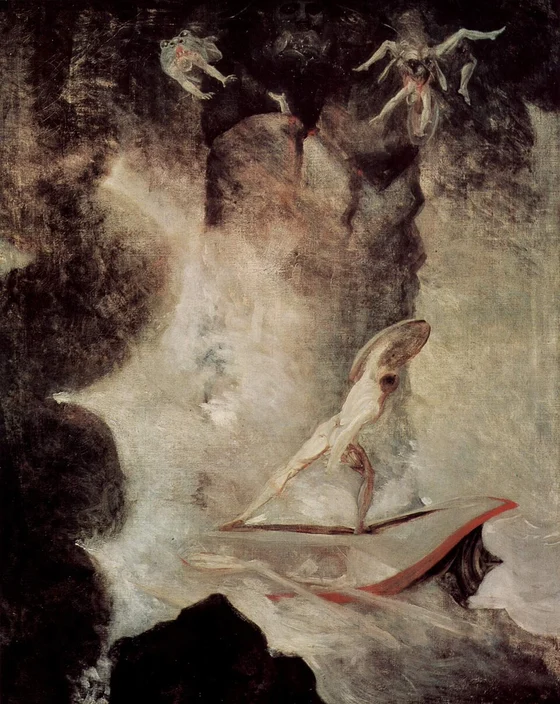
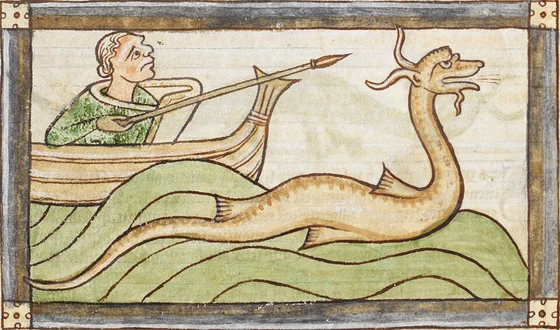
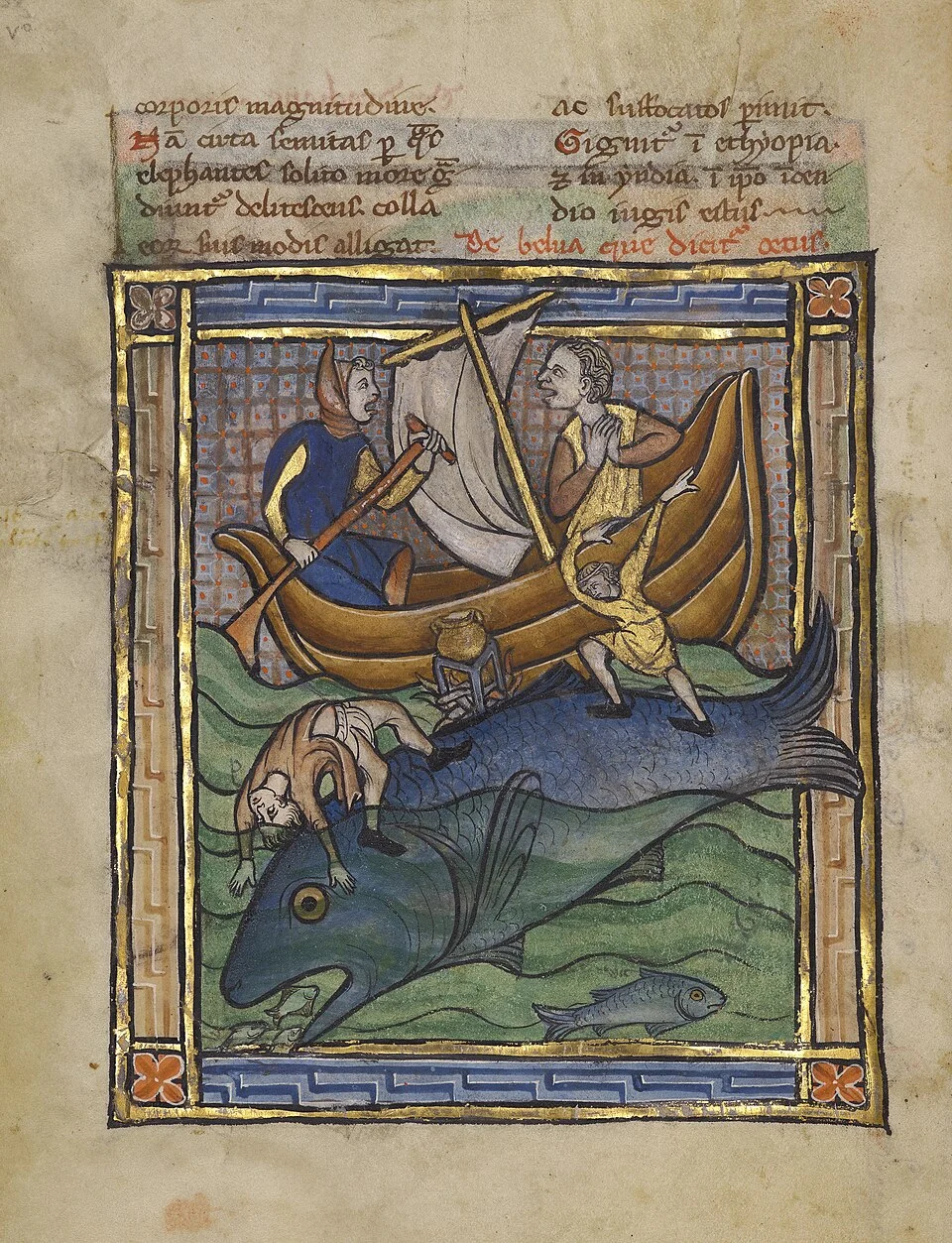
The Old English poem calls the creature Fastitocalon and describes a sea monster whose surface resembles a stony coastal bank. Sailors land, secure their ships and rest on what they take for firm ground. When their fire disturbs the creature, it dives, carrying the ships and people down. Apparent shelter therefore becomes a trap. Fastitocalon is retained here as a name in the poem, rather than counted as a second creature.
A later part of the same poem describes hungry jaws opening and releasing an attractive scent. Fish gather around the source and are swallowed when the jaws close. The poet interprets both actions through the devil’s deception and the danger of surrendering to temptation. This moral structure is part of the historical work, rather than evidence about whale feeding. The body’s deceptive landscape and its scented mouth are separate mechanisms within one account, so they should not be reduced to a generic giant whale.
Origins & earliest records
The poem survives in the Exeter Book, which its cathedral custodian dates to about970. The selected text and translations appear in Cook and Pitman’s 1921 Old English Physiologus edition. Its anonymous animal poem is not confidently assigned to Cynewulf. Manuscript dating establishes a surviving witness, not the first telling of the island-creature motif.
Records & interpretation
The poem’s opening episode and later feeding passage support the false-island and fragrant-mouth motifs. Exeter Cathedral supplies the manuscript’s approximate date and custody context. These literary and manuscript witnesses attest an allegorical creature; they do not establish a species with a habitable back or substantiate the represented manner of drowning ships.
Selected bibliography
Documented works and useful reading. This is not a list of every appearance.
- 01
Old English Physiologus, II: The Whale (Asp-Turtle), lines1–31 and51–80
Selected primary passage inspected; publication and transmission dates are distinguished from oral origins.
Family & connections
A source-supported family tree or inspiration record has not yet been compiled for this profile. Related reading below indicates a connection in subject matter, not a proven lineage or creative influence.
Encyclopedia background
An additional attributed reference, separate from the editorial profile above.
Read the open encyclopedia overview
According to the tradition of the Physiologus and medieval bestiaries, the aspidochelone is a fabled sea creature, variously described as a large whale or vast sea turtle, and a giant sea monster with huge spines on the ridge of its back. No matter what form it is, it is always described as being so huge that it is often mistaken for a rocky island covered with sand dunes and vegetation. The name aspidochelone appears to be a compound word
combining Greek aspis (which means either "asp" or "shield"), and chelone, the turtle. It rises to the surface from the depths of the sea, and entices unwitting sailors with its island appearance to make landfall on its huge shell and then the whale is able to pull them under the ocean, ship and all the people, drowning them. It also emits a sweet smell that lures fish into its trap where it then devours them. In the moralistic allegory of the Physiologus and bestiary tradition, the aspidochelone represents Satan, who deceives those whom he seeks to devour.
Text from Wikipedia contributors, “Aspidochelone”. CC BY-SA 4.0. Extracted introduction; formatting changed. Retrieved 5 October 2026. The source article may have changed since retrieval.
References
Sources supporting this profile. Linked pages have their own scope and editorial standards.
- Primary textOld English Physiologus, II: The Whale (Asp-Turtle), lines1–31 and51–80Research access: 2026-10-05
- ReferenceExeter Cathedral, Codex Exoniensis: manuscript date and custodyResearch access: 2026-10-05
Image credits
Reference illustrationAspidochelone
Image associated with the exact linked encyclopedia article; consult credited file description for its interpretation.