Yakshini / Yakshi
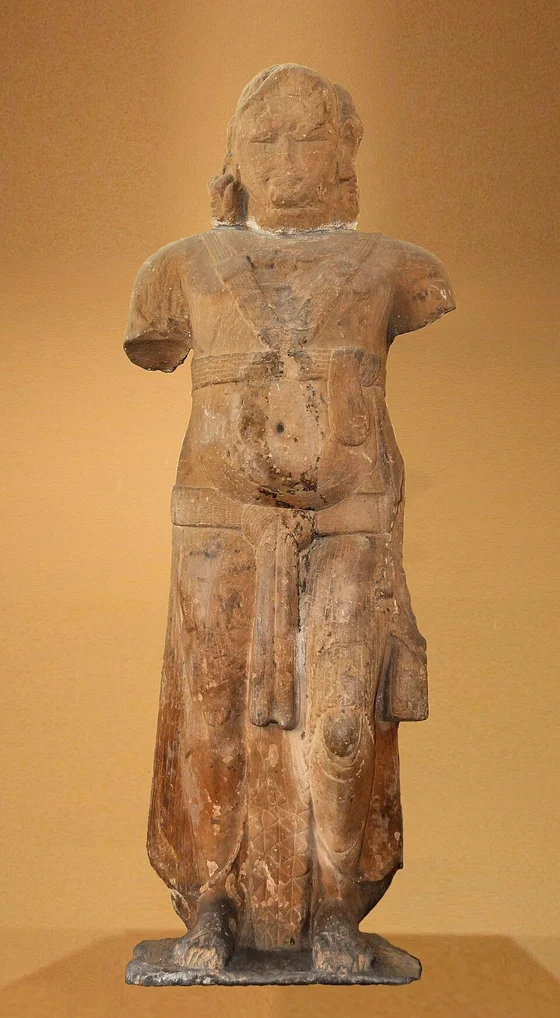
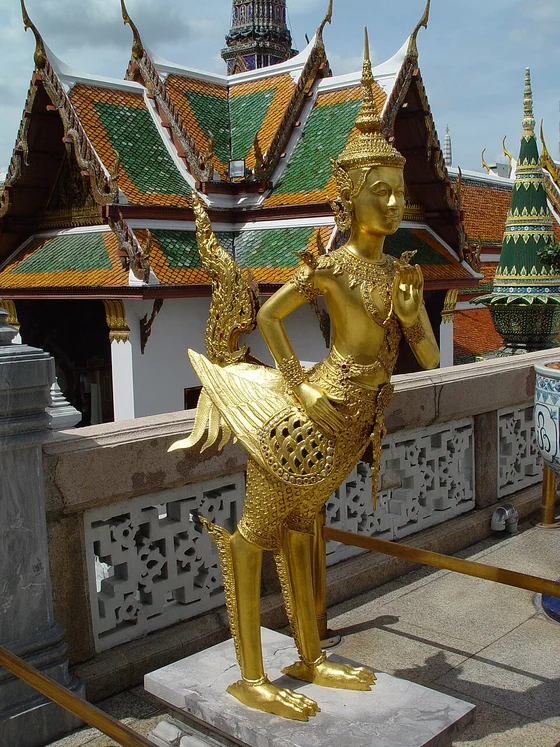
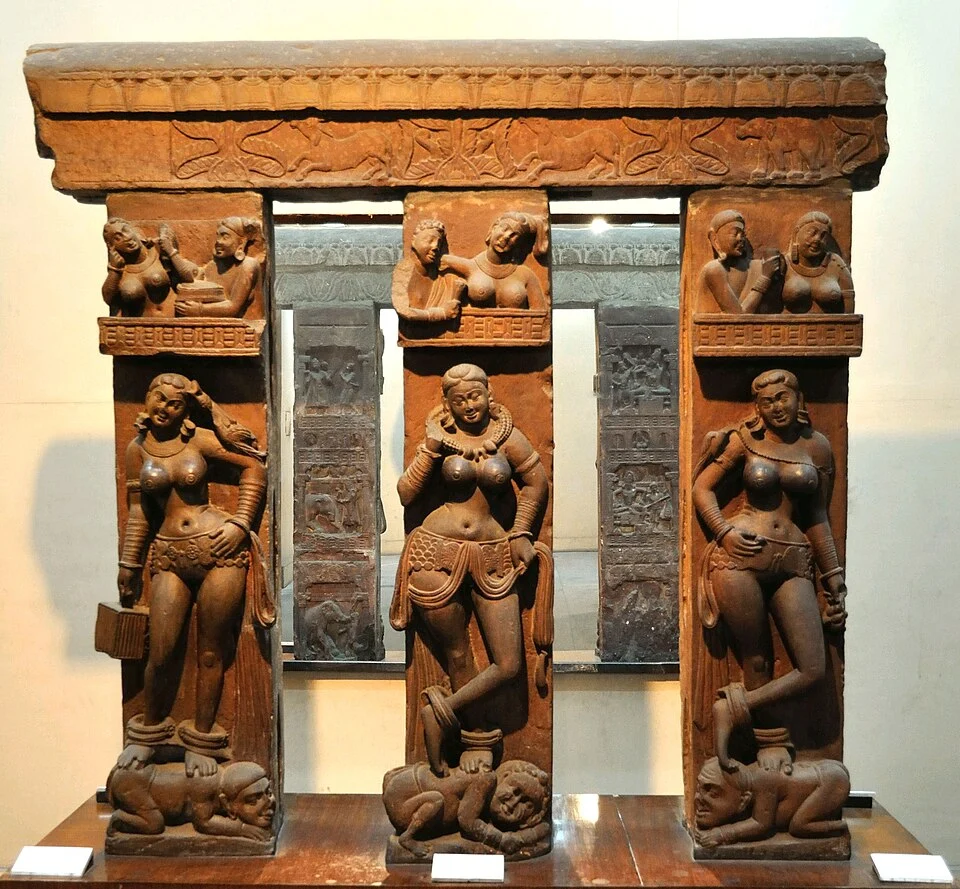
Image associated with the exact linked encyclopedia article; consult credited file description for its interpretation.
Overview
Yakshini, or yakshi, names a female supernatural category that cannot be reduced to one temperament or image. Two directly examined witnesses show why setting matters: an early Mathura gateway sculpture identified as a tree-spirit deity, and the Ramayana narrative of Tārakā in Manmatha Nath Dutt’s historical translation. The sculpture and epic do not portray the same named individual, and their different functions should remain explicit.
The Metropolitan Museum’s red-sandstone object 27.186 is dated to the first or second century and identified as a double-sided gateway bracket. Its ornamented female figure holds a flowering tree. The museum interprets the branch-grasping pose as auspicious and connected with flourishing growth. The inspected fragment preserves bent arms, jewellery, a curving body, and leafy branches, with wear and damage visible on the stone. Its architectural setting is part of the evidence.
In Balakanda section XXV, Tārakā is the daughter of the yaksha Suketu. His austerities obtain a daughter blessed with the strength of a thousand elephants. She grows into a beautiful young woman, marries Sunda, and gives birth to Māricha. The narrative thus gives a particular yakshini family, exceptional strength, and a history preceding the terrible forest form encountered by Rāma.
After Sunda’s destruction, Tārakā and her son turn against Agastya. The sage curses Māricha to become a rakshasa and Tārakā to abandon her previous shape. In section XXVI she confronts the princes with dust, falling rocks, disappearing movements, and changing forms. The translated narration continues to call her yakshini while also using rakshasi. That overlap belongs to the story’s transformed identity rather than an error to be silently repaired.
The contrast is therefore substantive: the museum object offers an auspicious tree-associated presence at a gateway, while the named epic figure receives an individual fall, curse, and violent confrontation. Neither witness defines every female spirit in South Asian traditions. The profile keeps the sculpture’s visual motif distinct from Tārakā’s powers and biography, and leaves further local or religious narratives to independently cited accounts.
A further named comparison is Hārītī. LACMA’s Gandharan sculpture record identifies her as a former ogress and queen of yakshis who became a protector of children and childbirth after conversion by the Buddha. The account thus allows a change in religious role, rather than making beneficence or hostility an immutable property of the category. Its Pañcika–Hārītī couple is a particular named pairing, not a rule assigning every yakshini a consort.
Hearn’s Japanese account of Kishibojin supplies a geographically separate protective mother shrine, which his footnote connects with Hārītī. His reported offerings of small children’s garments and brief conversion legend belong to that later witness. They should not be retroactively assigned to the Mathura gateway figure or to Tārakā. Across these examples, names, objects, narratives and devotional practices require their own locators even when a broad category connects them.
Origins & earliest records
The selected work or object is a witness to this representation. Its date is not asserted to be the beginning of the tradition; textual layers and regional variants need separate review.
Records & interpretation
The linked source and contextual bibliography support the stated motifs. Material objects document iconography; narratives document imagined encounters. Neither alone is zoological confirmation.
Selected bibliography
Documented works and useful reading. This is not a list of every appearance.
- 01
Yaksha and Yakshi sculptures
Selected reading or object; bibliography is not exhaustive. Secondary links identify primary passages where a direct primary edition was not verified.
- 02
Dutt Ramayana, Balakanda sectionsXXIV–XXVI: Tārakā
Exact episode/object directly read; no universal anatomy inferred.
- 03
Met Tree Spirit Deity (Yakshi), accession27.186
Exact episode/object directly read; no universal anatomy inferred.
- 04
The Tutelary Couple Panchika and Hariti
M.83.66; named queen-of-yakshis and conversion comparison, not universal category definition.
- 05
Glimpses of Unfamiliar Japan, First Series
IV, A Pilgrimage to Enoshima, §20/note7; full chapter and notes read.
- 06
The Rāmāyana, Volume 1: Bālakāndam and Ayodhyākāndam
Calcutta, Deva Press, 1891, as the hosted title page states. Bālakāndam prose translation.
Family & connections
A source-supported family tree or inspiration record has not yet been compiled for this profile. Related reading below indicates a connection in subject matter, not a proven lineage or creative influence.
Primary records and illustrations
Tree Spirit Deity (Yakshi)
India, Uttar Pradesh, Mathura region; 1st–2nd century; red sandstone. Met accession 27.186
Museum object identification, date and accession checked; public-domain API image downloaded and visually inspected. This is a fragment of an architectural bracket, not an intact freestanding figure. Additive Hariti comparison: complete LACMA M.83.66 curatorial account and Hearn pilgrimageIV§20/note7; older five paragraphs preserved. Shared modern LACMA-derived prose across Hariti/Yakshini remains below200 words.
The Mathura sandstone fragment preserves a tree spirit in a close relationship with a leafy tree. One ornamented arm bends above the head, while the other hand grasps part of the branching form. The face and portions of the body are worn, and the surviving stone retains a warm reddish surface interrupted by paler damaged areas. Jewellery and the curved pose remain legible despite the fragmentary condition. The Metropolitan Museum identifies the piece as a double-sided bracket from a gateway, with a yakshi on each side. Its interpretation connects the branch-grasping pose with fertility and an auspicious sacred entrance. This object supports a specific early sculptural representation; it does not establish that every yakshini tradition shares this pose or meaning.
Located primary passages
Specific passages supporting details in this entry, grouped by their published witness.
Primary source witness
Calcutta, Deva Press, 1891, as the hosted title page states. Bālakāndam prose translation.
- Tārakā is introduced as a Yakshini capable of changing form in this passage.
- The description assigns Tārakā extraordinary strength before the subsequent account of her curse.
Historical translation or collector’s published version; not zoological evidence, a universal account or an assertion about all living communities.
Encyclopedia background
An additional attributed reference, separate from the editorial profile above.
Read the open encyclopedia overview
Yakshinis or Yakshis (Sanskrit: यक्षिणी, IAST: Yakṣiṇī or Yakṣī, IPA: [jɐkʂiɳiː, jɐkʂiː]; Prakrit: Yakkhiṇī or Yakkhī, IPA: [jɐkːʰiɳiː, jɐkːʰiː]) are a class of female nature spirits in Hindu, Buddhist, and Jain religious mythologies. Yakshinis and their male counterparts, the Yakshas, are among the many divine or semi-divine beings traditionally associated with the sacred groves of India. Yakshis appear in the traditional legends of Northeastern Indian tribes, ancient legends of Kerala, and in the folktales of Kashmiris. Sikhism also mentions yakshas in its sacred texts. Yakshinis are different from Devas, Asuras, Gandharvas and Apsaras.
Well-behaved and benign yakshinis are worshipped as tutelaries, as they are attendees of Kubera, the treasurer of the gods, and the Hindu god of wealth who rules the kingdom of Alaka. There are also malign and mischievous yakshinis with poltergeist-like behaviours that can haunt and curse humans, according to Indian folklore.
The ashoka tree is closely associated with yakshinis. One of the recurring elements in Indian art, often found as gatekeepers in ancient Buddhist and Hindu temples, is a yakshini with her foot on the trunk and her hands holding the branch of a stylized flowering ashoka or, less frequently, tree with flowers or fruits.
Text from Wikipedia contributors, “Yakshini”. CC BY-SA 4.0. Extracted introduction; formatting changed. Retrieved 5 October 2026. The source article may have changed since retrieval.
References
Sources supporting this profile. Linked pages have their own scope and editorial standards.
- Scholarly art historyYaksha and Yakshi sculpturesResearch access: 2026-10-05
- Secondary referenceYakshini / Yakshi — contextual bibliographyResearch access: 2026-10-05
- Museum object recordTree Spirit Deity (Yakshi) — exact primary witnessResearch access: 2026-10-05
- Primary narrative or institutional object recordDutt Ramayana, Balakanda sectionsXXIV–XXVI: TārakāResearch access: 2026-10-05
- Named custodial or historical narrative comparisonThe Tutelary Couple Panchika and HaritiResearch access: 2026-10-05
- Named custodial or historical narrative comparisonGlimpses of Unfamiliar Japan, First SeriesResearch access: 2026-10-05
Image credits
Reference illustrationYakshini / Yakshi
Image associated with the exact linked encyclopedia article; consult credited file description for its interpretation.