Kinnara
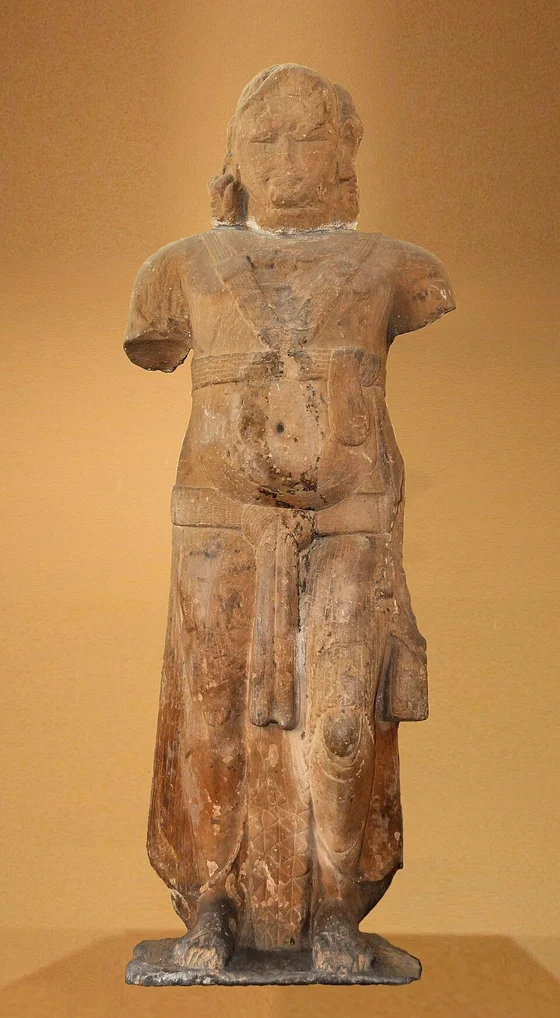
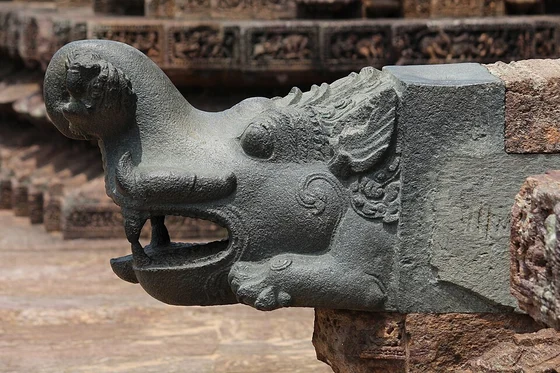
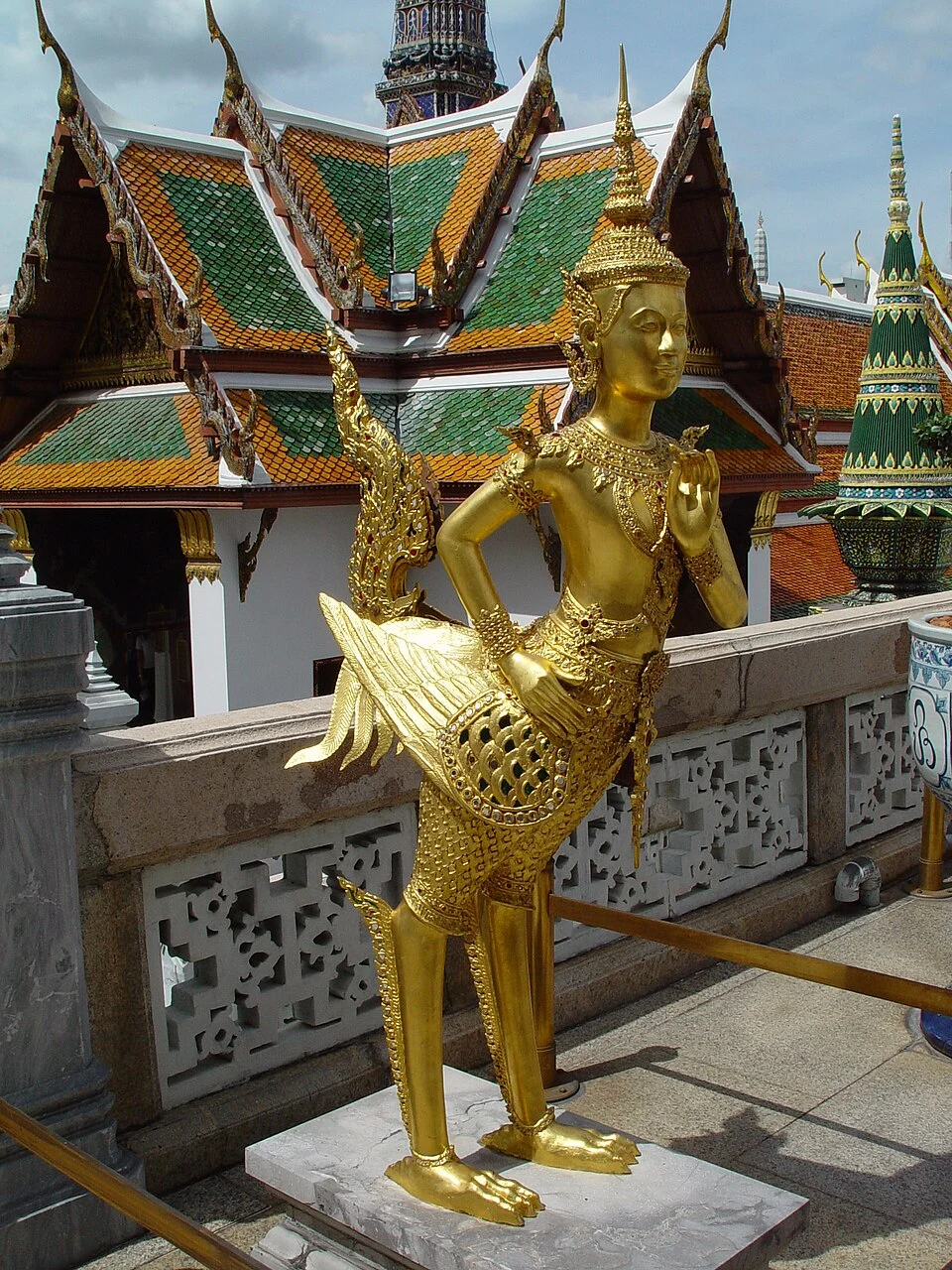
Image associated with the exact linked encyclopedia article; consult credited file description for its interpretation.
Overview
Kinnara are composite beings in Hindu and Buddhist traditions, strongly associated with music and affectionate pairing. Their bodies vary by region and source: bird-human forms are especially familiar in Southeast Asian imagery, while other traditions use different animal features. That variation is important to the entry. A single modern depiction cannot establish the anatomy of every kinnara or kinnari across a wide area of transmission.
Museum publications preserve actual images, including a kinnara playing the vina, and narrative references add another kind of evidence. The profile follows the musical and composite being without confusing it with contemporary people or social groups that bear related terms. It also keeps kinnara distinct from other human-bird figures such as kalaviṅka. Images document artistic and religious representation; they do not show that the same imagined body and role were standard everywhere.
A complete narrative witness is the Canda-Kinnara-Jātaka, no.485, in W. H. D. Rouse’s1901 translation. Rouse calls the central couple fairies, with a footnote explicitly identifying the term kinnara. Canda and his wife Candā live on the Mountain of the Moon in the Himalayas. Coming down in the hot season, they wear flowers, bathe, sing and dance; Canda plays a piece of bamboo. The episode supplies music and affectionate companionship but does not describe bird wings, horse heads or a standard hybrid anatomy.
A king secretly watches them and shoots Canda because he desires Candā. She rejects his offer to make her queen and returns to her stricken husband after the king leaves. Although her lament speaks of death, she later feels that his hand remains warm and concludes that he is still alive. Her appeal brings Sakka in a brahmin’s form; water from his pot removes the poison and heals Canda so completely that the wound’s position is no longer apparent. The couple withdraws towards their mountain home after Sakka warns them away from human paths.
The framing identifies this as a past birth of the Buddha and praises the faithfulness of Rāhula’s mother, identified with Candā at the end. That religious identification is part of the narrated teaching, not an independent historical genealogy. The translator’s suggestion that the tale contains a nature myth is likewise an interpretation, distinct from the story itself. This witness grounds the musical pair in a specific Buddhist narrative while leaving the separately documented regional images free to differ in bodily form.
Origins & earliest records
The selected work or object is a witness to this representation. Its date is not asserted to be the beginning of the tradition; textual layers and regional variants need separate review.
Records & interpretation
The linked source and contextual bibliography support the stated motifs. Material objects document iconography; narratives document imagined encounters. Neither alone is zoological confirmation.
Selected bibliography
Documented works and useful reading. This is not a list of every appearance.
- 01
Kinnara Playing the Vina: museum acquisition publication
Selected reading or object; bibliography is not exhaustive. Secondary links identify primary passages where a direct primary edition was not verified.
- 02
The Jātaka, or Stories of the Buddha’s Former Births, VolumeIV
No.485 Canda-Kinnara-Jātaka, pp.179–182, complete frame/narrative/identifications and12footnotes. Titlepage read; no independent Pāli collation.
Family & connections
A source-supported family tree or inspiration record has not yet been compiled for this profile. Related reading below indicates a connection in subject matter, not a proven lineage or creative influence.
Primary records and illustrations
Kinnari Playing the Vina
Indonesia, Java; Central Javanese period; ca. first quarter of 10th century. Met accession 1987.142.16
Museum record and public-domain API image checked; image visually inspected. Current museum title says Kinnari, while the older acquisition publication used Kinnara. Both refer to the same accession. Complete Rouse1901JatakaIV485pp179–182/all12notes checked; fairy explicitlyglossedkinnara; flowerclothing/music butnohybridanatomy. Canda remainswarm beforeSakkaheals; nodeath/resurrectioncertainty. https://original.sacred-texts.com/bud/j4/j4049.htm
The small Javanese bronze brings human and bird features into a compact standing musician. A crowned human face sits above ornamented shoulders and a rounded torso. Scaled feather-like decoration covers the upper legs, while the feet end in strong bird claws on a circular pedestal. The figure holds a long-necked string instrument diagonally across its body, with a resonating section close to the chest. A greenish patina and worn surfaces remain visible in the museum photograph. The current object title identifies the musician as a kinnari, whereas the older acquisition publication called the same accession a kinnara. This terminological change should be recorded, without turning the object into two separate sculptures.
Encyclopedia background
An additional attributed reference, separate from the editorial profile above.
Read the open encyclopedia overview
A kinnara (Sanskrit: किन्नर Kiṃnara) is a creature from Hindu and Buddhist mythology. They are described as part human and part bird, and have a strong association with music and love. Believed to come from the Himalayas, they often watch over the well-being of humans in times of trouble or danger. An ancient Indian string instrument is known as the Kinnari veena.
Their character is also clarified in the Adi Parva of the Mahabharata, where they say:
We are everlasting lover and beloved. We never separate. We are eternally husband and wife; never do we become mother and father. No offspring is seen in our lap. We are lover and beloved ever-embracing. In between us we do not permit any third creature demanding affection. Our life is a life of perpetual pleasures.
They are featured in a number of Buddhist texts, including the Jataka tales and Lotus Sutra. In Southeast Asian Buddhist mythology, kinnaris, the female counterpart of kinnaras, are depicted as half-bird, half-woman creatures. One of the many creatures that inhabit the mythical Himavanta, kinnaris have the head, torso, and arms of a woman and the wings, tail and feet of a swan. They are renowned for their dance, song and poetry, and are a traditional symbol of feminine beauty, grace and accomplishment.
Edward H. Schafer notes that in East Asian religious art, the kinnara is often confused with the Kalaviṅka, which is also a half-human, half-bird hybrid creature, but that the two are actually distinct and unrelated.
Text from Wikipedia contributors, “Kinnara”. CC BY-SA 4.0. Extracted introduction; formatting changed. Retrieved 5 October 2026. The source article may have changed since retrieval.
References
Sources supporting this profile. Linked pages have their own scope and editorial standards.
- Museum publication / primary object contextKinnara Playing the Vina: museum acquisition publicationResearch access: 2026-10-05
- Secondary referenceKinnara — contextual bibliographyResearch access: 2026-10-05
- Museum object recordKinnari Playing the Vina — exact record or passageResearch access: 2026-10-05
- Historical English translation of Buddhist primary literatureRouse, complete Canda-Kinnara-Jātaka485Research access: 2026-10-05
Image credits
Reference illustrationKinnara
Image associated with the exact linked encyclopedia article; consult credited file description for its interpretation.