A sourced illustration has not yet been added. This gap is included in the coverage record.
Overview
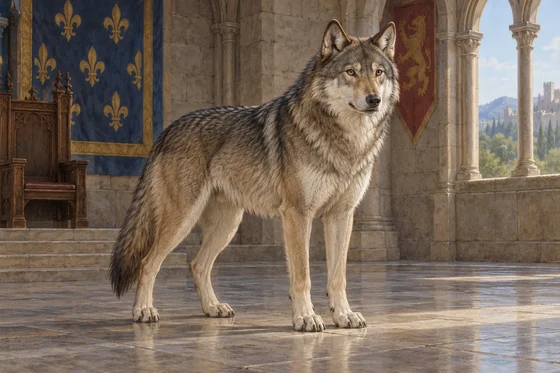
Official franchise material describes werewolves as people who change form at each full moon. The Wolfsbane Potion lets a transformed person keep a human mind.
Transmission depends on a bite from a werewolf in its transformed state; bites given in human form are described as having different effects. Rowling's own writing rejects the idea that the condition permanently destroys moral character.
Her account also points to social discrimination and registries that fail in practice. In documented cases, children of werewolf-human partnerships do not inherit lycanthropy, while rare pairings of two transformed werewolves produce very intelligent wolves without the condition's aggression toward humans.
First appearances & development
Within the fiction, lycanthropy is an acquired magical condition spread by bite. The selected sources do not establish a specific authorial inspiration; the shared folklore name alone is not treated as evidence.
Canon & continuity
Based on an official franchise fact file and J.K. Rowling's werewolves essay on the official site, both accessed 2026-10-07.
Selected bibliography
Documented works and useful reading. This is not a list of every appearance.
- 01
Werewolf
Selected bibliography; official franchise fact file.
- 02
Werewolves
Selected bibliography; author's own franchise writing.
Family, evolution & connections
Werewolf
A werewolf crosses between human and wolf identity, but the cause and timing vary. The selected Norse episode uses enchanted skins and dangerous loss of control rather than a universal full-moon rule. Comparison only; this historical context does not establish a creator-consulted text, borrowing route or identical transformation rules.
Bisclavaret in Mason’s Marie de France translation
Marie de France’s werewolf, in Mason’s 1911 version, is a human baron trapped in wolf form when his clothes are stolen; the king protects him and the recovered clothes permit restoration. This is one named literary werewolf context. Its weekly absences, clothing rule and courtly story do not establish the rules or creative sources of the Potter werewolf.
References
Sources supporting this profile. Linked pages have their own scope and editorial standards.
- Official franchise reference/editorialWerewolfResearch access: 2026-10-07
- Author's own franchise writingWerewolvesResearch access: 2026-10-07
Image credits
A sourced illustration has not yet been added. This gap is included in the coverage record.