Vetāla
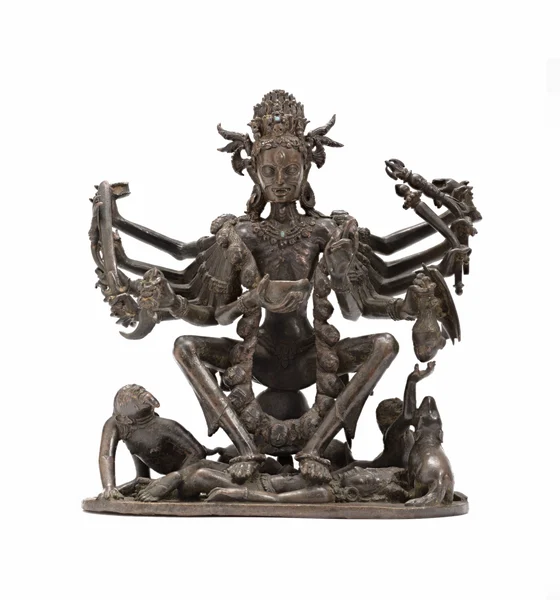
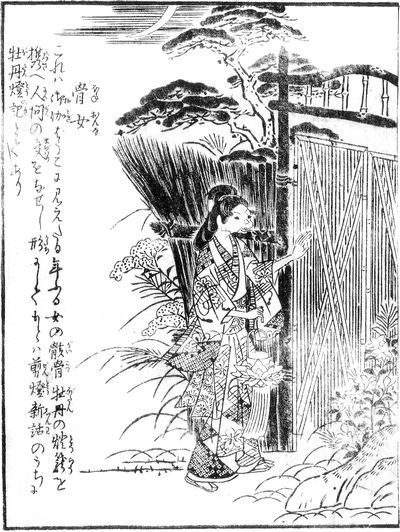
Image associated with the exact linked encyclopedia article; consult credited file description for its interpretation.
Overview
Vetāla are represented here through Burton’s 1870 English adaptation Vikram and the Vampire and Ernest Griset’s accompanying illustration. The title page explicitly calls the work an adaptation. Its Baital is therefore a source-specific literary presentation, not a universal replacement for Sanskrit corpse-spirit traditions. Burton’s English word vampire should likewise not automatically import every convention of European blood-drinking fiction.
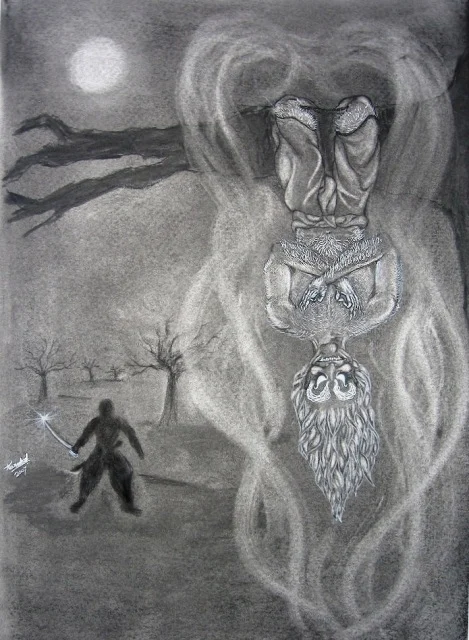
In the framing episode, printed pages46–52, Vikram reaches a burning ground and finds a body suspended upside down from a tree. The text describes unblinking eyes, brown hair and face, a thin ribbed body, icy clammy skin, and a small tail. It compares the grip on the branch with a flying fox. Vikram identifies it as a Baital and reasons that the hostile devotee has altered the appearance of the body he was sent to fetch.
The creature resists through escape rather than a conventional duel. Each time the king brings it down and questions it, it slips from his grasp, laughs, and returns to the tree. Sword blows fail to resolve the problem. Eventually the Baital allows itself to be carried, but establishes conditions: it will tell stories and ask questions, returning to its perch whenever Vikram answers. Silence will permit the king to complete the journey.
The creature consequently becomes an articulate challenger of the king’s judgment and pride. Its tales interrupt the physical task and repeatedly reset it. In the conclusion, beginning printed page307, the king’s silence changes the relationship: the Baital acknowledges the successful restraint and continues speaking about the danger awaiting him. This conclusion belongs to Burton’s selected framing and should not be projected unchanged into all other versions.
Griset’s inspected image beside page48 gives the creature a conspicuously winged, inverted body above the king and his companion. The picture is a primary visual witness for this illustrated edition, while the text supplies a different level of physical and narrative detail. Read together they document an influential adaptation’s appearance, escape, speech, and questioning mechanism. They do not establish a historical mortuary event or a single fixed anatomy shared by every vetāla.
Origins & earliest records
The selected work or object is a witness to this representation. Its date is not asserted to be the beginning of the tradition; textual layers and regional variants need separate review.
Records & interpretation
The linked source and contextual bibliography support the stated motifs. Material objects document iconography; narratives document imagined encounters. Neither alone is zoological confirmation.
In the literature
“Its body was thin and ribbed like a skeleton or a bamboo framework,”
Introduction; paragraph beginning “Its eyes, which were wide open, were of a greenish-brown, and…” · Richard Francis Burton (English literary adaptation)
Burton’s Baital has a skeletal, ribbed body.
“its skin it felt icy cold and clammy as might a snake.”
Introduction; paragraph beginning “Its eyes, which were wide open, were of a greenish-brown, and…” · Richard Francis Burton (English literary adaptation)
The king experiences the creature’s skin as cold and clammy.
“a ragged little tail much resembling a goat’s.”
Introduction; paragraph beginning “Its eyes, which were wide open, were of a greenish-brown, and…” · Richard Francis Burton (English literary adaptation)
The adaptation gives the Baital a goat-like tail, a version-specific feature.
“rose in the air with its legs uppermost,”
Introduction; paragraph beginning “Scarcely, however, had the words passed the royal lips, when the…” · Richard Francis Burton (English literary adaptation)
The Baital escapes upward and hangs by its toes again.
“even the gods cannot resist a thoroughly obstinate man.”
Introduction; paragraph beginning “However, it was not necessary. On the seventh time of falling,…” · Richard Francis Burton (English literary adaptation)
The Baital yields on the seventh attempt and comments on the king’s persistence.
“I leave thee and return to my favourite place and position in the siras-tree,”
Introduction; paragraph beginning ““Whenever thou answerest me, either compelled by Fate or entrapped by…” · Richard Francis Burton (English literary adaptation)
Under the narrative covenant, an answer from Vikram lets the Baital return to its tree.
Selected bibliography
Documented works and useful reading. This is not a list of every appearance.
- 01
Vikram and the Vampire
Selected reading or object; bibliography is not exhaustive. Secondary links identify primary passages where a direct primary edition was not verified.
- 02
Burton 1870, Introduction pp46–52; Conclusion pp307ff; Griset illustration besidep48
Exact episode/object directly read; no universal anatomy inferred.
Family & connections
A source-supported family tree or inspiration record has not yet been compiled for this profile. Related reading below indicates a connection in subject matter, not a proven lineage or creative influence.
Primary records and illustrations
Vikram and the Vampire, Richard Francis Burton; illustrations Ernest Griset
Historical English adaptation, 1870; Introduction framing episode. Text pages 46–52; illustration caption adjacent to page 48
Exact narrative and caption read; actual Griset illustration downloaded and visually inspected. Its bat-like winged form is evidence for this adaptation, not a universal Sanskrit vetala anatomy.
Burton’s framing episode sends Vikram to retrieve a body suspended upside down from a tree in a burning ground. The body repeatedly escapes his grasp and returns to a branch. Eventually it accepts being carried, but sets conditions for the journey: it will entertain the king with tales and questions, returning to its tree whenever he answers. The accompanying Griset illustration makes the captive a winged, inverted creature above the king and his companion. That image is a conspicuous reinterpretation within this illustrated English adaptation. The text and picture should therefore be cited together for Burton’s Baital, while retaining the distinction between this nineteenth-century presentation and the broader corpse-inhabiting spirit tradition.
Located primary passages
Specific passages supporting details in this entry, grouped by their published witness.
Primary source witness
Historical English adaptation; author’s preface dated 1870; hosted later edited text.
- Burton’s Baital has a skeletal, ribbed body.
Introduction; paragraph beginning “Its eyes, which were wide open, were of a greenish-brown, and…”
- The king experiences the creature’s skin as cold and clammy.
Introduction; paragraph beginning “Its eyes, which were wide open, were of a greenish-brown, and…”
- The adaptation gives the Baital a goat-like tail, a version-specific feature.
Introduction; paragraph beginning “Its eyes, which were wide open, were of a greenish-brown, and…”
- The Baital escapes upward and hangs by its toes again.
- The Baital yields on the seventh attempt and comments on the king’s persistence.
Introduction; paragraph beginning “However, it was not necessary. On the seventh time of falling,…”
- Under the narrative covenant, an answer from Vikram lets the Baital return to its tree.
- The Baital explicitly characterizes itself as talkative.
- The king interprets the Baital’s body as the transformed corpse of an oilman’s son; his explanation is an inference within the tale.
Introduction; paragraph beginning “Judging from these signs the brave king at once determined the…”
Historical translation or collector’s published version; not zoological evidence, a universal account or an assertion about all living communities.
Encyclopedia background
An additional attributed reference, separate from the editorial profile above.
Read the open encyclopedia overview
A vetala (Sanskrit: वेताल, romanized: vetāla) is a class of beings in Hindu mythology. They are usually defined as a knowledgeable (fortune telling) paranormal entity said to be dwelling at charnel grounds. Reanimated corpses are used as vehicles by these spirits for movement. A vetala may possess and leave a dead body at will.
Text from Wikipedia contributors, “Vetala”. CC BY-SA 4.0. Extracted introduction; formatting changed. Retrieved 5 October 2026. The source article may have changed since retrieval.
References
Sources supporting this profile. Linked pages have their own scope and editorial standards.
- Historical adaptation of narrative traditionVikram and the VampireResearch access: 2026-10-05
- Secondary referenceVetāla — contextual bibliographyResearch access: 2026-10-05
- Primary narrative in historical translationVikram and the Vampire, Richard Francis Burton; illustrations Ernest Griset — exact record or passageResearch access: 2026-10-05
- Primary historical English adaptationBurton, Vikram and the Vampire — retrieval covenant, Introduction pp. 47–53; adaptation statement, Preface p. xixResearch access: 2026-10-05
Image credits
Reference illustrationVetāla
Image associated with the exact linked encyclopedia article; consult credited file description for its interpretation.