A sourced illustration has not yet been added. This gap is included in the coverage record.
Overview
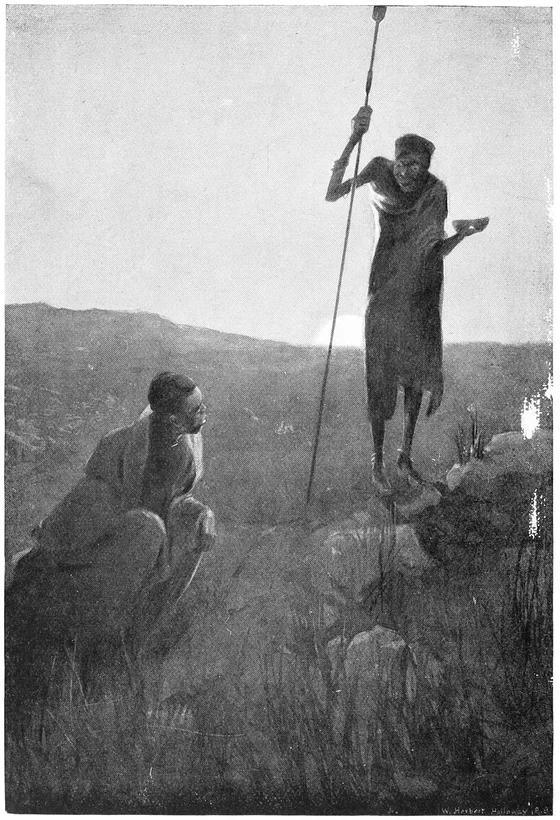
The valley has great rock pillars, red cliffs and an uneasy reputation: hunters disappear and answering spirits seem to reply even to whispers at its gate. When Semai-mai’s army has failed, a beautiful woman appears before him and Sobuso’s pursuing people. Her commanding glance brings them after her. She binds the defeated king immovably upon a boulder and shows the visitors the preserved bodies of his soldiers who refused cannibal service.
She brews a potion and sprinkles it on torches. Sobuso, his generals and she herself carry the burning torches over the rock ledges; each dead warrior rises when their magical fire approaches. The restored men tell their story and accept Sobuso’s protection. Then she loosens Semai-mai’s restraint only to compel him down for judgment. She makes him a brown dog, grants a sharp nail and limited powers, and states that fidelity may restore him but continued cruelty will bring a greater curse.
When the giant dog later commits further atrocities, a strange old envoy brings Sobuso weapons and medicines expressly from this valley woman. Those gifts enable the release of its captives and reduction to a powerless ordinary dog. The visibly beautiful judge and the later toothless, two-toed messenger are different described appearances in distinct roles; the story does not explicitly identify the envoy as her transformed body.
Origins & earliest records
Sarah F. Bourhill and Beatrice L. Drake collected and arranged the English tale for children. No individual contributor is named for the episode. The chapter’s community label is retained separately from the colonial generalizations of the preface.
Records & interpretation
Complete XIV–XV. The Story of Semai-mai, parts I and II, printed pp. 160–186, read through the final resolution.
Selected bibliography
Documented works and useful reading. This is not a list of every appearance.
- 01
Fairy Tales from South Africa
XIV–XV. The Story of Semai-mai, parts I and II, pp. 160–186; complete English arrangement, unnamed individual contributor.
Family & connections
A source-supported family tree or inspiration record has not yet been compiled for this profile. Related reading below indicates a connection in subject matter, not a proven lineage or creative influence.
Located primary passages
Specific passages supporting details in this entry, grouped by their published witness.
Primary source witness
Sarah F. Bourhill (Mrs. E. J. Bourhill) and Beatrice L. Drake (Mrs. J. B. Drake), Fairy Tales from South Africa, London: Macmillan, 1908; selected original title page and complete headed tales in PG75833. Arranged for children; introduction pp.v–xi attributes principally Swazi, also Zulu and border-region contributions, with Shining Princess attributed to Mapoch. Individual narrators for these selected tales unnamed. Historical colonial framing is not current community consensus.
- The valley is initially described through feared local reports, but the fairy later appears to Sobuso and Semai-mai. She binds the latter and conducts a torch-assisted restoration of his executed warriors. This explicitly restores those victims, not the slain cannibal followers from the intervening battle.
- She transforms Semai-mai into a dog, gives him a special nail and magic, and states that faithful service might restore him while continued cruelty will worsen the curse. The later tale is the test of that stated condition rather than an unconditional promise of redemption.
- A distinct old-woman envoy says her weapons and vessels come from the valley fairy. Sobuso uses them to release Semai-mai’s victims and neutralise him. The source does not explicitly say the valley fairy herself takes the two-toed envoy’s form.
Selected historical arrangement, not unmediated original-language oral testimony. Individual contributor not named; no separate manuscript inspected. Original facsimile not visually inspected in this batch.
References
Sources supporting this profile. Linked pages have their own scope and editorial standards.
- Collected historical tale in an English literary retellingBourhill and Drake — XIV–XV. The Story of Semai-mai, parts I and IIResearch access: 2026-10-05
Image credits
A sourced illustration has not yet been added. This gap is included in the coverage record.