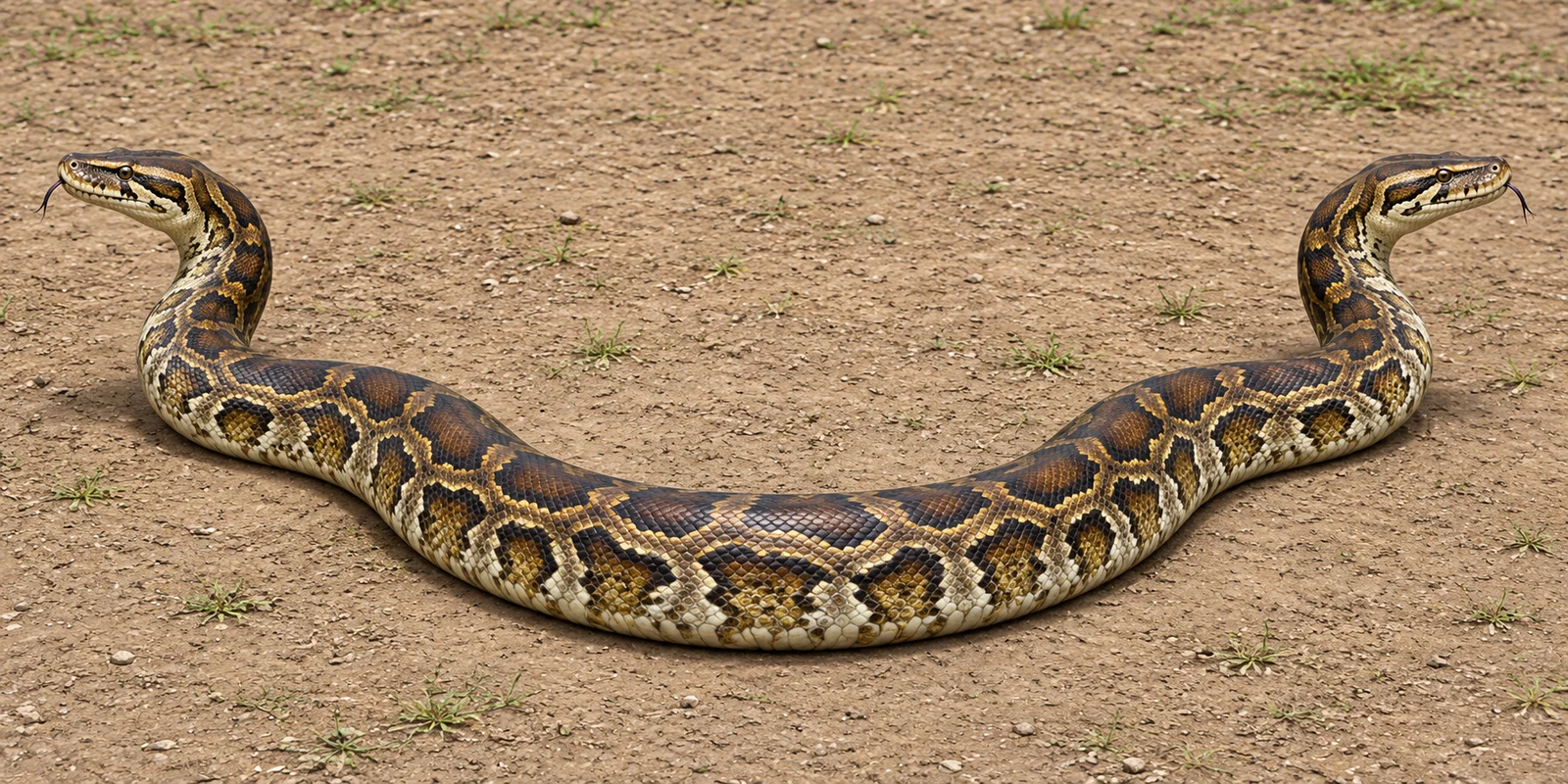
AI-generated two-headed-python interpretation.
Head placement interprets the narrative; species, colour, markings and setting imagined.
Overview
Rattray’s seventeenth Chinyanja tale introduces a very long python with two heads. While moving, the animal sings a repeated refrain; a voice behind it repeats the same song. It prepares a hemp pipe and coughs, and the sound is again answered from behind. Python treats this repetition as deliberate imitation by someone else. The narrative gives the two heads one body, rather than introducing a second independent snake.
Ordered to find and kill the imitator, the attendants follow their master’s body until they reach its end. They recognize the danger: the apparent rival shares Python’s own body, so killing it could kill their master. They return and explain this connection. Python nevertheless insists on the killing after another bout of coughing, refusing the warning that the two apparent opponents are physically one.
The attendants obey and cut the second head’s throat. Returning, they find Python already decaying. Its cough becomes incomplete and its voice weakens before it dies. The death follows the injury to the other head; the tale does not give either head a separate afterlife or describe a later recovery. The creature’s inability to recognize its own bodily connection drives the catastrophe.
The English version supplies a qualitative length and a shared-body condition, but no measurement, colour, species beyond its python label, or anatomical diagram. The second voice is behind the speaker and the attendants trace the body to its end. An illustration may interpret that arrangement, but should not present invented scale patterns or precise head placement as an observed zoological specimen.
Origins & earliest records
Rattray attributes the collection to Chinyanja-speaking people of Central Angoniland; this tale has no named individual storyteller or independently dated first telling.
Records & interpretation
Complete Chinyanja tale XVII, its complete English translation on pp. 132–133, chapter notes and both prefaces. Claims follow the published English translation; no independent translation claimed.
Selected bibliography
Documented works and useful reading. This is not a list of every appearance.
- 01
Some Folk-Lore Stories and Songs in Chinyanja
XVII, Nsatu ya Mitu Iwiri / The Two-Headed Python, pp. 132–133; notes to XVII
Family & connections
A source-supported family tree or inspiration record has not yet been compiled for this profile. Related reading below indicates a connection in subject matter, not a proven lineage or creative influence.
References
Sources supporting this profile. Linked pages have their own scope and editorial standards.
- Original historical bilingual narrative and English translationRattray 1907 — XVII, Nsatu ya Mitu Iwiri / The Two-Headed Python, pp. 132–133; notes to XVIIResearch access: 2026-10-18
- Original collector and prefatory contextHetherwick and Rattray — complete prefacesResearch access: 2026-10-18
Image credits
AI-generatedAI-generated two-headed-python interpretation.
Head placement interprets the narrative; species, colour, markings and setting imagined.