Taowu
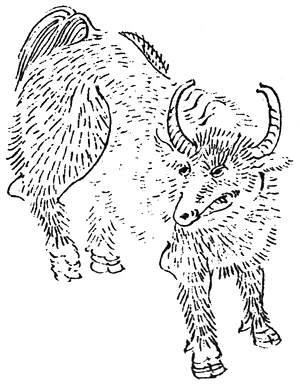
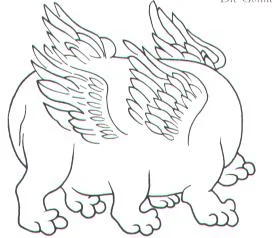
Image associated with the exact linked encyclopedia article; consult credited file description for its interpretation.
Overview
Taowu is important as both a moral name and a bodily monster, but the directly read sources present those roles differently. The Zuo zhuan passage under Duke Wen’s eighteenth year discusses an unworthy descendant of Zhuanxu. He cannot be taught, does not understand instruction, behaves stubbornly when warned, and disrupts the order associated with proper conduct. The people call him Taowu. This account supplies character and lineage rather than claws, fur, or a monstrous tail.
The same passage places Taowu beside Hundun and Qiongqi, then adds the greedy descendant called Taotie. Their harmful qualities persist through their lineages. Shun sends the four evil lineages to the outer regions. Within the historical work’s speech, the comparison supports a judgment about removing a dangerous political figure; it is not narrated as a hunter defeating four animal species.
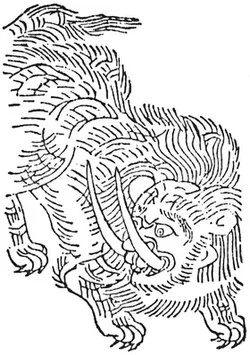
The Western Wilderness section of the Shenyi jing gives Taowu an explicitly composite body. It resembles a tiger, with doglike hair, a human face, tiger feet, piglike mouth and teeth, and a very long tail. It disturbs the wilderness and receives alternative names expressing arrogance and resistance to instruction. The passage itself invokes the earlier tradition concerning Zhuanxu’s unworthy descendant, making the moral link explicit while supplying a different descriptive register.
That received text’s traditional author attribution is disputed in its hosted introductory discussion. Consequently, the monster account is cited as a transmitted witness, not securely assigned to Dongfang Shuo or a precise Han date. The measurements remain literary features of the passage and do not establish the scale of an observed animal.
The two witnesses give a concrete reason to preserve variants. The lineage account explains the moral meaning attached to the name, while the wilderness account makes that name visible in an alarming hybrid form. An illustration based on the latter would not prove that the former described an animal. The profile therefore keeps stubborn character, ancestry, expulsion, composite appearance, and source context in their proper textual places.
Origins & earliest records
The selected work or object is a witness to this representation. Its date is not asserted to be the beginning of the tradition; textual layers and regional variants need separate review.
Records & interpretation
The linked source and contextual bibliography support the stated motifs. Material objects document iconography; narratives document imagined encounters. Neither alone is zoological confirmation.
Selected bibliography
Documented works and useful reading. This is not a list of every appearance.
- 01
Book of Gods and Strange Things; classical Four Perils accounts
Selected reading or object; bibliography is not exhaustive. Secondary links identify primary passages where a direct primary edition was not verified.
- 02
Zuo zhuan, Duke Wen year18: Zhuanxu’s unworthy descendant
Directly read named passage; commentary distinguished.
- 03
Shenyi jing, Western Wilderness: Taowu
Directly read named passage; commentary distinguished.
Family & connections
A source-supported family tree or inspiration record has not yet been compiled for this profile. Related reading below indicates a connection in subject matter, not a proven lineage or creative influence.
Primary records and illustrations
Chunqiu Zuo Zhuan — Duke Wen, year 18
Received primary narrative; 文公十八年傳. Paragraph beginning 昔帝鴻氏有不才子
Exact Chinese primary passage read in transcription. No manuscript scan or historical illustration verified. This narrative calls the figures or lineages morally deficient and supplies no tiger anatomy.
The Duke Wen passage places Taowu in a comparison between worthy ancestral groups and persistently harmful ones. A deficient descendant associated with Zhuanxu cannot be taught, rejects instruction and acts arrogantly against proper order; the people call him Taowu. The surrounding narrative groups that name with Hundun, Qiongqi and Taotie, then recounts Shun’s expulsion of the four harmful lineages to the outer regions. Its immediate concern is the rejection of bad conduct and the selection of capable people. It does not describe tiger claws, a human face or enormous teeth. Those bodily features belong to other textual witnesses and should not be attributed to this particular passage.
References
Sources supporting this profile. Linked pages have their own scope and editorial standards.
- Secondary reference identifying primary passagesBook of Gods and Strange Things; classical Four Perils accountsResearch access: 2026-10-05
- Primary-text transcriptionChunqiu Zuo Zhuan — Duke Wen, year 18 — exact passageResearch access: 2026-10-05
- Primary-text transcriptionShenyi jing, Western Wilderness: TaowuResearch access: 2026-10-05
Image credits
Reference illustrationTaowu
Image associated with the exact linked encyclopedia article; consult credited file description for its interpretation.