Hundun
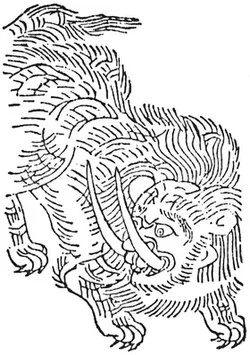
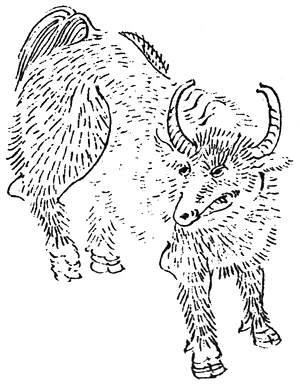
Image associated with the exact linked encyclopedia article; consult credited file description for its interpretation.
Overview
Hundun appears as a personified host in the closing episode of the seventh Inner Chapter of the Zhuangzi. The rulers of the southern and northern regions, rendered Swift and Sudden in Robert Eno’s university-hosted translation, meet within the domain of the central ruler Hundun. He treats them generously. Their response turns an ordinary idea of repayment into an intervention in the host’s body.
The visitors reason that people possess seven openings through which to see, hear, eat, and breathe, while Hundun has none. They resolve to give him the missing openings, making one each day. On the seventh day he dies. The episode does not describe wings, legs, fur, or a predatory appetite. Its action concerns hospitality and the destructive imposition of a familiar bodily pattern on a being that had existed without it.
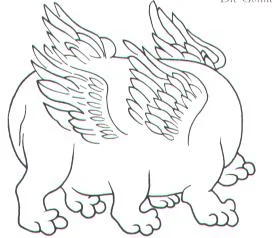
The Shanhaijing’s Western Mountains account supplies a useful comparison, but names its being Dijiang rather than simply Hundun. At Tian Mountain it describes a spirit shaped like a yellow sack, red as cinnabar fire, with six feet and four wings. It has no face or eyes and understands singing and dancing. The displayed commentary explicitly compares this description with the Zhuangzi’s central ruler and treats the philosophical episode as a literary use of the image.
That commentary is evidence for an interpretive connection, not permission to transplant all of Dijiang’s limbs into the Zhuangzi story. The six feet and four wings belong to the separately named mountain spirit in the cited passage. Hundun’s lack of apertures belongs to the narrative mechanism of the philosophical fable. A picture showing a winged sack may therefore illustrate a comparative tradition while failing to depict the host’s specified anatomy.
This profile keeps the two witnesses legible and avoids turning their comparison into a single fixed creature species. Eno’s explanation of the episode is a scholarly interpretation supplied beside his translation, while the events of hospitality, drilling, and death are the primary narrative. The text does not establish a medical account, an evolutionary stage, or a verified origin of the universe. Its force comes from the mismatch between the visitors’ intended benefit and the consequence of their assumptions.
Origins & earliest records
The selected work or object is a witness to this representation. Its date is not asserted to be the beginning of the tradition; textual layers and regional variants need separate review.
Records & interpretation
The linked source and contextual bibliography support the stated motifs. Material objects document iconography; narratives document imagined encounters. Neither alone is zoological confirmation.
Selected bibliography
Documented works and useful reading. This is not a list of every appearance.
- 01
Zhuangzi: Responses for Emperors and Kings
Selected reading or object; bibliography is not exhaustive. Secondary links identify primary passages where a direct primary edition was not verified.
- 02
Shanhaijing, Western Mountains: Tian Mountain Dijiang and bracketed commentary
Exact named passage directly read; bracketed commentary distinguished from base text.
Family & connections
A source-supported family tree or inspiration record has not yet been compiled for this profile. Related reading below indicates a connection in subject matter, not a proven lineage or creative influence.
Primary records and illustrations
Zhuangzi: The Inner Chapters, translated by Robert Eno
Chapter 7, section 7.7; version 1.1, 2019. PDF page 55 of 55
University-hosted scholarly translation of the primary text. Complete relevant PDF page rendered and visually inspected. Commentary is distinguished from the translated passage; this is not a creature illustration.
In the closing story of the Inner Chapters, Hundun is the ruler of the central region and a generous host to two rulers associated with the southern and northern seas. His guests wish to repay his kindness by giving him the openings that humans use for perception, eating and breathing. They make one opening each day; after the seventh, their host dies. The event reverses their benevolent intention. This passage depicts a being without those openings but does not prescribe wings, legs or a particular animal silhouette. Eno’s commentary treats the story as philosophical literary invention. A visual profile should therefore distinguish this textual Hundun from other bodies later associated with chaos.
Encyclopedia background
An additional attributed reference, separate from the editorial profile above.
Read the open encyclopedia overview
Hundun (Chinese: 混沌; pinyin: Hùndùn; Wade–Giles: Hun4-tun4; lit. 'muddled confusion') is both a "legendary faceless being" in Chinese mythology and the "primordial and central chaos" in Chinese cosmogony, comparable with the world egg.
Text from Wikipedia contributors, “Hundun”. CC BY-SA 4.0. Extracted introduction; formatting changed. Retrieved 5 October 2026. The source article may have changed since retrieval.
References
Sources supporting this profile. Linked pages have their own scope and editorial standards.
- Secondary reference identifying primary passagesZhuangzi: Responses for Emperors and KingsResearch access: 2026-10-05
- Primary text in scholarly translationZhuangzi: The Inner Chapters, translated by Robert Eno — exact passageResearch access: 2026-10-05
- Primary-text transcriptionShanhaijing, Western Mountains: Tian Mountain Dijiang and bracketed commentaryResearch access: 2026-10-05
Image credits
Reference illustrationHundun
Image associated with the exact linked encyclopedia article; consult credited file description for its interpretation.