A sourced illustration has not yet been added. This gap is included in the coverage record.
Overview
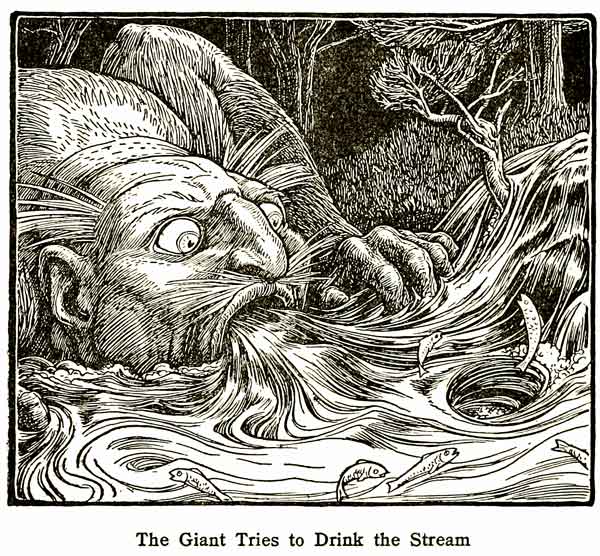
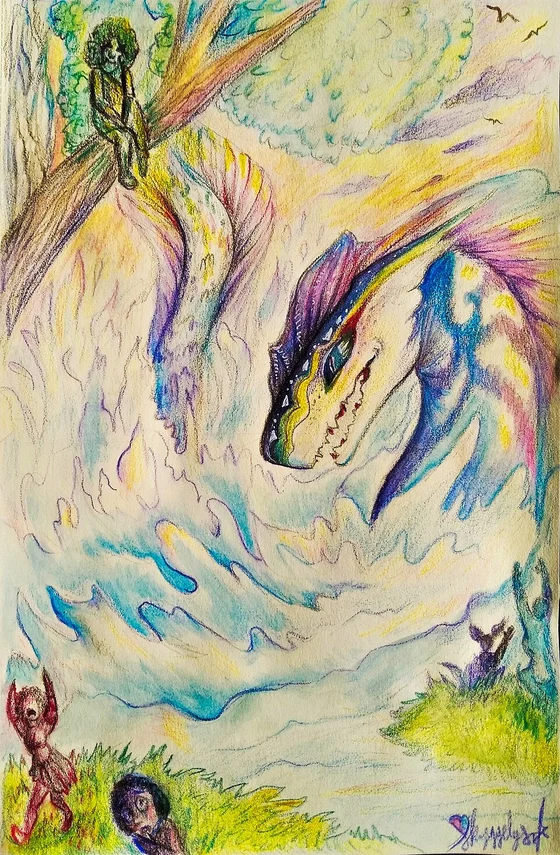
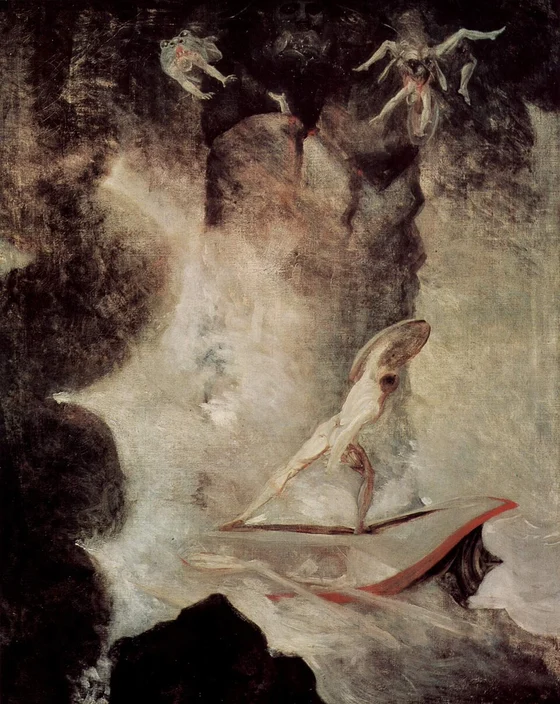
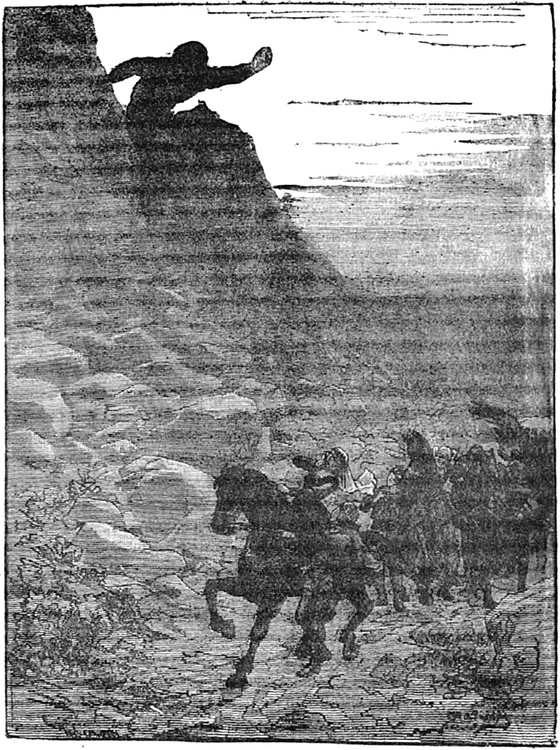
When Mastermaid and the prince sail away, their pursuing giant calls a helper translated as his stream-sucker. Three gulps lower the sea enough for him to see their ship. Mastermaid counters with a lump of salt that grows into a mountain across the water. Drinking more cannot remove this solid obstruction, so the giant summons a second specialist, the hill-borer.
The hill-borer opens a passage through the mountain, allowing the stream-sucker another approach. Mastermaid then orders water from a carried flask thrown overboard, and the sea fills again before another gulp can be taken. The fugitives reach shore safely. The story supplies functions and English designations but no detailed bodies, ancestry or species. Their episode shows a contest of complementary abilities rather than an inventory of interchangeable trolls.
Origins & earliest records
These two helpers are directly designated in Dasent's English Mastermaid tale, part of an Asbjørnsen and Moe collection first published in translation in 1859. The inspected electronic text includes a second-edition notice. Their translated functional labels justify a paired episode profile, but do not establish independent oral names, complete anatomies or a separate date of origin.
Records & interpretation
The primary text distinguishes the sea-lowering helper from the mountain-piercing helper and describes why one alone cannot overcome the obstacle. The three gulps and restored water support their specific narrative functions. This is literary evidence for pursuit assistants, not hydrological or zoological evidence; no precise body dimensions, natural species or means of boring is supplied.
In the literature
“took one, two, three gulps”
Tale XI, The Mastermaid; Stream-sucker responds to the Giant · George Webbe Dasent
The helper lowers the sea through three enormous drinks.
Selected bibliography
Documented works and useful reading. This is not a list of every appearance.
- 01
The Mastermaid (Popular Tales from the Norse)
Inspected named tale XI. Electronic witness includes a notice to the second edition; its exact print date is unresolved.
- 02
Popular Tales from the Norse — The Mastermaid
Dasent historical English translation of Asbjørnsen and Moe; hosted PG8933 includes a Second Edition notice, but its exact selected print edition date and printed pages are unresolved. 1859 is the first English collection context only. Exact observed chapter anchors and episode locators used.
Family & connections
A source-supported family tree or inspiration record has not yet been compiled for this profile. Related reading below indicates a connection in subject matter, not a proven lineage or creative influence.
Located primary passages
Specific passages supporting details in this entry, grouped by their published witness.
Popular Tales from the Norse — The Mastermaid
Dasent historical English translation of Asbjørnsen and Moe; hosted PG8933 includes a Second Edition notice, but its exact selected print edition date and printed pages are unresolved. 1859 is the first English collection context only. Exact observed chapter anchors and episode locators used.
- The Giant summons Stream-sucker, whose three gulps lower the sea enough to expose the escaping boat. A cast lump of salt then becomes a mountain across the sea and blocks further approach.
- Hill-borer pierces the salt mountain so Stream-sucker can pass and drink again. Before another gulp, Mastermaid restores the sea with drops from her flask, and the fugitives reach safety.
Tale XI, The Mastermaid; Hill-borer’s tunnel and flask restores the obstacle
Complete pursuit sequence read in the context of the full named tale. Exact selected print date, page numbers and earliest attestations are not inferred.
References
Sources supporting this profile. Linked pages have their own scope and editorial standards.
- Primary textPopular Tales from the Norse — The Mastermaid (tale XI)Research access: 2026-10-05
Image credits
A sourced illustration has not yet been added. This gap is included in the coverage record.