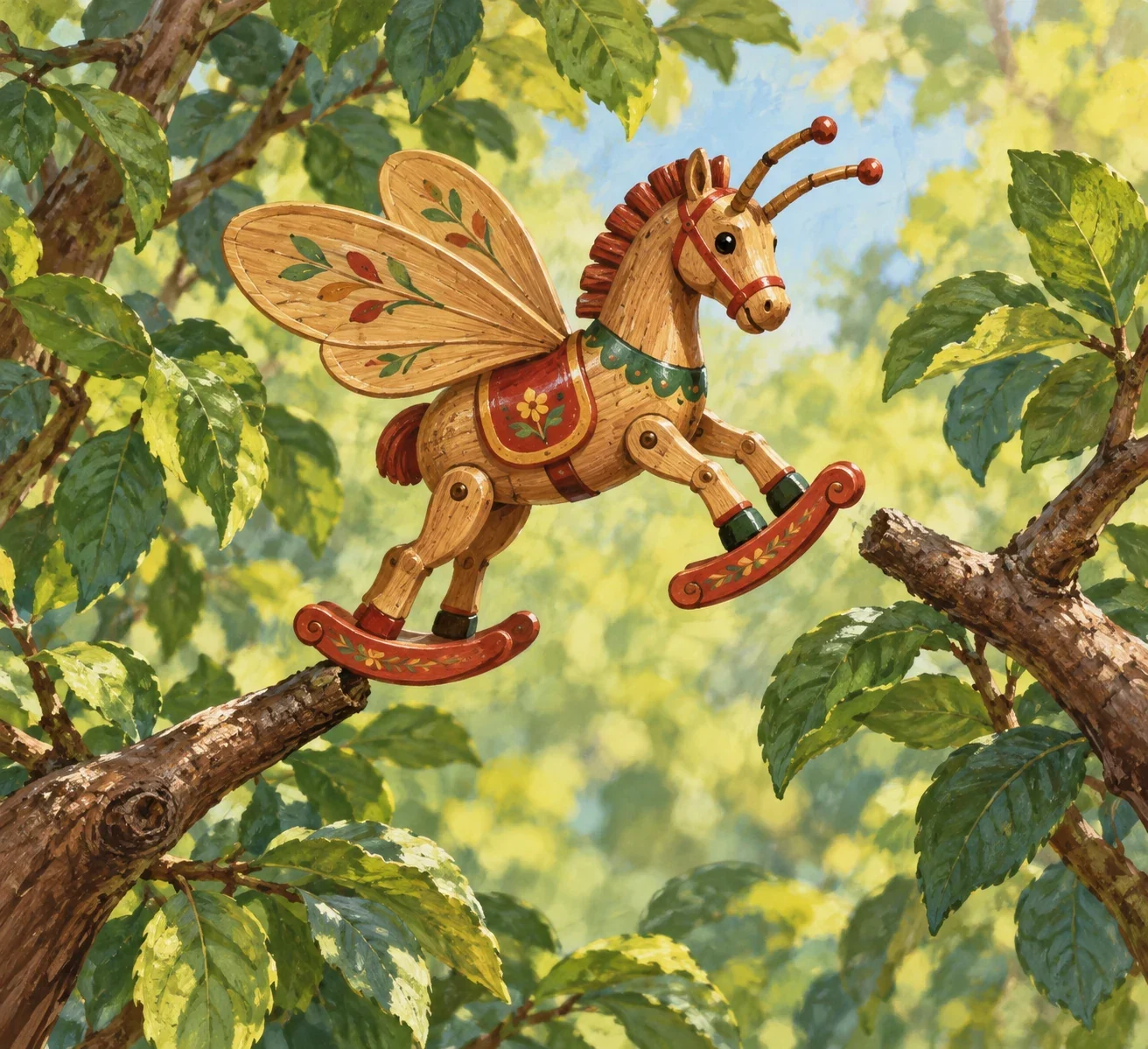
Unofficial AI interpretation of Carroll’s entirely wooden Rocking-horse-fly between branches. Toy anatomy, carved wings, rockers, paint colours, decorative motifs, pose and woodland are imagined; the book specifies wood, swinging movement and sap-and-sawdust diet.
Unofficial AI interpretation of Carroll’s entirely wooden Rocking-horse-fly between branches. Toy anatomy, carved wings, rockers, paint colours, decorative motifs, pose and woodland are imagined; the book specifies wood, swinging movement and sap-and-sawdust diet. Full-frame display derivative; no upscaling.
Overview
The Rocking-horse-fly is the first Looking-Glass insect introduced when Alice lists familiar insects for the Gnat. Her ordinary horse-fly prompts it to point halfway up a bush, where the unfamiliar creature can be seen. The Gnat says that it is made entirely of wood and travels by swinging itself from branch to branch. Alice looks at it with interest and judges that it must have been freshly repainted because it appears bright and sticky. The fresh paint is her inference from its appearance, not a narrated account of someone painting the creature.
Its stated food is sap and sawdust. Both suit an organism whose material is wood, but the book does not explain digestion, growth, reproduction or manufacture. Neither does the short description fix the number or shape of its wings, legs, joints or rockers. A modern illustration can interpret the rocking-horse name as a toy-like design, but those details must not be presented as additional anatomical facts established by Carroll. The secure features are its wooden composition, its place in the bush and its swinging method of movement.
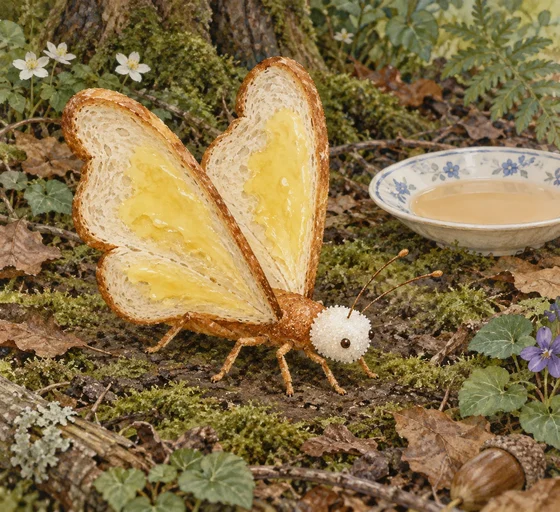
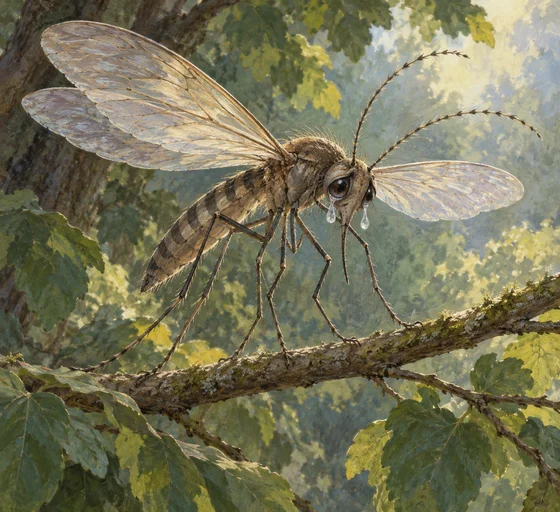
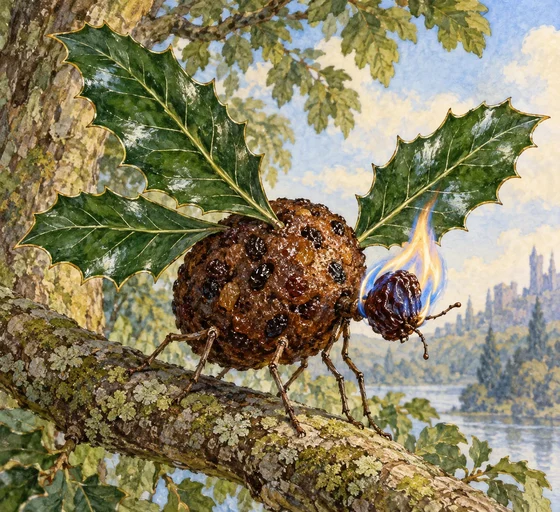
The Gnat’s introduction follows a dispute about the purpose of insect names. Alice says that names are useful to the people who assign them, even if insects never answer. Her list then produces creatures whose altered names are connected to their bodies and habits: a horse-fly becomes a wooden Rocking-horse-fly, a dragonfly becomes a food-and-flame Snap-dragon-fly, and a butterfly becomes the Bread-and-butter-fly. This relationship is visible in the primary text. It supports a reading of the creature as a materialised verbal play, without establishing a specific external toy, illustration or biological species as Carroll’s design source.
Alice asks about its diet and observes it, but the insect itself is not given dialogue or a separate personal identity. It is not described attacking her or carrying her through the wood. Its brief appearance is a demonstration within the Gnat’s larger conversation, after the strange railway journey and before Alice enters the wood where names are lost. Keeping that limited narrative role preserves the difference between an evocative literary invention and a fully documented fantasy species.
First appearances & development
Introduced by Lewis Carroll in Through the Looking-Glass (1871), chapter III, “Looking-Glass Insects.” The passage explicitly responds to Alice’s horse-fly with a Rocking-horse-fly. The toy-like name and all-wood material are primary evidence, while a precise toy design or historical inspiration is not supplied.
Canon & continuity
The complete primary insect conversation was read and retained. The Gnat’s material, locomotion and diet statements are distinguished from Alice’s fresh-paint inference and from newly imagined illustration details. Gutenberg’s retained catalogue marks the original book public domain in the USA; historical illustrations are not reused.
Selected bibliography
Documented works and useful reading. This is not a list of every appearance.
- 01
Through the Looking-Glass, and What Alice Found There, chapter III, Looking-Glass Insects
Selected primary passage: Alice’s complete conversation with the Gnat about names and Looking-Glass insects. The catalogue supplies the publication year and public-domain witness.
Family & connections
A source-supported family tree or inspiration record has not yet been compiled for this profile. Related reading below indicates a connection in subject matter, not a proven lineage or creative influence.
References
Sources supporting this profile. Linked pages have their own scope and editorial standards.
- Primary literary textThrough the Looking-Glass, chapter III — primary textResearch access: 2026-10-11
- Bibliographic and rights recordProject Gutenberg catalogue: Through the Looking-GlassResearch access: 2026-10-11
Image credits
Unofficial modern AI interpretationUnofficial AI interpretation of Carroll’s entirely wooden Rocking-horse-fly between branches. Toy anatomy, carved wings, rockers, paint colours, decorative motifs, pose and woodland are imagined; the book specifies wood, swinging movement and sap-and-sawdust diet.
Unofficial AI interpretation of Carroll’s entirely wooden Rocking-horse-fly between branches. Toy anatomy, carved wings, rockers, paint colours, decorative motifs, pose and woodland are imagined; the book specifies wood, swinging movement and sap-and-sawdust diet. Full-frame display derivative; no upscaling.