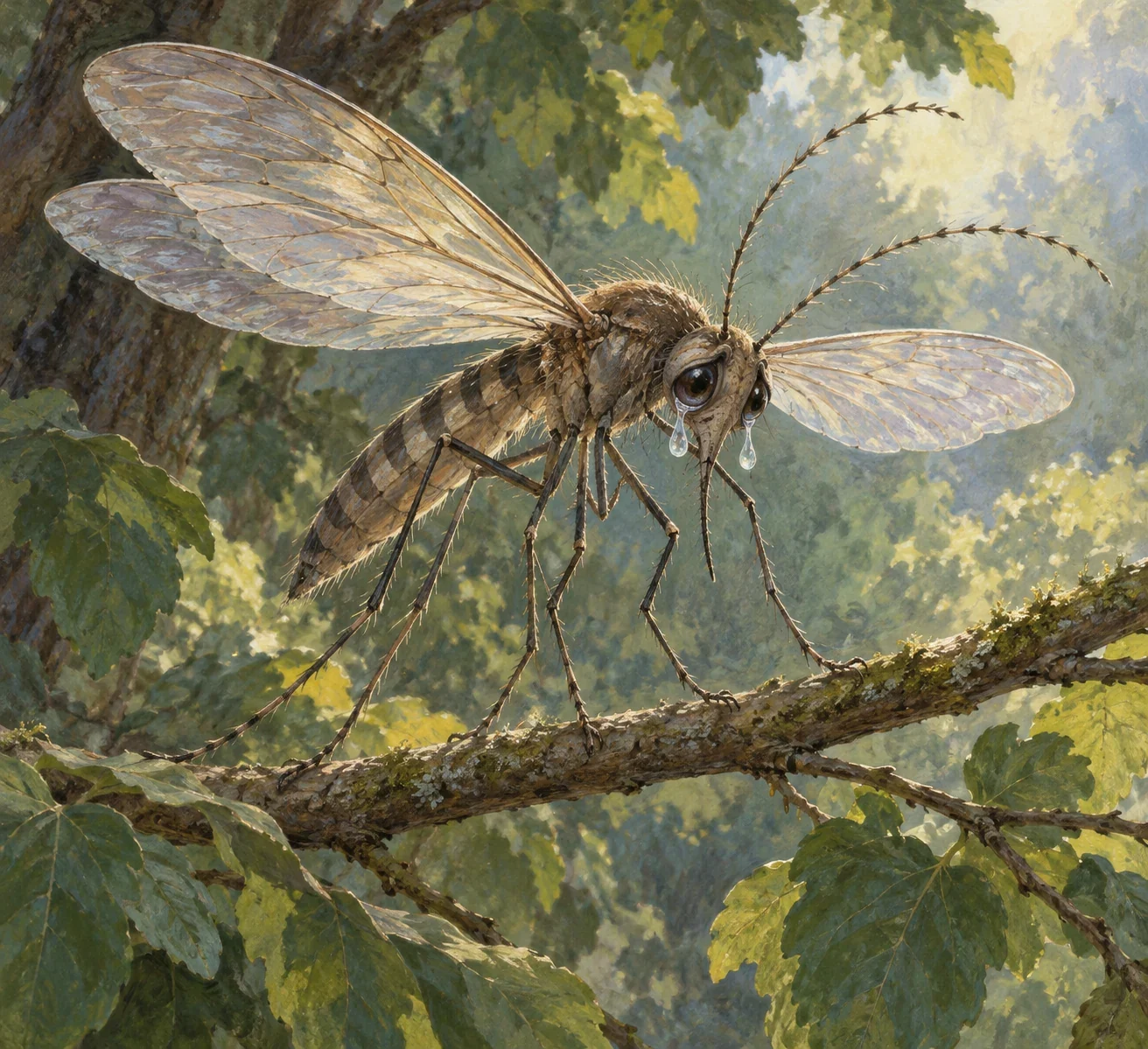
Unofficial AI interpretation of Carroll’s large speaking Gnat on a twig with two tears. Facial anatomy, four-wing arrangement, body markings, limbs, colours and woodland are imagined; this is a fantasy character, not a real-species anatomical record.
Unofficial AI interpretation of Carroll’s large speaking Gnat on a twig with two tears. Facial anatomy, four-wing arrangement, body markings, limbs, colours and woodland are imagined; this is a fantasy character, not a real-species anatomical record. Full-frame display derivative; no upscaling.
Overview
The Gnat is first heard as a tiny voice close to Alice’s ear during the strange railway journey in chapter III of Through the Looking-Glass. It suggests jokes based on what other travellers say, including a connection between a horse and a hoarse voice. Alice asks why it does not make its own jokes, and the little voice sighs unhappily. It calls her an old friend and assures her that it is an insect she will not hurt. Alice privately wonders whether it can sting but does not ask; the text consequently does not establish a stinging ability.
After the train rises to jump a brook, the setting changes abruptly. Alice finds herself under a tree, with the Gnat balancing on a twig above her head and fanning her with its wings. She judges it about the size of a chicken, surprisingly large despite the earlier small voice and sigh. Their familiarity now makes her less nervous. The passage specifies this scale comparison, wings and a twig-balancing pose, but does not provide a complete anatomical description or identify the creature with a particular real-world gnat species.
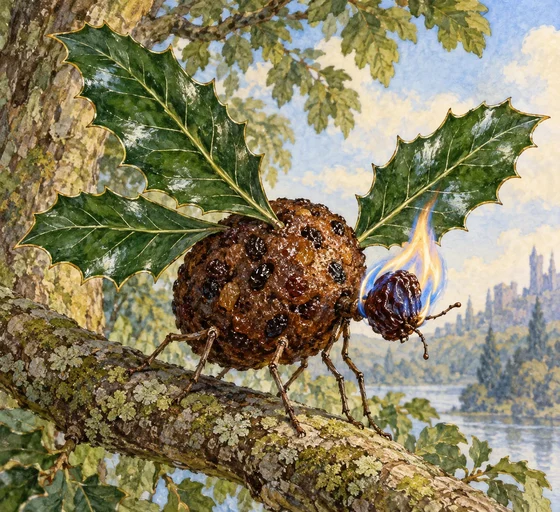
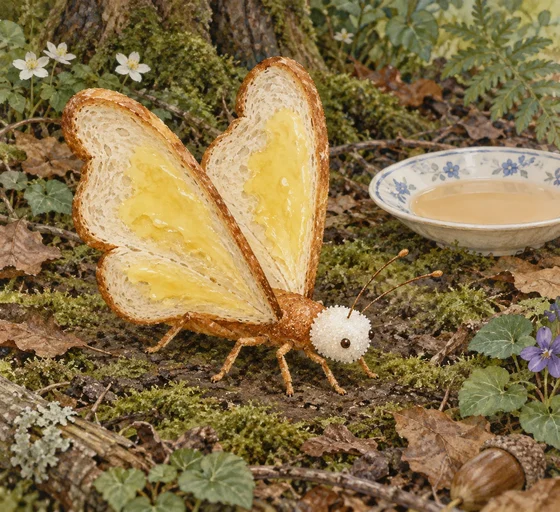
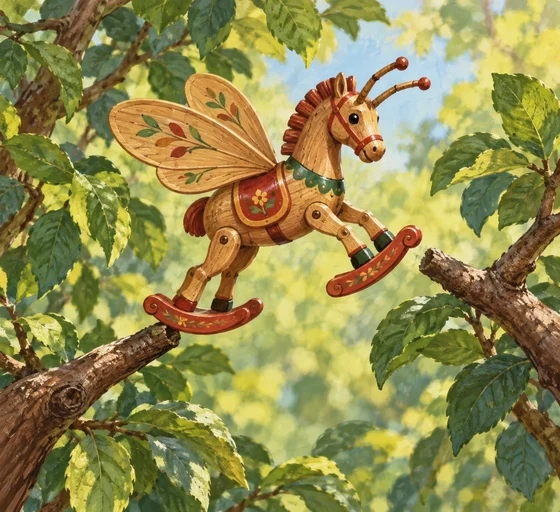
The Gnat asks which insects Alice enjoys and whether they answer to their names. She replies that insect names are useful to people even when the insects do not respond. It then points out the Rocking-horse-fly, Snap-dragon-fly and Bread-and-butter-fly, explaining their materials, food and behaviour as Alice supplies the ordinary names that prompt them. Its commentary also introduces a nearby wood where things have no names. It serves as a speaking companion and local interpreter in this episode, without being established as an infallible authority on the whole Looking-Glass world.
After the insect descriptions, the Gnat hums around Alice’s head and returns to the prospect of her losing her name. It jokes that a governess could no longer call her to lessons and then plays on being called Miss and missing lessons. Alice calls the joke bad. The Gnat sighs while two large tears roll down its cheeks; after a further melancholy sigh, it seems to have sighed itself away. Alice looks up and sees nothing on the twig, then leaves. The narrator describes this disappearance tentatively rather than explaining a demonstrated mechanism, permanent death or later return.
First appearances & development
A speaking character in Lewis Carroll’s Through the Looking-Glass (1871), chapter III, “Looking-Glass Insects.” Its puns, demonstrations of named insects and reference to the nameless wood are directly documented in the primary narrative. No unverified earlier folklore identity or creator-design influence is asserted.
Canon & continuity
The retained complete episode includes the railway voice, transition to the tree, chicken-size comparison, naming dialogue, tears and apparent disappearance. Anatomical details absent from the passage are not supplied as facts. Gutenberg’s retained catalogue marks the original literary work public domain in the USA; the new image is an unofficial interpretation.
Selected bibliography
Documented works and useful reading. This is not a list of every appearance.
- 01
Through the Looking-Glass, and What Alice Found There, chapter III, Looking-Glass Insects
Selected complete insect conversation and the Gnat’s preceding railway dialogue. The retained catalogue supplies publication year and public-domain status.
Family & connections
A source-supported family tree or inspiration record has not yet been compiled for this profile. Related reading below indicates a connection in subject matter, not a proven lineage or creative influence.
References
Sources supporting this profile. Linked pages have their own scope and editorial standards.
- Primary literary textThrough the Looking-Glass, chapter III — primary textResearch access: 2026-10-11
- Bibliographic and rights recordProject Gutenberg catalogue: Through the Looking-GlassResearch access: 2026-10-11
Image credits
Unofficial modern AI interpretationUnofficial AI interpretation of Carroll’s large speaking Gnat on a twig with two tears. Facial anatomy, four-wing arrangement, body markings, limbs, colours and woodland are imagined; this is a fantasy character, not a real-species anatomical record.
Unofficial AI interpretation of Carroll’s large speaking Gnat on a twig with two tears. Facial anatomy, four-wing arrangement, body markings, limbs, colours and woodland are imagined; this is a fantasy character, not a real-species anatomical record. Full-frame display derivative; no upscaling.