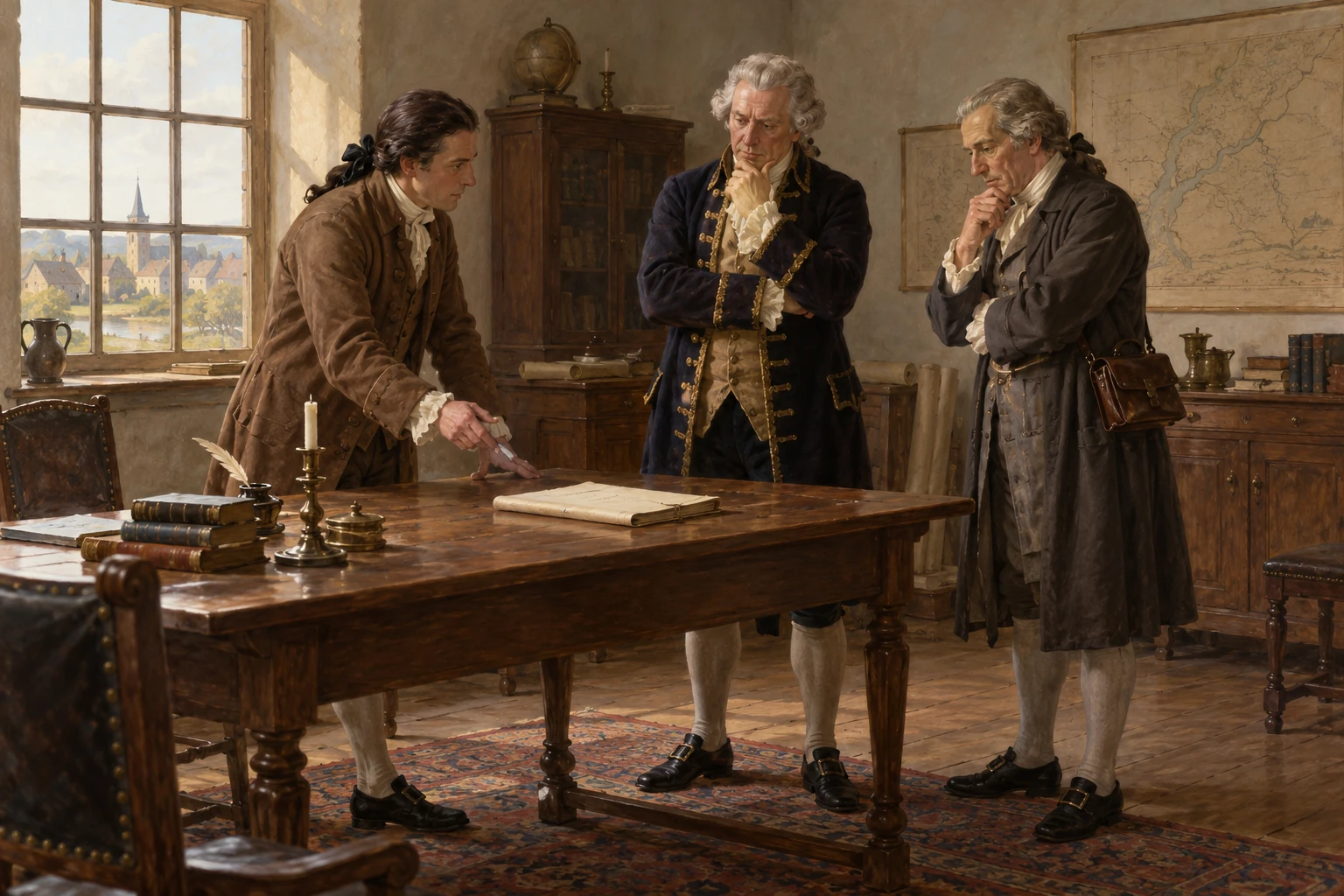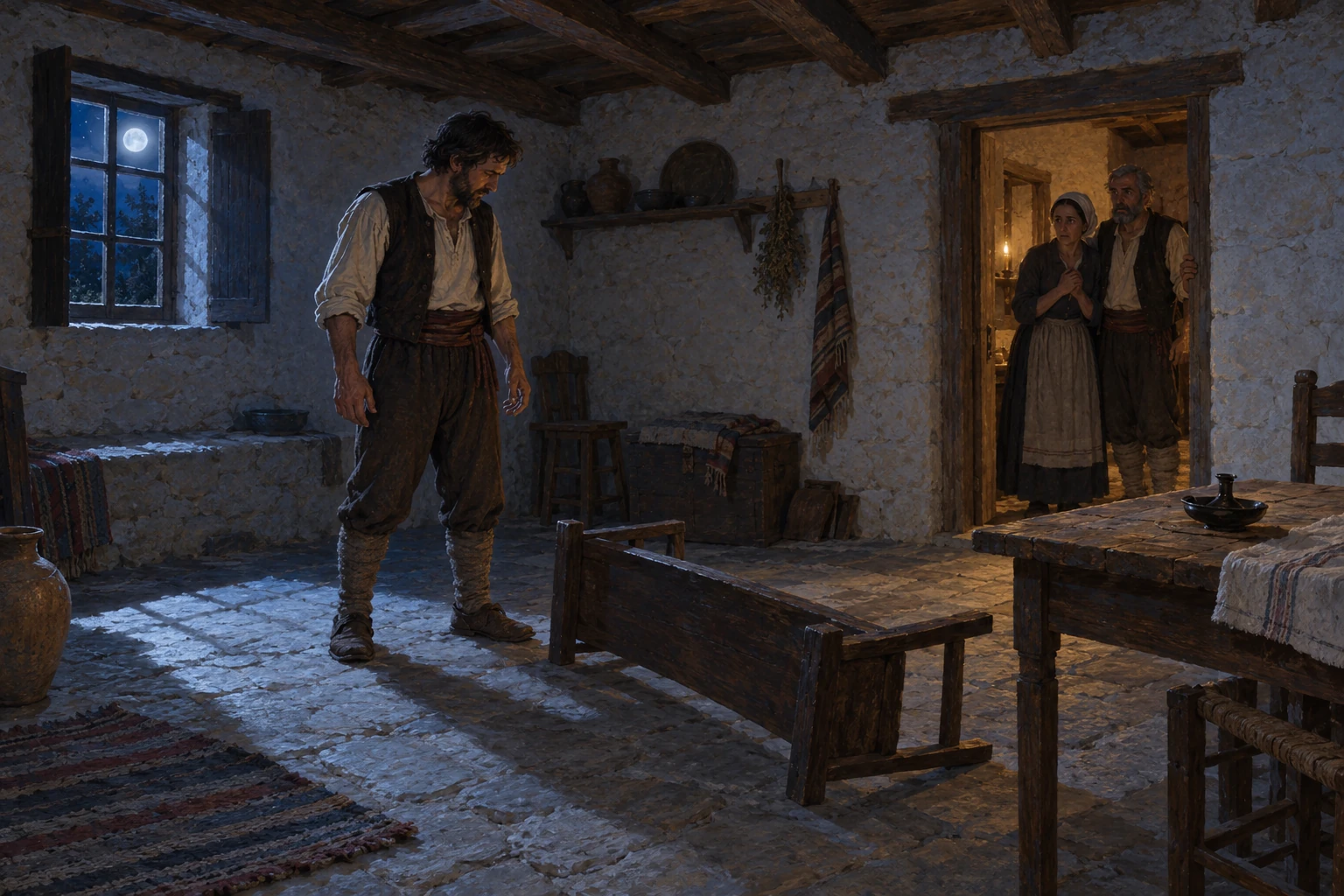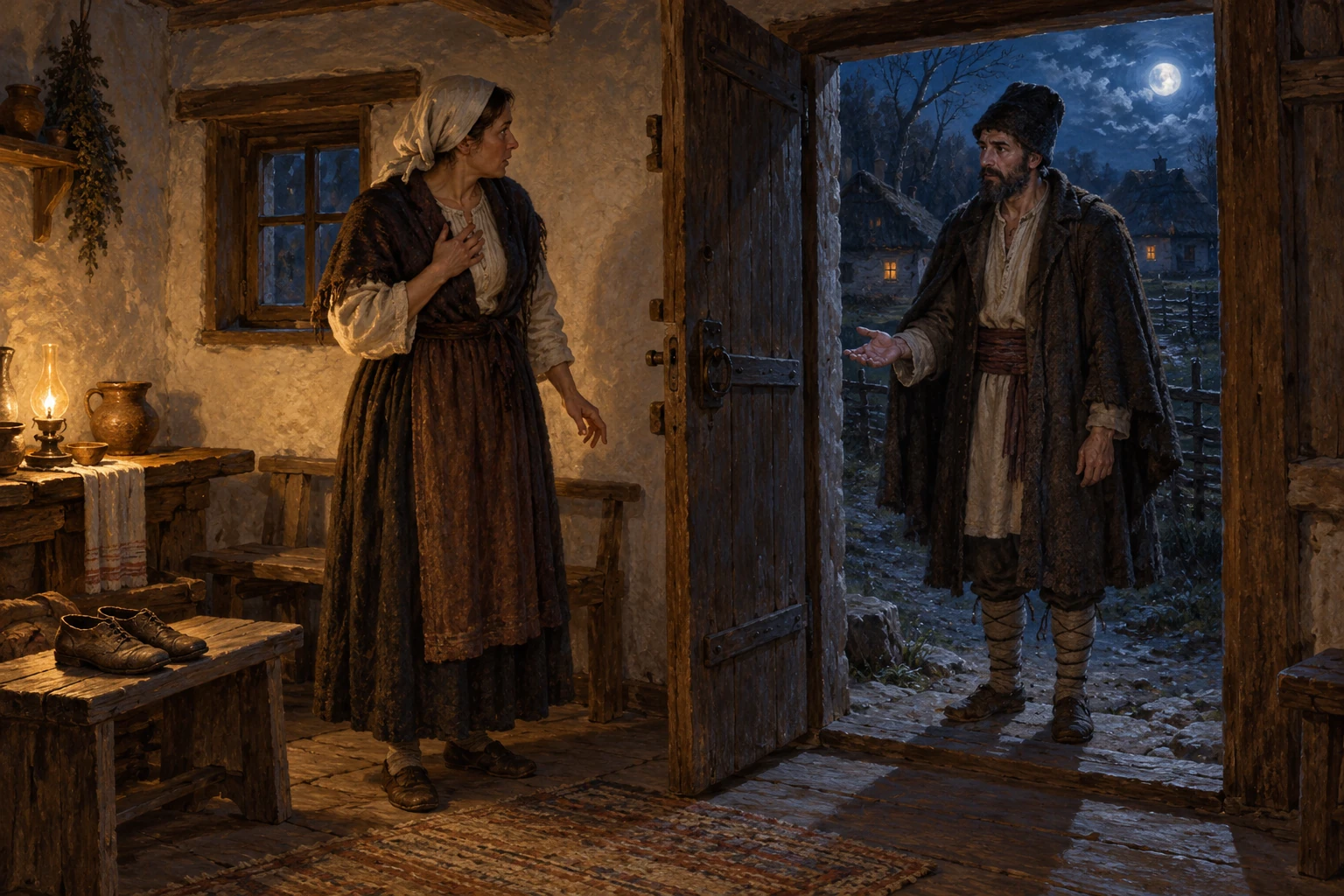
AI-generated interpretation of the widow’s reported shoe-request visit in Calmet’s Kisolova account. Faces, clothes, cottage, lighting and the position of the shoes are imagined. This illustrates an attributed report, not an authenticated return from death or a verified portrait.
The source’s supernatural explanation remains a reported belief; no Witcher design or modern diagnostic claim is depicted.
Overview
Calmet’s account of Peter Plogojovitz appears in the chapter headed Singular Instance of a Hungarian Ghost in the inspected 1850 English Phantom World. It is presented through Michael Rauff, rather than as Calmet’s own visit to a village. The place is called Kisolova in this witness. Its historical geographical wording and personal spelling are retained without treating them as a modern jurisdiction or independently identifying every person in the report.
The narrative says that Plogojovitz had been buried for ten weeks when he appeared at night to sleeping villagers and gripped their throats. It attributes nine deaths within eight days to these visits. His widow separately says that he returned to ask for his shoes; frightened, she leaves the village. These are reported experiences and attributed causes. The selected chapter does not establish that a dead man returned, independently authenticate the deaths, or provide their modern medical explanation.
The villagers seek permission from an imperial officer and the local priest to exhume the body. Both resist, but the inhabitants threaten to abandon the settlement if refused. The officer then accompanies the priest and reports the examination. The narration describes an absence of bad smell, apparent renewed hair, beard, nails and skin, intact hands and feet, and blood in the mouth. The villagers interpret these appearances as confirmation of their suspicions. Their conviction leads to destructive treatment of the remains, followed by burning. The procedure is part of the historical report, not proof that its supernatural interpretation was correct.
The surrounding chapters make the framing less uniform than a simple monster story. Chapter XLV discusses beliefs about corpses chewing in graves and rejects the literal movement of the truly dead, while chapter XLVII lists competing explanations involving imagination, mistaken death, animals and supernatural agency. Its comments about climate, food and disease belong to historical argument, not current medicine. Chapter XLVI’s two notes cite Rauff; the earlier authors named there have not been independently inspected. This named, mediated Kisolova account remains distinct from Calmet’s Arnald Paul narrative and from the rules of a modern fictional vampire.
Origins & earliest records
Selected Philadelphia English edition of 1850 from Calmet’s French, citing Rauff. This is a later published transmission, not an independently inspected military original. Name, place and chronology follow this chapter; wider case history is not reconstructed from uninspected retellings.
Records & interpretation
Complete volume II chapters XLV–XLVII with all notes 575–583 read; named episode XLVI with notes 580–581. The report’s claims of official observation and the neighbouring skeptical arguments are preserved as attributed evidence.
Selected bibliography
Documented works and useful reading. This is not a list of every appearance.
- 01
The Phantom World; or, The History and Philosophy of Spirits, Apparitions, &c.
Philadelphia: A. Hart, two volumes in one; volume II XLV–XLVII, printed pp. 340–344, notes 575–583. Named episode XLVI pp. 341–342, notes 580–581. Translator not separately established.
Family, evolution & connections
Bruxa (The Witcher)
The Witcher’s bruxa belongs to its fictional vampire categories. Calmet’s Kisolova narrative offers a different historical account of alleged returns, community pressure and interpretation of remains. It is comparative context, not the bruxa’s origin story, a verified supernatural event or evidence of designer consultation. The report does not supply the game creature’s body, powers or rules.
Arnald Paul in Calmet’s Gleaner account
Calmet transmits two distinct named vampire reports: Plogojovitz at Kisolova and Arnald Paul in the Gleaner account. Their reported events, transmission and neighbouring arguments must be kept separate. Neither narrative independently authenticates a return from death, and their inclusion in one collection does not make them independent corroboration of each other.
Micon vroucolaca in Calmet’s Tournefort account
These two reports in Calmet have different places, allegations and outcomes. Plogojovitz’s Kisolova account attributes deaths and a shoe request to a named returner. Tournefort’s Micon narrative describes an unnamed suspected visitor, contested observations, alleged disorder and later communal repercussions. Neither report authenticates the other or establishes a uniform revenant biology.
References
Sources supporting this profile. Linked pages have their own scope and editorial standards.
- Historical collection transmitting an attributed reportCalmet 1850, volume II XLVI, Singular Instance of a Hungarian Ghost, with neighbouring framingResearch access: 2026-10-26
Image credits
Modern interpretation of a historical literary accountAI-generated interpretation of the widow’s reported shoe-request visit in Calmet’s Kisolova account. Faces, clothes, cottage, lighting and the position of the shoes are imagined. This illustrates an attributed report, not an authenticated return from death or a verified portrait.
The source’s supernatural explanation remains a reported belief; no Witcher design or modern diagnostic claim is depicted.