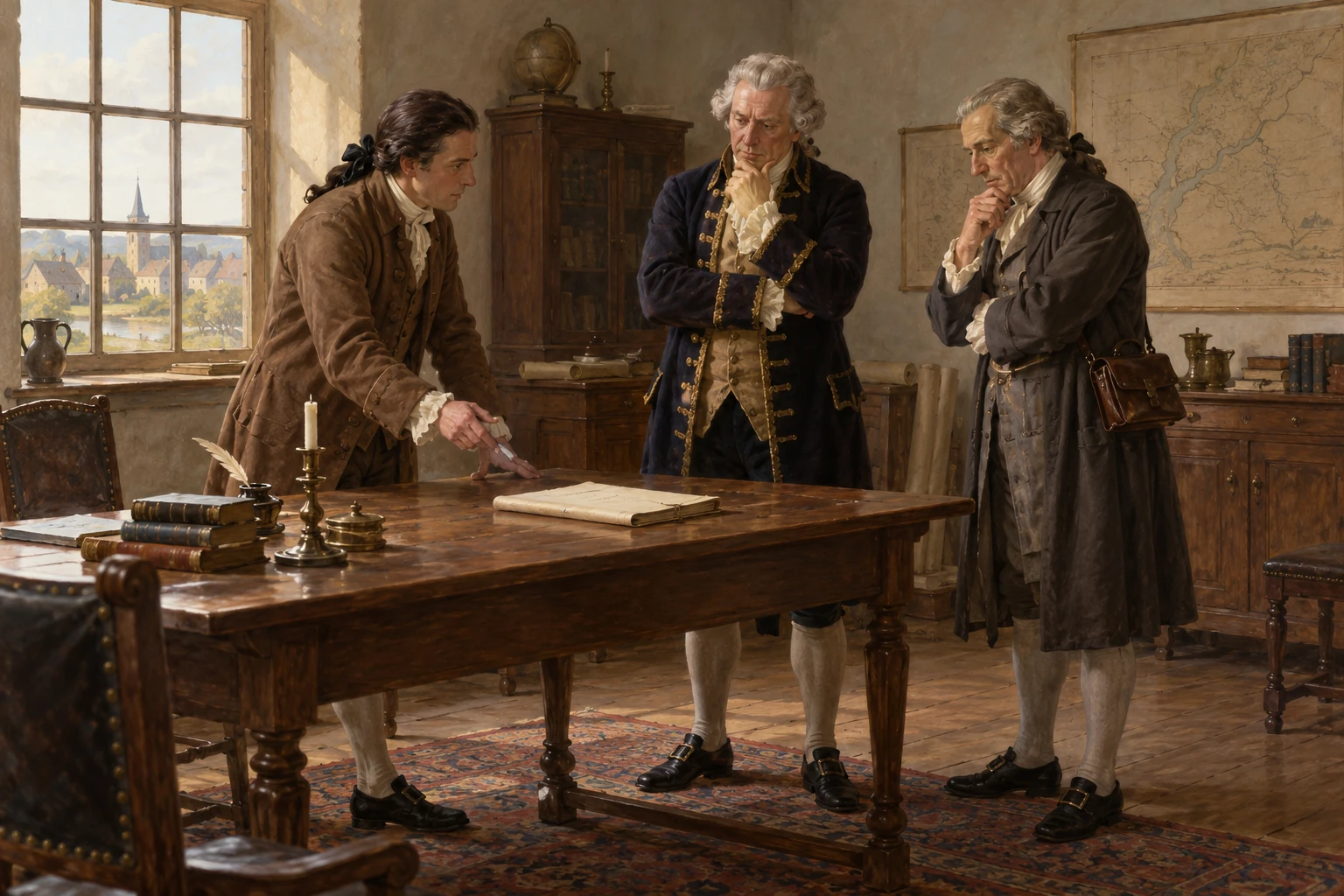
AI-generated contextual interpretation of the official-investigation claims in Calmet’s Arnald Paul account. The meeting, people, faces, clothing, room, maps, furniture and lighting are imagined; this is not an authenticated reconstruction, a portrait of a named signatory or a reproduction of an original report.
The illustration visualises the narration’s appeal to officials and surgeons. It does not depict a verified vampire or claim that this meeting occurred.
Overview
Calmet’s selected account names a man called Arnald Paul, an inhabitant of Madreiga, whose death beneath a falling wagonload of hay becomes the starting point of an alleged vampire outbreak. The spelling and locality follow this English witness. Chapter IX introduces material from the Lettres Juives and the Gleaner; chapter X continues that transmitted account. Its declarations of reliable witnesses belong to the historical narration, not to a modern authentication of the events.
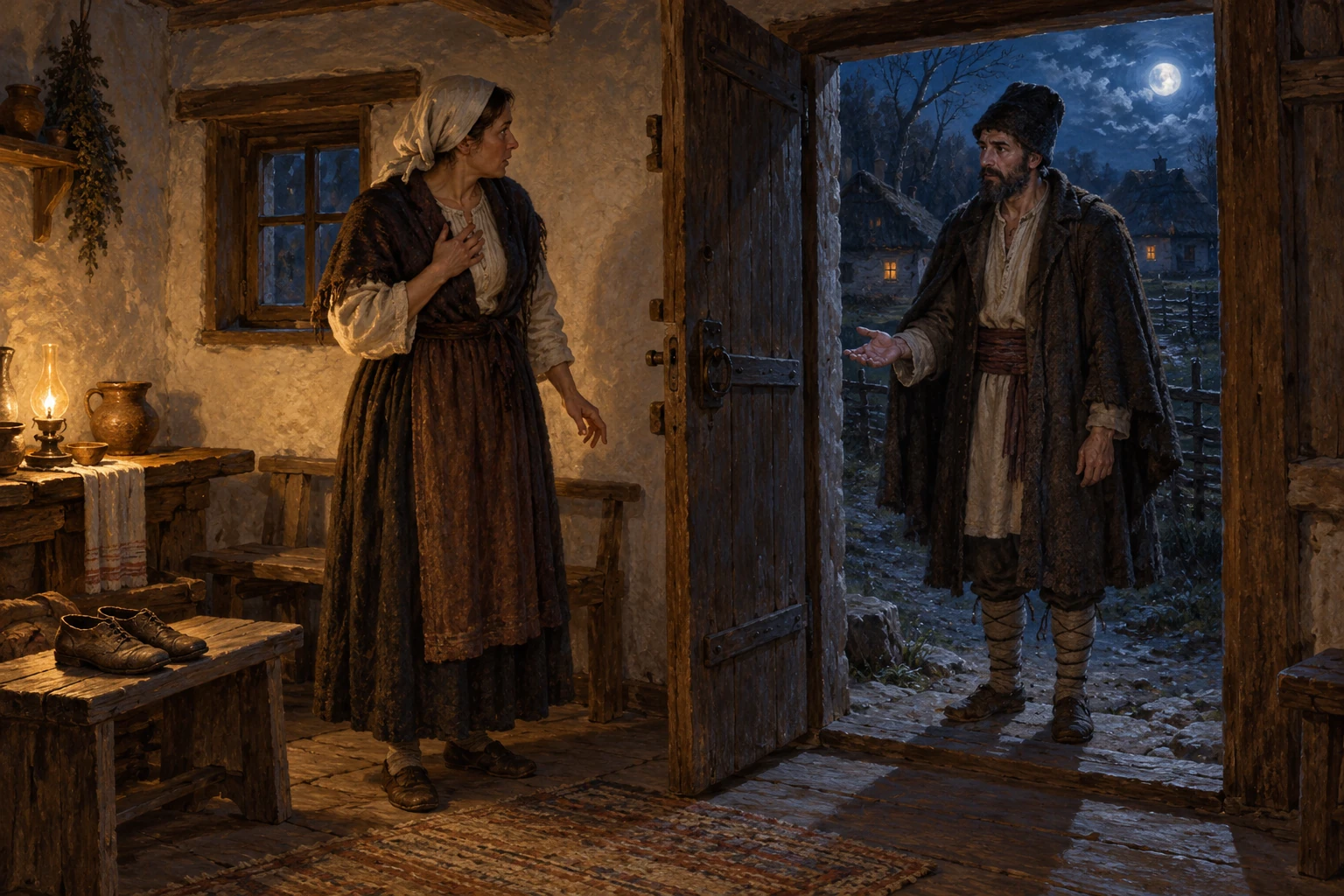
The report says that four people died thirty days after Paul’s death. Neighbours remembered his earlier claim that a vampire had tormented him near Cassovia and the frontier of Turkish Servia. He allegedly tried to protect himself with earth and blood associated with the attacker’s grave. The narration connects this remembered experience with a belief that victims could become attackers after death. Forty days after burial, an examination reportedly found a ruddy body, fluid blood and apparent renewed growth of hair, beard and nails. Officials then ordered the body’s destruction and treated the four other suspected bodies similarly.
The story does not end with those first measures. It reports another seventeen deaths about five years later and introduces Stanoska, who says that the deceased son of Millo nearly strangled her during sleep. Investigators explain the renewed outbreak by alleging that cattle attacked by Paul had subsequently been eaten. Seventeen of forty examined bodies are pronounced suspect, and the narrative records further destruction of remains. Its ending emphasizes a formal declaration, military and surgical signatories, and transmission to the Imperial Council of War at Vienna. These reported procedures demonstrate how the story claims authority; they do not prove its supernatural explanation.
The immediate continuation preserves disagreement rather than one unanimous verdict. Chapters XI and XII challenge reliance on certificates and suggest fear, imagination and bodily preservation as explanations. Their discussions of hair growth, earth, heat and blood are historical arguments, not current medical findings adopted by this profile. Note 463 also proposes that the story may duplicate an earlier Haidamaque account dated 1729 or 1730. That uncertain cross-reference remains visible. This entry therefore follows a particular mediated report and its skeptical responses, without claiming an independently inspected original investigation, a verified vampire or the conclusion of Calmet’s entire book.
Origins & earliest records
The Phantom World, from the French of Augustine Calmet, Philadelphia: A. Hart, 1850, two volumes in one. Selected chapters IX–XII, printed pp. 263–272. The title credits Henry Christmas with preface and notes; a translator is not separately identified in the inspected title.
Records & interpretation
Complete selected chapters IX–XII, including notes 463–471, read from the retained historical text. IX establishes the Lettres Juives/Gleaner mediation, X contains the named account and formal-report ending, and XI–XII supply immediate skeptical arguments. Original investigation records, the Gleaner and Lettres Juives were not separately collated.
Selected bibliography
Documented works and useful reading. This is not a list of every appearance.
- 01
The Phantom World: chapters IX–XII
Philadelphia: A. Hart, two volumes in one. From French; translator not separately verified. Exact witness forms Arnald Paul and Madreiga retained.
Family, evolution & connections
Vampire
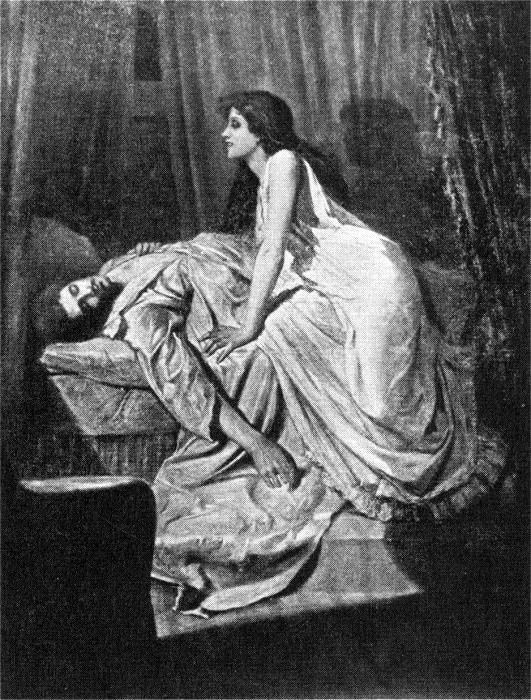
Calmet’s selected report names Arnald Paul and describes alleged attacks, exhumations and renewed deaths, followed by skeptical arguments. It is one attributed historical vampire account, not a verified supernatural event or a universal vampire life cycle.
Peter Plogojovitz in Calmet’s Kisolova account
Calmet transmits two distinct named vampire reports: Plogojovitz at Kisolova and Arnald Paul in the Gleaner account. Their reported events, transmission and neighbouring arguments must be kept separate. Neither narrative independently authenticates a return from death, and their inclusion in one collection does not make them independent corroboration of each other.
References
Sources supporting this profile. Linked pages have their own scope and editorial standards.
- Historical compilation and attributed reportsThe Phantom World, Project Gutenberg 29412: complete selected chapters IX–XIIResearch access: 2026-10-24
Image credits
Modern contextual interpretation of a historical reportAI-generated contextual interpretation of the official-investigation claims in Calmet’s Arnald Paul account. The meeting, people, faces, clothing, room, maps, furniture and lighting are imagined; this is not an authenticated reconstruction, a portrait of a named signatory or a reproduction of an original report.
The illustration visualises the narration’s appeal to officials and surgeons. It does not depict a verified vampire or claim that this meeting occurred.