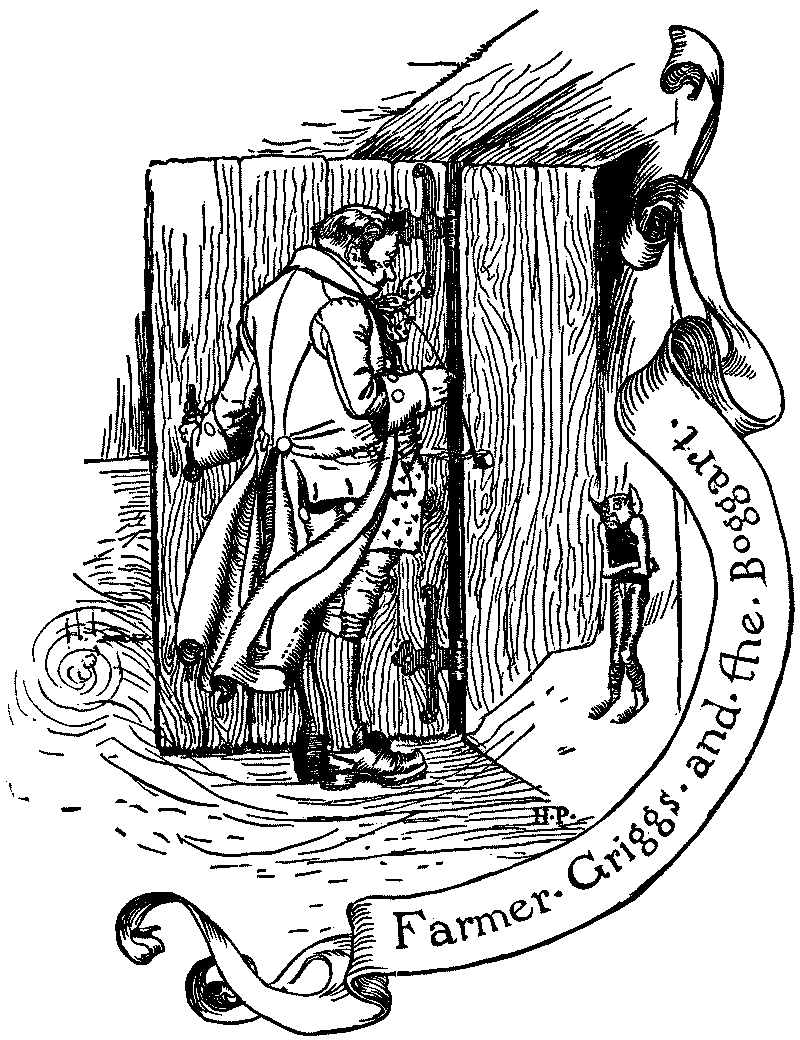
A sourced illustration has not yet been added. This gap is included in the coverage record.
Overview
Henderson’s Leeds-area description makes Padfoot a shaggy black creature about the size of a small donkey, with very large eyes. It follows or confronts people travelling after dark. A carrier named Sally Dransfield, working between Leeds and Swillington, reports seeing it repeatedly: sometimes rolling ahead like a woolpack, and sometimes vanishing through a hedge. The witness’s name and route are part of the collected report; they do not turn the reported apparition into an independently documented animal.
The Reverend J. C. Atkinson supplies a different account from Danby. Here Padfoot is larger than a sheep and has long, smooth hair. It may be visible or known only by the padding of its feet, an unusual roar or a clanking sound. Atkinson calls it a precursor of death. Henderson also relates a story in which a man kicks at the figure and is dragged through hedges and ditches to his home, where it leaves him under his own window. The smooth coat in this account should not be silently replaced by the shaggy Leeds description.
A footnote signed S. B. G. contributes a Horbury version called Padfooit. This one is white, and may be described with two or three legs. A man strikes at it, but his stick passes through the apparition; its great eyes and the encounter’s fright are followed by his illness and death. This local story supplies neither a universal number of legs nor proof that every Padfoot encounter is fatal. The white Horbury figure also prevents the black Leeds form from being treated as the only traditional appearance.
Henderson cautiously proposes that Padfoot, Barguest and Boggart may be names for the same being. His wording presents that identification as his own inference. The accompanying footnote offers further comparisons with other spectral animals and church traditions. Those comparisons remain antiquarian interpretations, not demonstrated ancestry or evidence for the historical practices they speculate about. Retaining the separate local witnesses makes the entry useful without inventing a single standardized monster from their incompatible details.
Origins & earliest records
Henderson’s 1879 new edition, Chapter VII, pp. 273–274 and the Horbury footnote, supplies the inspected descriptions. The collection credits Atkinson and S. B. G. for particular material; no first-ever oral or written appearance is claimed.
Records & interpretation
Complete Leeds, Sally Dransfield, Danby and Horbury passages and associated notes read in the selected edition. Apparition reports and later illness are narrative testimony, with no independently verified supernatural specimen or causal finding.
In the literature
“sometimes visible, sometimes invisible”
ChapterVII, printed273–274, complete Leeds/Danby/Horbury passages and note
Atkinson’s Danby description permits audible presence without continuous visibility.
Selected bibliography
Documented works and useful reading. This is not a list of every appearance.
- 01
Notes on the Folk-lore of the Northern Counties of England and the Borders
Chapter VII, pp. 273–274, including Atkinson’s Danby account and the footnote signed S. B. G.; complete sections read.
- 02
Henderson: Padfoot and Horbury Padfooit
London: W. Satchell, Peyton and Co., new edition,1879; original printed274–276 independently visually checked against retained scan b24856940. Printed273 opening read in OCR and public transcription.
Family & connections
A source-supported family tree or inspiration record has not yet been compiled for this profile. Related reading below indicates a connection in subject matter, not a proven lineage or creative influence.
Located primary passages
Specific passages supporting details in this entry, grouped by their published witness.
Notes on the Folk-lore of the Northern Counties of England and the Borders
London: W. Satchell, Peyton and Co., new edition,1879; original printed274–276 independently visually checked against retained scan b24856940. Printed273 opening read in OCR and public transcription.
- Leeds shaggy black, Danby smooth-haired and Horbury white apparitions remain separate. Atkinson reports uncanny footsteps and death warnings; a man kicking it is dragged home and left beneath his window. Horbury’s ill witness and passing stick are reported, not causal proof. Henderson’s shared-identity proposal is a collector’s interpretation.
ChapterVII, printed273–274, complete Leeds/Danby/Horbury passages and note
Selected witness only; no first-ever attestation or whole-book inspection claimed. Reported supernatural events are textual testimony, not verified biological facts.
References
Sources supporting this profile. Linked pages have their own scope and editorial standards.
- Primary textHenderson 1879: Padfoot and Padfooit local accountsResearch access: 2026-10-05
Image credits
A sourced illustration has not yet been added. This gap is included in the coverage record.