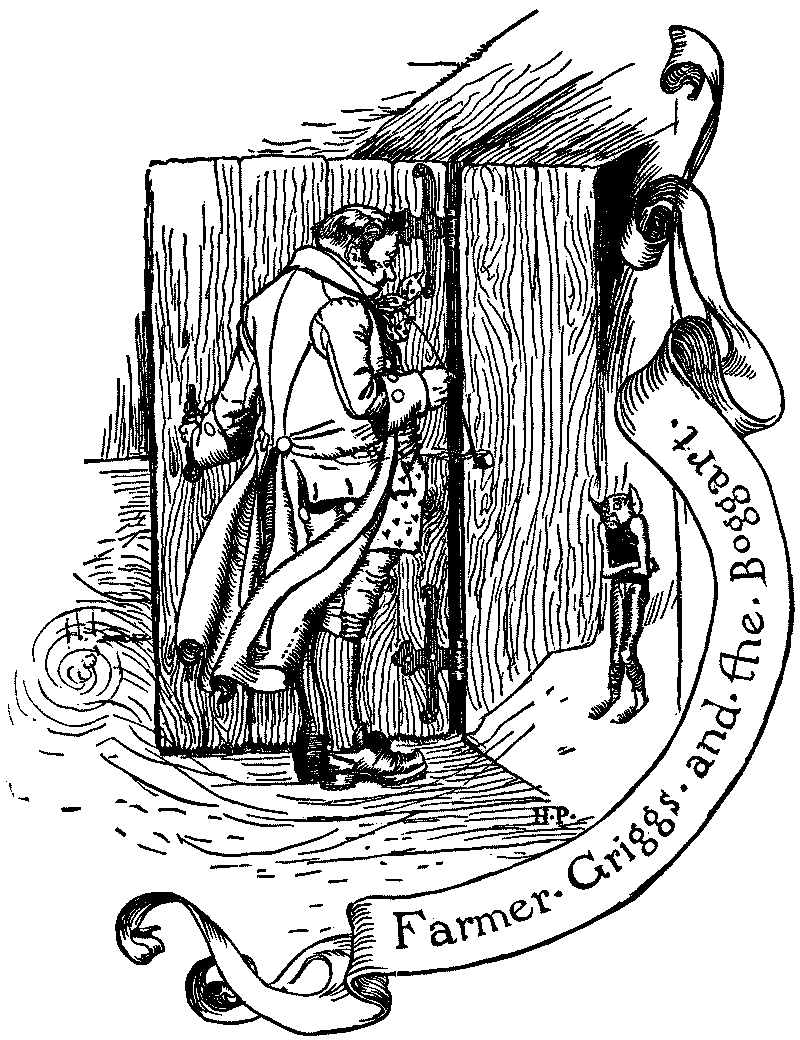
A sourced illustration has not yet been added. This gap is included in the coverage record.
Overview
William Henderson prints several local accounts under the name Barguest, alongside the spellings Bahrgeist and Boguest. His 1879 collection treats the figure as a frightening apparition whose appearance or distant roaring may foretell death. It does not describe one consistent animal. In the account of Glassensikes near Darlington, an unnamed correspondent lists a headless man disappearing in flame, a headless woman, a white cat or rabbit, and dogs that may be white or black. These are forms reported within that local tradition, rather than successive stages in a creature’s life cycle.
Henderson also locates a reputed haunt in a glen between Darlington and Houghton, near Throstlenest. A separate Leeds account associates the apparition with Oxwells, a spring near the town. There it is described as a huge black dog with flaming eyes. Local dogs accompany it, howling, when the death of an important person is announced. Someone obstructing the procession is said to receive a wound from its paw that never heals. This is a claim within the collected story, not a verified medical property or an established record of an attack.
The Leeds material includes a recollection supplied by an unnamed Yorkshire gentleman who had since died. He reportedly saw the procession as a child before the death of Squire Wade of New Grange. The source thus preserves both a general account of a death-associated procession and a particular person’s recollection of one. The description should not be flattened into a universal rule that every apparition kills a witness, or that its arrival always has precisely the same timing.
Henderson favours an explanation of the name through a bier-ghost, following a suggestion associated with Walter Scott. That is an antiquarian etymological proposal, not a demonstrated linguistic origin. He also conjectures a connection with Padfoot and Boggart. Thomas Keightley’s introductory discussion instead distinguishes the outdoor Barguest from the domestic boggart while comparing the latter with household spirits. These collectors’ comparisons are useful evidence for how the names were interpreted, but they do not establish that all the recorded figures are interchangeable or biologically related.
Origins & earliest records
The directly inspected witness is Henderson’s 1879 new edition, Chapter VII, pp. 274–275. Earlier references and reported recollections are mediated by that collection; an absolute first attestation has not been established.
Records & interpretation
Complete Henderson Padfoot/Barguest/Capelthwaite sequence, pp. 273–276 and notes, read. Keightley’s northern-spirit introductory distinction was separately read. The evidence documents printed traditions and attributed testimony, not a verified supernatural animal.
In the literature
“a large black dog with flaming eyes”
ChapterVII, printed274–275, complete Barguest discussion and adjoining note
The phrase describes the Leeds death-associated procession, not all regional forms.
Selected bibliography
Documented works and useful reading. This is not a list of every appearance.
- 01
Notes on the Folk-lore of the Northern Counties of England and the Borders
Chapter VII, especially pp. 274–275; full local accounts and adjoining comparison read.
- 02
The Fairy Mythology: northern English spirit discussion preceding The Boggart
Introductory distinction between outdoor Barguest and domestic boggart; notes 352–354 also read. This comparison is kept separate from Henderson’s local testimony.
- 03
Henderson: Barguest local accounts
London: W. Satchell, Peyton and Co., new edition,1879; original printed274–276 independently visually checked against retained scan b24856940. Printed273 opening read in OCR and public transcription.
- 04
Keightley: Barguest and Boggart introductory distinction
London: GeorgeBellandSons,1892 selectedtitle; original work1828 distinct.
Family & connections
A source-supported family tree or inspiration record has not yet been compiled for this profile. Related reading below indicates a connection in subject matter, not a proven lineage or creative influence.
Located primary passages
Specific passages supporting details in this entry, grouped by their published witness.
Notes on the Folk-lore of the Northern Counties of England and the Borders
London: W. Satchell, Peyton and Co., new edition,1879; original printed274–276 independently visually checked against retained scan b24856940. Printed273 opening read in OCR and public transcription.
- Glassensikes has variable human and animal forms. The Leeds Oxwells account has a black dog announcing important deaths with local dogs accompanying it. An unnamed deceased gentleman recalls a procession before Squire Wade’s death. Scott-derived etymology and never-healing injury remain attributed claims.
ChapterVII, printed274–275, complete Barguest discussion and adjoining note
Selected witness only; no first-ever attestation or whole-book inspection claimed. Reported supernatural events are textual testimony, not verified biological facts.
The Fairy Mythology: northern English spirit discussion preceding The Boggart
London: GeorgeBellandSons,1892 selectedtitle; original work1828 distinct.
- Keightley compares the household Boggart with Brownie and Kobold while treating Barguest as an outdoor spirit usually appearing as a domestic animal. His proposed Barn-ghaist derivation differs from Henderson’s preferred bier-ghost explanation.
NorthernEnglish section immediately preceding TheBoggart; complete introductory paragraph
Selected witness only; no first-ever attestation or whole-book inspection claimed. Reported supernatural events are textual testimony, not verified biological facts.
References
Sources supporting this profile. Linked pages have their own scope and editorial standards.
- Primary textHenderson 1879: Barguest accounts, pp. 274–275Research access: 2026-10-05
- Primary textKeightley 1892: distinction between Barguest and BoggartResearch access: 2026-10-05
Image credits
A sourced illustration has not yet been added. This gap is included in the coverage record.