A sourced illustration has not yet been added. This gap is included in the coverage record.
Overview
Mulha, whose name the tale glosses as the Fair One, survives the pot-ogre after disobeying her mother’s warning. On the journey to her married sister she again breaks a prohibition, eating manumbela fruit. The Imbula from its tree persuades her to exchange clothes and beads for the ogress’s skin, which binds to her body. The impostor enters the kraal as a beautiful princess and has Mulha housed with an old woman and fed like the dogs.
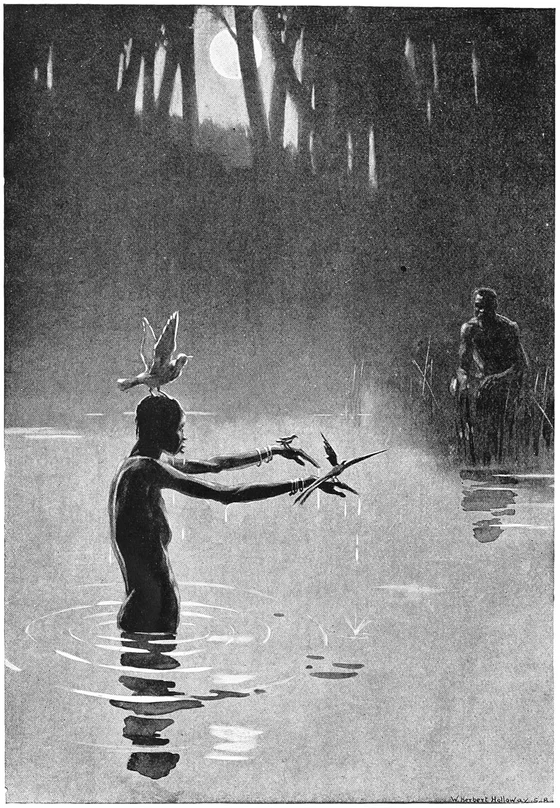
Mulha discovers that the borrowed skin grants powers. She makes her elderly companion young again and commands excellent food for them both, keeping these comforts secret because she resents her sister’s rejection. In the river the skin floats away, revealing her human beauty, and summoned maidens play with her. It reattaches when she leaves the water. Her sister and a wise older princess identify her while bathing, but Mulha initially prefers her comfortable concealed life to reclaiming her position.
The sister takes the matter to the king, whose milk trap exposes the false princess’s tail. After the impostor is killed, Mulha appears in her true form and the prince chooses her. The wedding brings one hundred cows to her father. The ending establishes her public restoration, but does not narrate the same flying-hide release given to Kitila in the separate moss-green princess story.
Origins & earliest records
Sarah F. Bourhill and Beatrice L. Drake collected and arranged the English tale for children. The publication does not name an individual contributor for this episode; its literary dialogue is not treated as a verbatim field transcription.
Records & interpretation
Complete XIX. The Beauty and the Beast, printed pp. 224–236, read through the final resolution.
Selected bibliography
Documented works and useful reading. This is not a list of every appearance.
- 01
Fairy Tales from South Africa
XIX. The Beauty and the Beast, pp. 224–236; complete English arrangement, unnamed individual contributor.
Family & connections
A source-supported family tree or inspiration record has not yet been compiled for this profile. Related reading below indicates a connection in subject matter, not a proven lineage or creative influence.
Located primary passages
Specific passages supporting details in this entry, grouped by their published witness.
Primary source witness
Sarah F. Bourhill (Mrs. E. J. Bourhill) and Beatrice L. Drake (Mrs. J. B. Drake), Fairy Tales from South Africa, London: Macmillan, 1908; selected original title page and complete headed tales in PG75833. Arranged for children; introduction pp.v–xi attributes principally Swazi, also Zulu and border-region contributions, with Shining Princess attributed to Mapoch. Individual narrators for these selected tales unnamed. Historical colonial framing is not current community consensus.
- Mulha’s disobedience releases the pot ogre, but she escapes without reviving her youngest sister. Travelling later to an already married older sister, she is tricked into wearing an ogress’s skin and displaced from her own identity. The married sister is distinct from both younger girls at the opening.
- The skin enables Mulha to rejuvenate her host and obtain food. She resumes human form while bathing but initially refuses to undo the imposture, angered by her sister’s treatment. The sister and an aged princess disclose the matter to the king; after the impostor’s death, Mulha is herself again and marries. Her temporary refusal to be restored is preserved rather than assuming passive helplessness throughout.
Selected historical arrangement, not unmediated original-language oral testimony. Individual contributor not named; no separate manuscript inspected. Original facsimile not visually inspected in this batch.
References
Sources supporting this profile. Linked pages have their own scope and editorial standards.
- Collected historical tale in an English literary retellingBourhill and Drake — XIX. The Beauty and the BeastResearch access: 2026-10-05
Image credits
A sourced illustration has not yet been added. This gap is included in the coverage record.