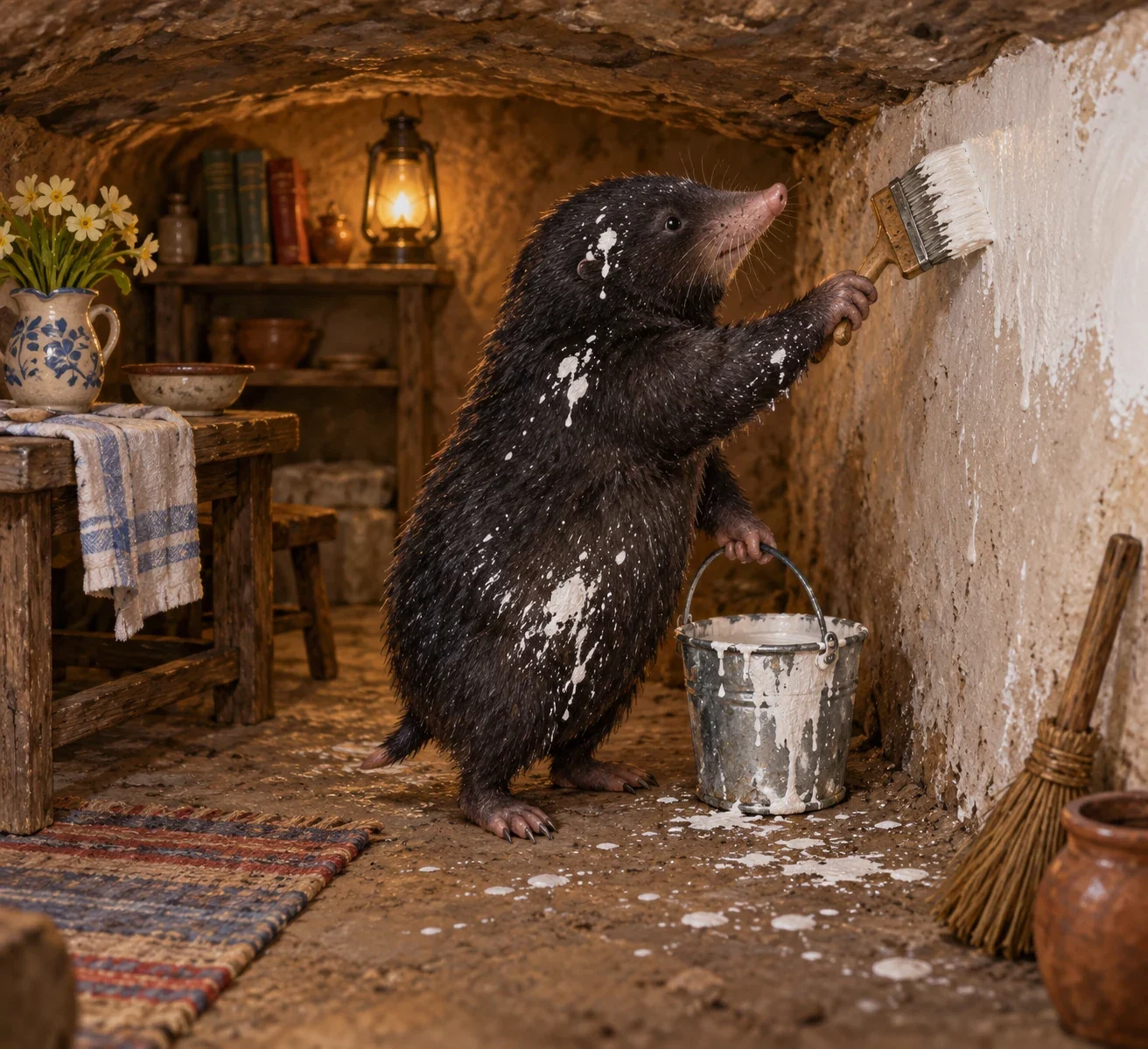
Imagined black-furred Mole holds a whitewash brush and pail inside his underground home.
Unofficial AI interpretation of Mole spring-cleaning with whitewash. Black fur, splashes, brush, pail and digging paws follow chapter I; posture, portrait, scale, room and tools are imagined storybook details, without an adaptation likeness claim. Full-frame display derivative; no upscaling.
Overview
Mole is the underground householder whose departure from spring-cleaning opens The Wind in the Willows. He has spent the morning using brooms, dusters, a brush and a pail of whitewash, until dust, aching limbs and splashes on his black fur make the work disagreeable. The arrival of spring draws him upward through his tunnel, where his little paws dig and his snout emerges into sunlight. He abandons the task without first putting on his coat. These details identify a speaking, house-keeping animal in a fantasy world, not a human in a mole costume or a natural-history account of an ordinary wild mole. His exact clothing, bodily scale and portrait should not be fixed from a later illustrator or screen adaptation.
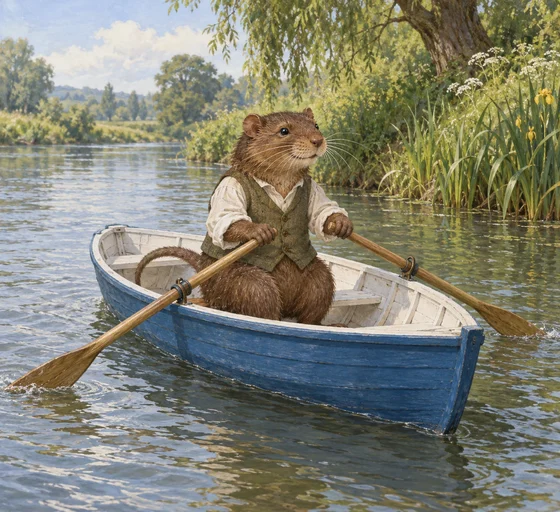
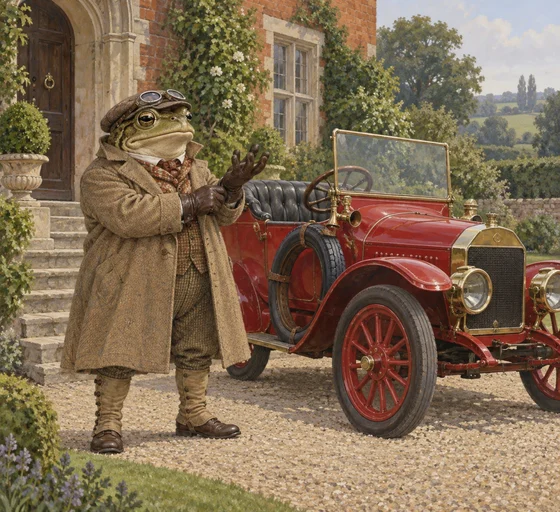
The river is new to him, and his meeting with the Water Rat begins a friendship that expands his experience. Mole delights in unpacking their picnic and tries to enjoy even the less successful business of repacking it. His eagerness sometimes outruns his competence: wanting to row as confidently as Rat, he suddenly takes the sculls and causes trouble. Rat’s subsequent kindness moves him to tears rather than humiliating him permanently. Mole is also susceptible to Toad’s imaginative account of life on the open road, yet proves useful when the caravan is wrecked, calming the horse while Toad is absorbed by the passing motor-car. Curiosity, pride and practical kindness therefore coexist; he is neither an entirely helpless novice nor an instantly accomplished adventurer.
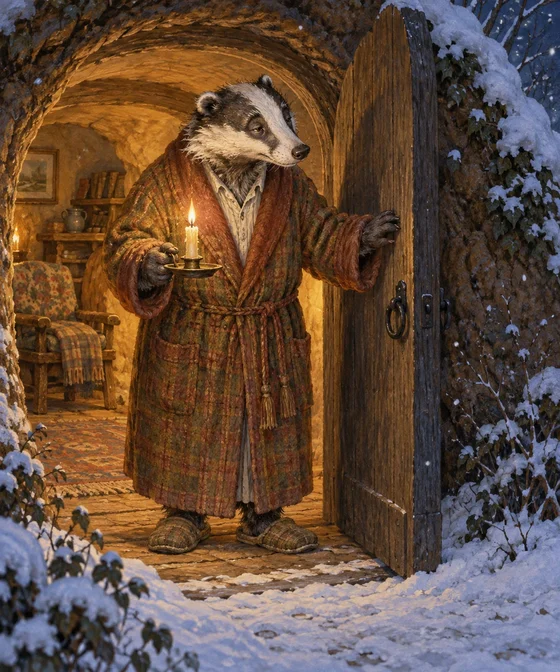
Mole’s solitary attempt to explore the Wild Wood is another test of those limits. Rat finds him frightened and sheltering in a tree, then helps him recover confidence. Snow and a difficult journey eventually bring both animals to Badger’s door. Mole helps uncover the entrance and swings on the bell-pull with his feet off the ground, while Badger provides warmth, food and shelter. Later a familiar scent abruptly recalls Mole’s own neglected home. When Rat initially continues along the road, Mole breaks down and explains that the modest dwelling was his own and still mattered to him. Rat turns back, helps him find it and encourages a renewed appreciation of its possessions. Mole’s account of savings, gifts and bargains makes the home a record of effort and attachment rather than a lesser place whose value depends on matching Toad’s wealth.
By the recovery of Toad Hall, Mole acts with more initiative. Wearing Toad’s discarded washerwoman disguise, he approaches the armed sentries and uses conversation to unsettle them before the planned attack through the secret passage. After the friends retake the house, he deals with the sentries and returns with their rifles. Badger praises his resourcefulness and entrusts him with arranging clean, comfortable bedrooms; Toad also thanks him for his work. Mole later prepares simple invitations in place of Toad’s boastful ones. The conclusion presents him among the respected friends who walk through the Wild Wood. This growth rests on specific actions within the original story. It does not establish a political office, military rank, permanent magical power or a later biography, and his temporary disguise should not be mistaken for his normal anatomy or dress.
First appearances & development
Kenneth Grahame’s original The Wind in the Willows, retained in the edition whose original title matter says Published October 1913. Selected chapters I–VI and XI–XII support these episodes; adaptation designs and undocumented authorial models are excluded.
Canon & continuity
Original narrative.
Selected bibliography
Documented works and useful reading. This is not a list of every appearance.
- 01
The Wind in the Willows
Selected original chapters.
Family & connections
A source-supported family tree or inspiration record has not yet been compiled for this profile. Related reading below indicates a connection in subject matter, not a proven lineage or creative influence.
References
Sources supporting this profile. Linked pages have their own scope and editorial standards.
- PrimaryThe Wind in the WillowsResearch access: 2026-10-11
- CatalogueGutenberg: The Wind in the WillowsResearch access: 2026-10-11
Image credits
Unofficial modern AI interpretationImagined black-furred Mole holds a whitewash brush and pail inside his underground home.
Unofficial AI interpretation of Mole spring-cleaning with whitewash. Black fur, splashes, brush, pail and digging paws follow chapter I; posture, portrait, scale, room and tools are imagined storybook details, without an adaptation likeness claim. Full-frame display derivative; no upscaling.