Luwu, named1667 historical plate
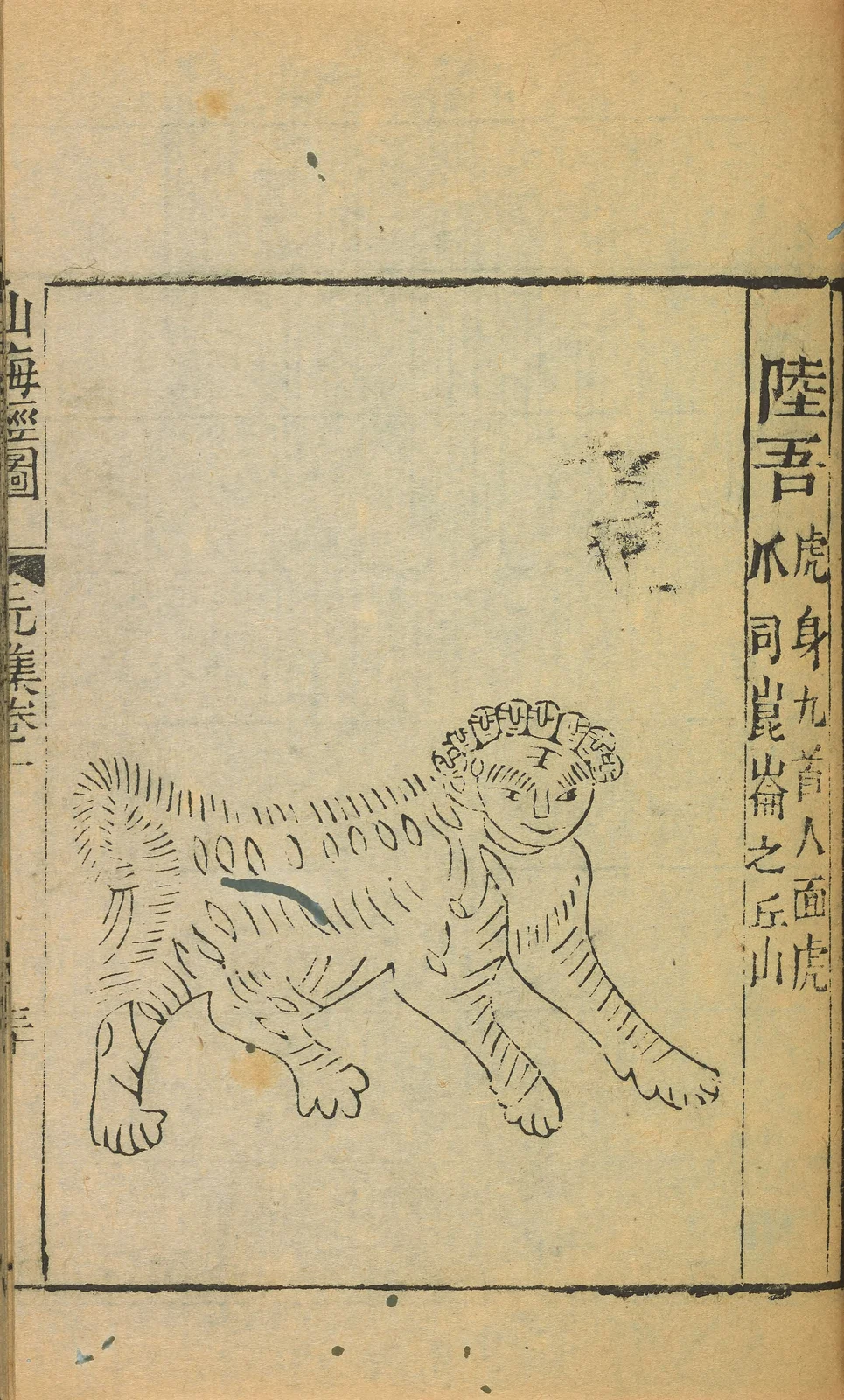
Actual 1000-pixel labelled image directly inspected and text compared. Tiger-like body and human face, with the caption explicitly listing nine tails, human face and tiger claws at Kunlun. The depicted single-side silhouette does not visibly separate all nine tails. Smithsonian physical volume catalog1667, public domain. Earlier primary witness, including any Japanese plate, retained under additionalNarrativeSources.
Overview
Luwu is the divine keeper at Kunlun, described as the ruler’s lower capital in the third western itinerary of the Shanhaijing. It has a tiger’s body, nine tails, a human face, and tiger claws. The entry assigns it oversight of the nine divisions of heaven and the ruler’s park or its temporal arrangements. The unusual body therefore accompanies a specific supervisory office.
Kunlun’s other inhabitants include the human-eating Tulou and the lethal stinging Qinyuan bird. Their dangerous abilities do not automatically make Luwu a human-eater or a venomous creature. The nine tails belong to a tiger-bodied guardian here, not to a fox. A commentary compares its identity with another divine name; that comparison remains commentary and is not proof that every later named mountain guardian represents one fixed creature across all texts.
Origins & earliest records
China; Shanhaijing western mountain itineraries
Records & interpretation
Directly read named primary-text transcription; historical illustration not yet assigned.
Selected bibliography
Documented works and useful reading. This is not a list of every appearance.
- 01
Shanhaijing, Western Mountains
Third western itinerary; Kunlun
Family & connections
A source-supported family tree or inspiration record has not yet been compiled for this profile. Related reading below indicates a connection in subject matter, not a proven lineage or creative influence.
Primary records and illustrations
Shan hai jing: er shi san juan (Smithsonian digitized edition)
Physical volume 1; Shan hai jing tu illustration sequence. IIIF canvas index 72 (zero based), labelled 陸吾; no printed page number asserted
Actual 1000-pixel labelled image directly inspected and text compared. Tiger-like body and human face, with the caption explicitly listing nine tails, human face and tiger claws at Kunlun. The depicted single-side silhouette does not visibly separate all nine tails. Smithsonian physical volume catalog 1667, public domain. Earlier primary witness, including any Japanese plate, retained under additionalNarrativeSources.
References
Sources supporting this profile. Linked pages have their own scope and editorial standards.
- Primary text transcriptionShanhaijing: Western Mountains, received text and commentaryResearch access: 2026-10-05
- Primary illustrated bookSmithsonian illustrated Shan hai jing v.1, canvas 72: 陸吾Research access: 2026-10-05
Image credits
Historical illustrationLuwu, named1667 historical plate
Actual 1000-pixel labelled image directly inspected and text compared. Tiger-like body and human face, with the caption explicitly listing nine tails, human face and tiger claws at Kunlun. The depicted single-side silhouette does not visibly separate all nine tails. Smithsonian physical volume catalog1667, public domain. Earlier primary witness, including any Japanese plate, retained under additionalNarrativeSources.