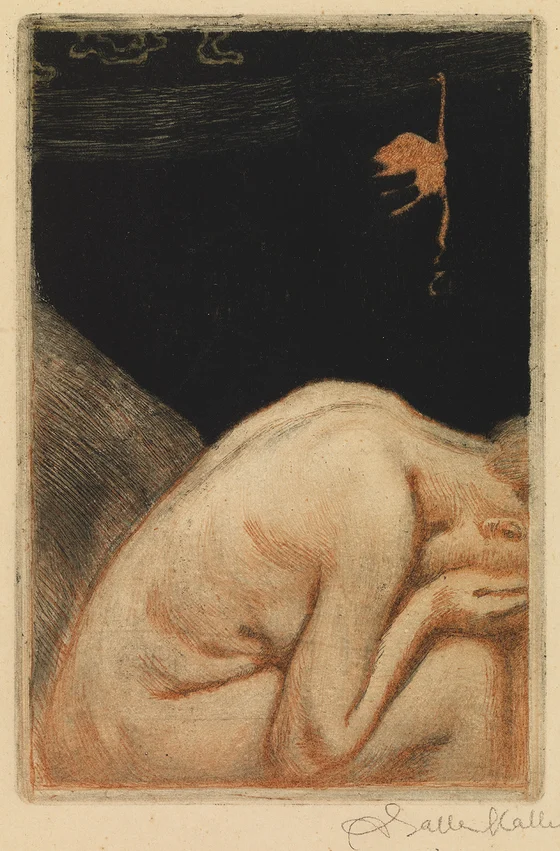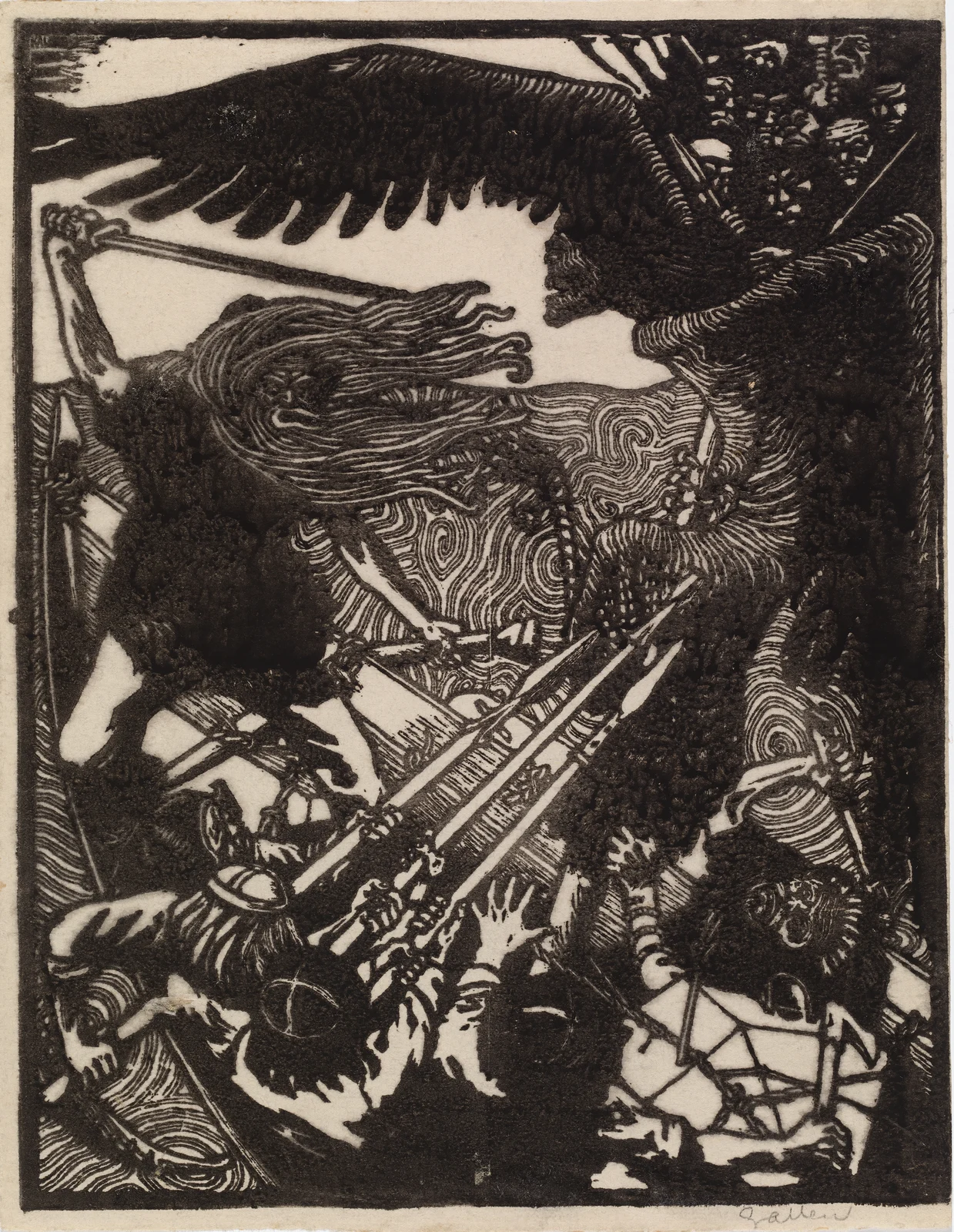
Louhi as the enormous eagle in Akseli Gallen-Kallela’s Defence of the Sampo (1895)
Actual original graphic print inspected: huge eagle with human face and warriors upon its back attacks a boat; Väinämöinen raises a weapon/rudder at left. Named Sampo defence scene and current RuneXLII–XLIII transformation narrative agree. Image-specific print treatment distinguished from an eagle species. Individual multimedia licence CC0. Returned signed-original download preserved; stable source/download API links retained.
Overview
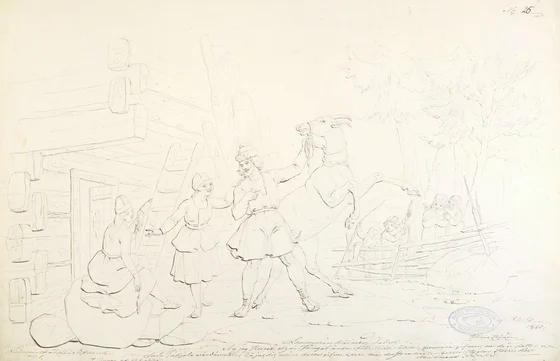
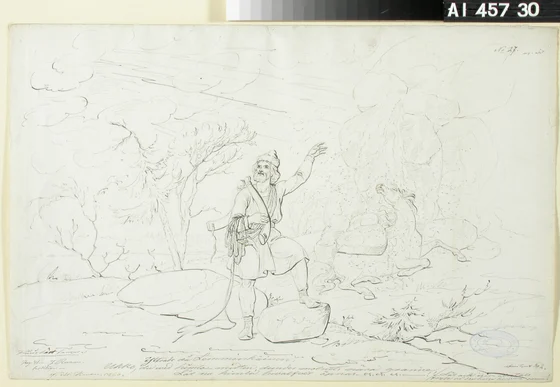
Louhi governs Pohjola and sets the creature-catching conditions for her daughter’s suitors in the selected Kalevala episodes. Lemminkäinen must catch the elk, bridle the fire horse and hunt Tuoni’s swan; Ilmarinen receives different tasks involving the serpent field, death-land bear and giant pike. The narrative’s rival household and marriage negotiations are retained alongside her magic rather than reducing her to a nameless species of monster.
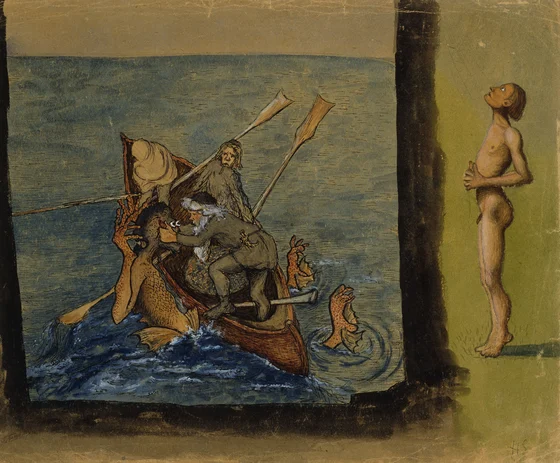
When the heroes remove the Sampo, she summons fog, Iku-Turso and a storm to stop their voyage. She then pursues with an armed ship. After it strikes a magically raised reef, she transforms: scythes and sickles make eagle talons; the broken vessel becomes her framework, ribs and flooring become wings and breastplate, and the rudder becomes the tail. Her warriors occupy the wings, body and tail, making the giant bird a transformed war force as well as her new body.
She attacks the heroes’ mast and grasps the Sampo. Lemminkäinen’s sword injures her talons; Väinämöinen strikes with a rudder, dislodging the warriors. With one remaining talon she drags the treasure overboard, where it breaks. The final confrontation includes threats against light, crops and cattle, followed by her return home with limited fragments. Crawford’s hostile witch and Northland labels belong to his rendering of the epic conflict; they are not descriptions of a living northern people. No separate eagle species is inferred from this particular transformation.
Origins & earliest records
Kalevala, Runes XIII–XIV, XIX, XLII–XLIII, John Martin Crawford’s English translation (1888), after Elias Lönnrot’s edited epic. Selected publication witness, not a date for the original oral tradition.
Records & interpretation
Complete relevant Runes XLII–XLIII and previously cited bridal encounters read. Actual transformation and sea encounter distinguished from hostile narrative labels.
Selected bibliography
Documented works and useful reading. This is not a list of every appearance.
- 01
Kalevala, Runes XIII–XIV, XIX, XLII–XLIII
Complete selected epic passages; direct Finnish and archival variants not independently collated.
Family & connections
A source-supported family tree or inspiration record has not yet been compiled for this profile. Related reading below indicates a connection in subject matter, not a proven lineage or creative influence.
References
Sources supporting this profile. Linked pages have their own scope and editorial standards.
- Primary epic translationCrawford, Kalevala, Runes XIII–XIV, XIX, XLII–XLIIIResearch access: 2026-10-05
Image credits
Historical illustrationLouhi as the enormous eagle in Akseli Gallen-Kallela’s Defence of the Sampo (1895)
Actual original graphic print inspected: huge eagle with human face and warriors upon its back attacks a boat; Väinämöinen raises a weapon/rudder at left. Named Sampo defence scene and current RuneXLII–XLIII transformation narrative agree. Image-specific print treatment distinguished from an eagle species. Individual multimedia licence CC0. Returned signed-original download preserved; stable source/download API links retained.