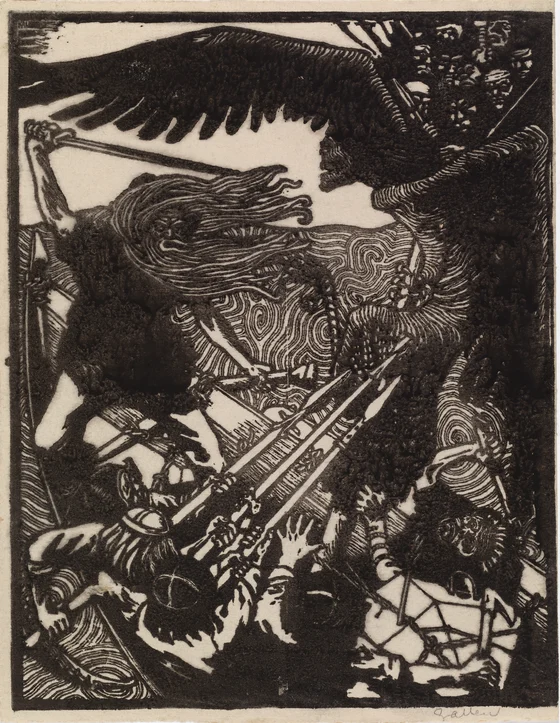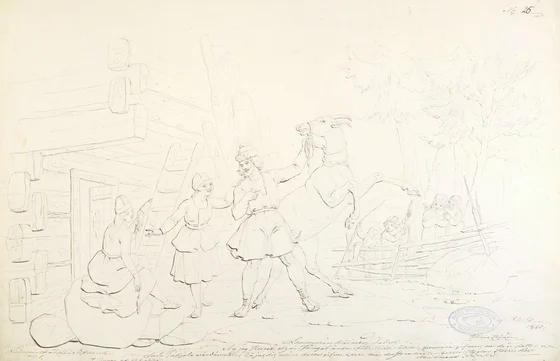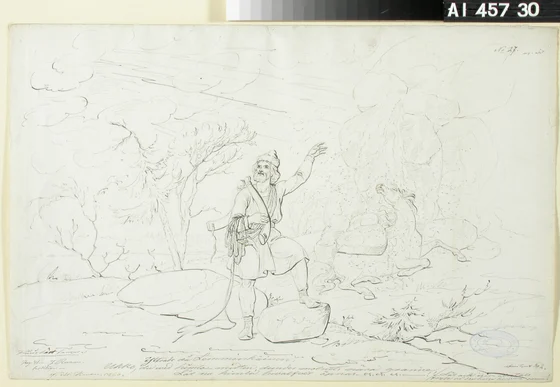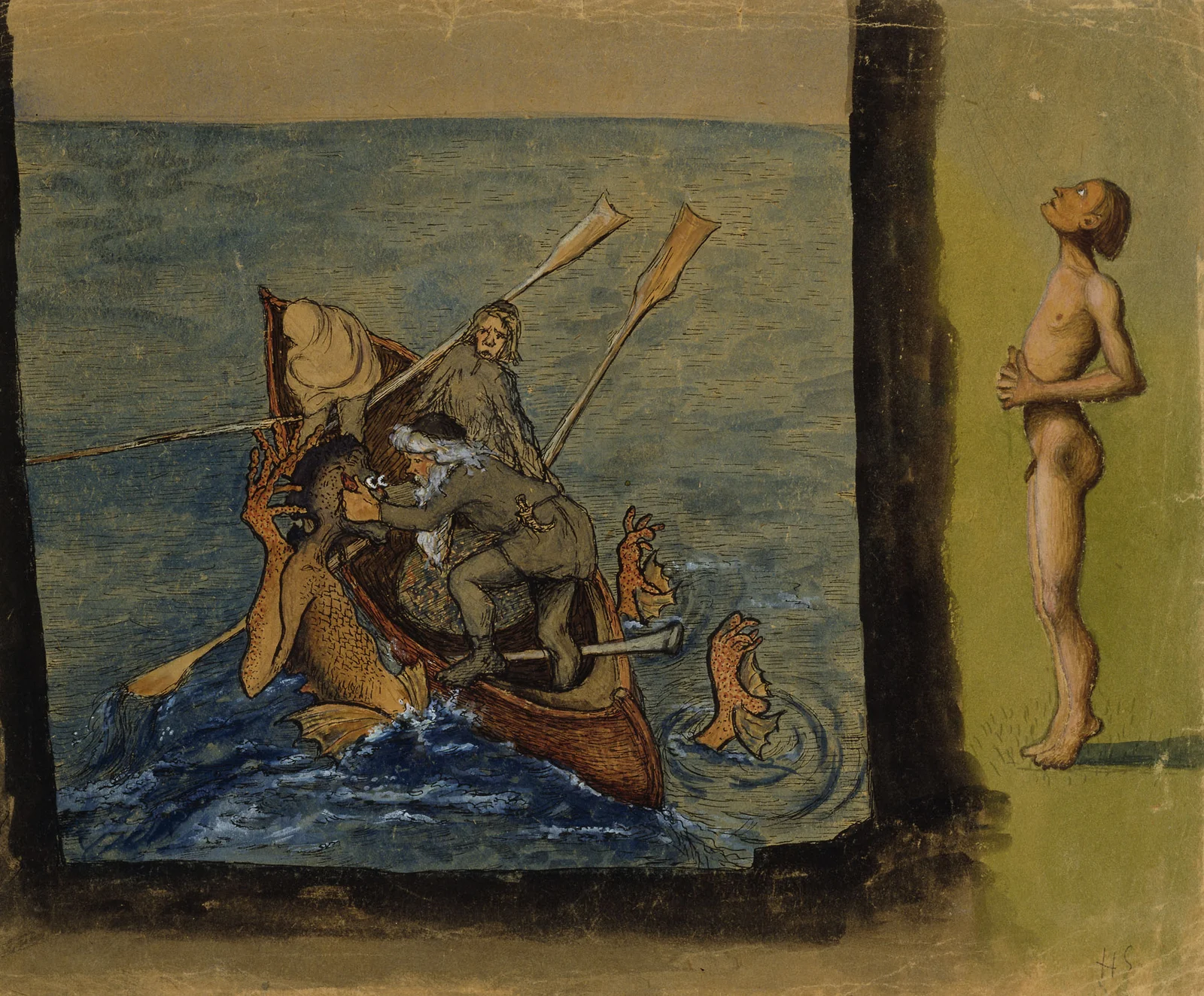
Iku-Turso sea encounter in Hugo Simberg’s Väinämöinen and Ikiturso (1890–1897)
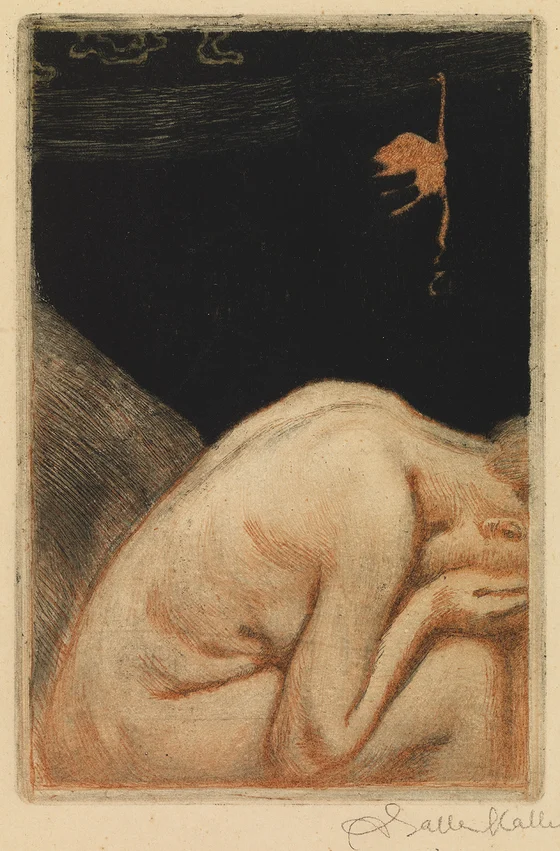
Actual original artist sheet inspected: left scene shows Väinämöinen grasping an emerging monster beside a boat, with other drawn monster features at right. Exact museum title identifies Ikiturso. Extra heads/limbs and dragonlike treatment belong to Simberg’s interpretation; the textual witness does not specify those counts or anatomy. Unrelated standing nude study at far right remains part of the unaltered artist sheet and is not identified as Iku-Turso. Individual multimedia licence CC0. Returned signed-original download preserved; stable source/download API links retained.
Overview
Louhi calls Iku-Turso, addressed as son of Old-age in Crawford’s translation, to destroy the fleeing Kalevala heroes and return the Sampo. She imagines them being taken to his deep sea-castles and devoured. Later a roaring disturbance and spray rise beside their boat, and Väinämöinen sees the monster’s head above the foam. He seizes it by the ears; this passage does not specify tentacles, horns or a fixed number of limbs.
Iku-Turso initially shows neither fear nor an answer. On the third questioning he admits his purpose and asks for release, promising never again to show his face to Väinämöinen’s people. The singer frees him and sends him back below. The narrator concludes that sailors have not seen his head since. The encounter therefore ends in a sworn withdrawal, not a killing or a demonstrated sinking of the heroes’ vessel.
Origins & earliest records
Kalevala, Runes XLII, John Martin Crawford’s English translation (1888), after Elias Lönnrot’s edited epic. Selected publication witness, not a date for the original oral tradition.
Records & interpretation
Complete relevant Runes XLII–XLIII and previously cited bridal encounters read. Actual transformation and sea encounter distinguished from hostile narrative labels.
Selected bibliography
Documented works and useful reading. This is not a list of every appearance.
- 01
Kalevala, Runes XLII
Complete selected epic passages; direct Finnish and archival variants not independently collated.
Family & connections
A source-supported family tree or inspiration record has not yet been compiled for this profile. Related reading below indicates a connection in subject matter, not a proven lineage or creative influence.
References
Sources supporting this profile. Linked pages have their own scope and editorial standards.
- Primary epic translationCrawford, Kalevala, Runes XLIIResearch access: 2026-10-05
Image credits
Historical illustrationIku-Turso sea encounter in Hugo Simberg’s Väinämöinen and Ikiturso (1890–1897)
Actual original artist sheet inspected: left scene shows Väinämöinen grasping an emerging monster beside a boat, with other drawn monster features at right. Exact museum title identifies Ikiturso. Extra heads/limbs and dragonlike treatment belong to Simberg’s interpretation; the textual witness does not specify those counts or anatomy. Unrelated standing nude study at far right remains part of the unaltered artist sheet and is not identified as Iku-Turso. Individual multimedia licence CC0. Returned signed-original download preserved; stable source/download API links retained.