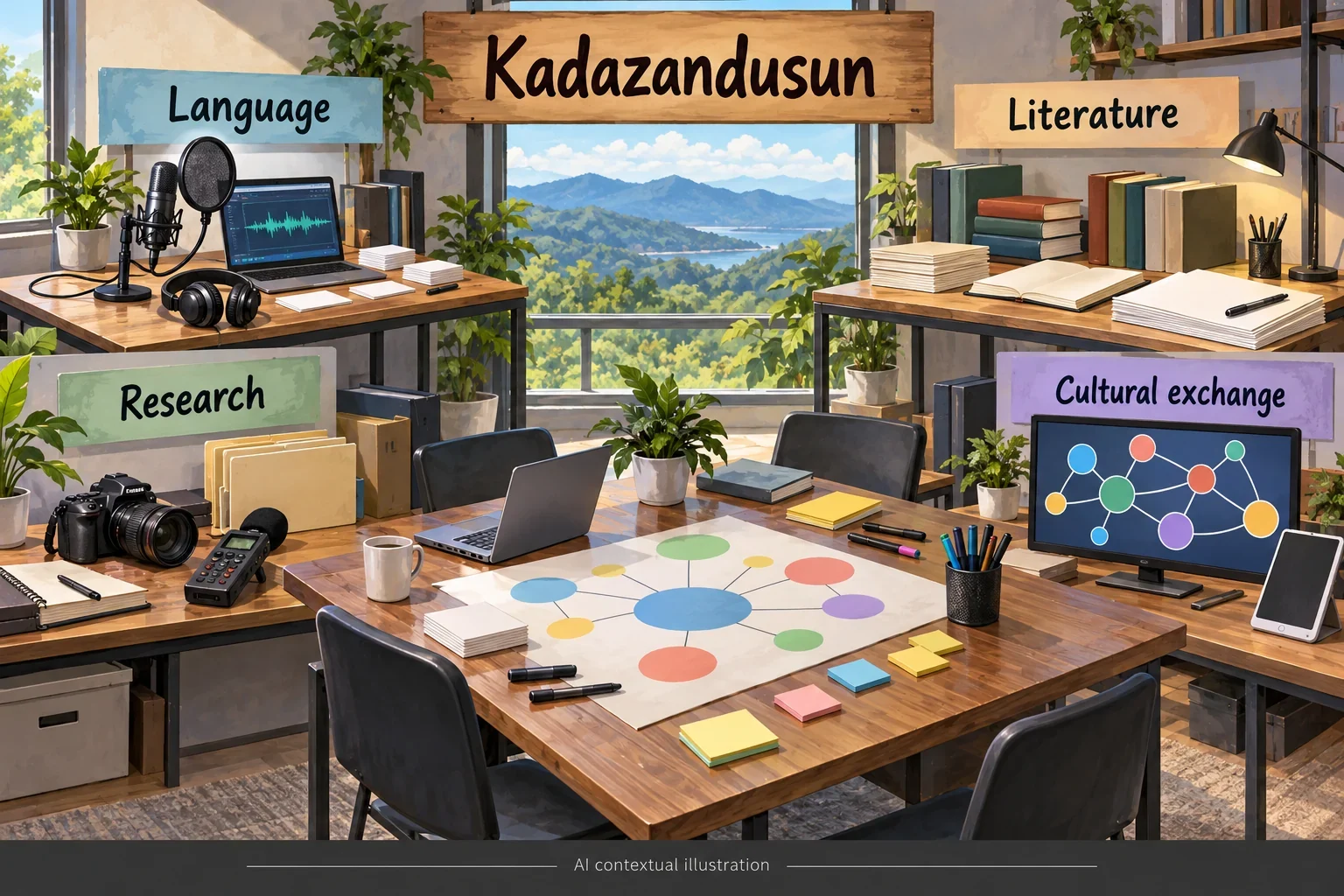
AI concept of Kadazandusun language, literature and cultural research using imagined contemporary tools.
Setting, tools and layout imagined; not ethnographic evidence.
Overview
The Kadazan Dusun Cultural Association describes a diverse Kadazandusun heritage and traces its institutional roots to the Society of Kadazan Penampang in 1953, followed by registration in 1966. Its objectives include language development across dialects, literature, arts and cooperation with other Indigenous organisations.
KDCA’s public introduction describes shared work to preserve and promote Sabah’s diverse Indigenous heritage. It links this work with Kaamatan celebrations and a cultural village. Kadazandusun here denotes a plural identity; the association’s account does not erase distinct community names or imply uniform practices.
History & identity
KDCA roots include the 1953 Penampang society.
Sources & representation
Selected native community passages retained.
Selected bibliography
Documented works and useful reading. This is not a list of every appearance.
- 01
- 02
Language & cultural connections
Source-supported language and cultural connections have not yet been compiled for this profile.
References
Sources supporting this profile. Linked pages have their own scope and editorial standards.
- Community institutional accountAbout UsResearch access: 2026-10-11
- Community institutional accountKDCA SabahResearch access: 2026-10-11
Image credits
AI contextual interpretationAI concept of Kadazandusun language, literature and cultural research using imagined contemporary tools.
Setting, tools and layout imagined; not ethnographic evidence.