Jinn
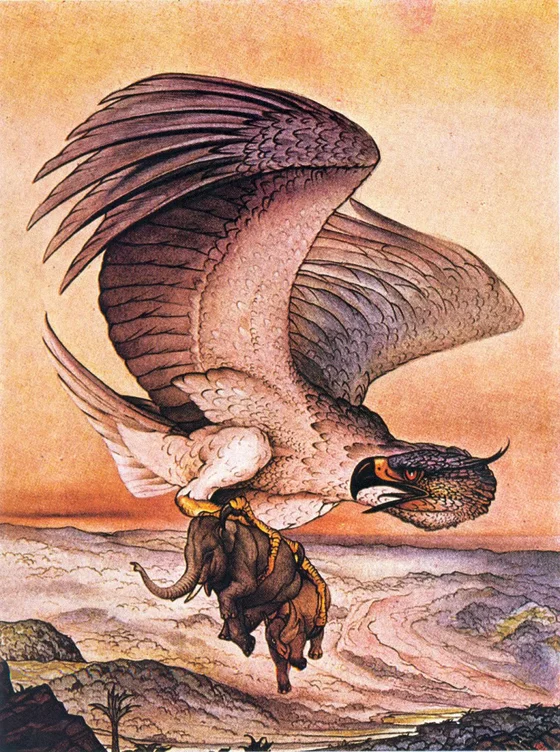
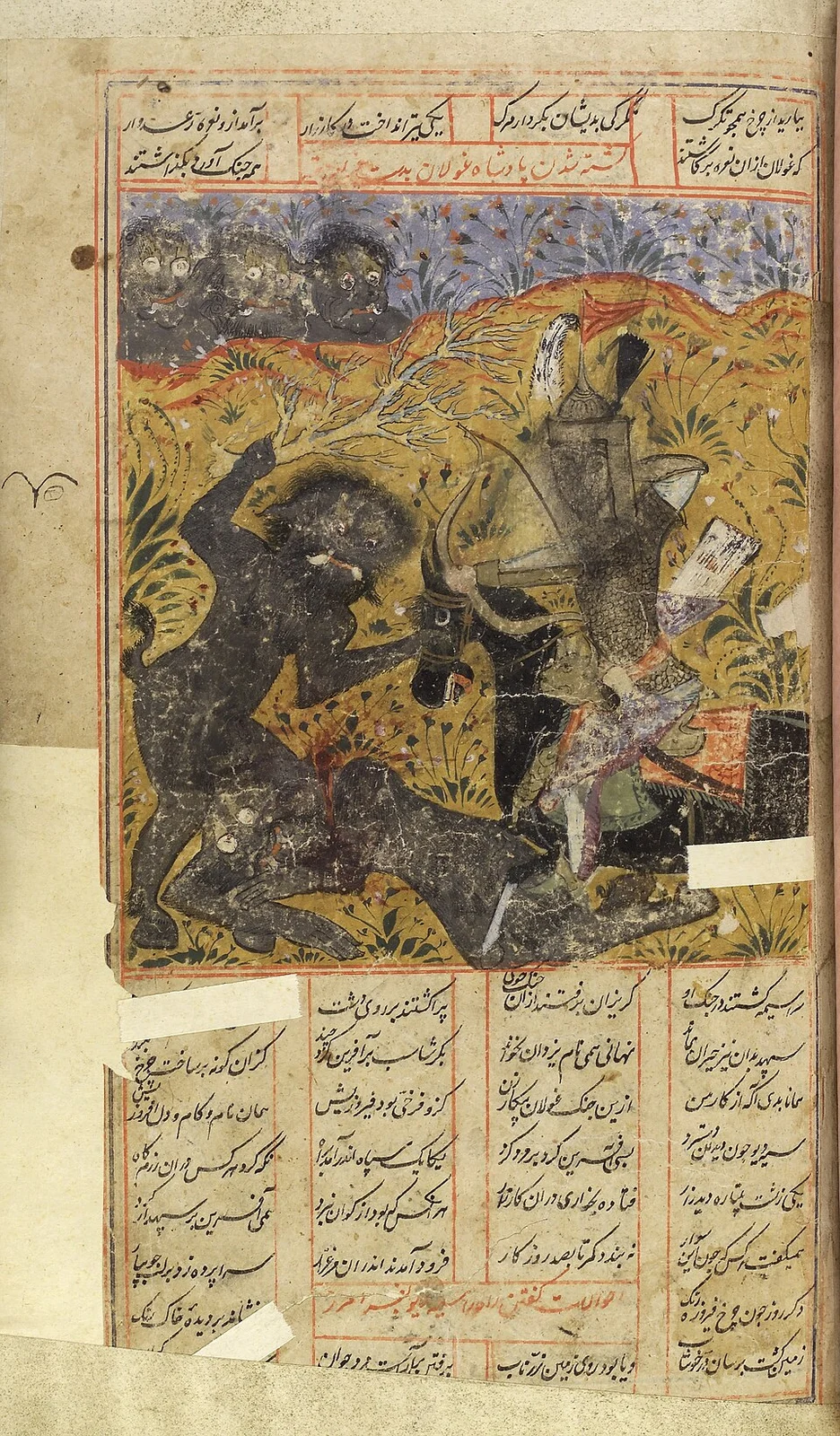
Image associated with the exact linked encyclopedia article; consult credited file description for its interpretation.
Overview
Jinn belong to Islamic scripture and living religious belief as well as to many literary traditions. Their roles include listeners, believers, rebels, powerful workers and individual adversaries or helpers. A particular tale’s visible body, container or bargain therefore needs its own citation rather than becoming the anatomy and behaviour of every jinn.
Qur’an 55:15 connects the creation of jinn with fire. In surah 72, a group hears the recitation and accepts its guidance. Verses 11 and 14 describe differences within their community, including righteous and less righteous members and those who submit to God alongside those who do not. These passages make belief and responsibility central; the category is not uniformly hostile. Verses 8–9 also describe the speakers finding guarded heavenly places where they had previously listened.
Two other passages give more specific connections. Qur’an 18:50 identifies Iblis as one of the jinn and describes his refusal of the command concerning Adam. In 27:38–40, a powerful jinn offers Solomon to bring the queen’s throne before the council rises, while a subsequent speaker offers a quicker action. This jinn’s boast establishes a particular offer within that scene, not an unlimited ability automatically possessed by every member of the category.
The Arabian Nights provides a different kind of witness. Andrew Lang’s selected edition states in its preface that its English stories follow Galland’s French version, with shortening and omissions for its intended readership. Its wording and narrative choices are consequently evidence for that adaptation. They should not be presented as an unmediated Arabic original or used to replace the scriptural passages. The volume calls the fisherman’s being a genius and uses genie in Aladdin’s story.
In The Story of the Fisherman, a poor man’s fourth and final daily cast retrieves a sealed metal vessel. Opening it releases smoke that gathers into an enormous being. The captive explains that he rebelled against the king of the genii and was imprisoned under an enchanted seal. During successive centuries he had promised an eventual rescuer riches, treasure and finally kingship with three wishes every day; prolonged captivity changed the promise into a threat to kill whoever released him. The wishes in this particular speech are a former daily promise, not a universal rule of three requests. The fisherman survives by pretending the giant could not have fitted inside the vessel, inducing it to become smoke again and resealing the lid.
The encounter continues after an embedded cautionary story about an ungrateful king. Offered wealth, the fisherman releases the captive under a fresh promise. The being kicks away the vessel, then guides him to a lake with fish of four colours and instructs him to take his catch to the Sultan, limiting him to one cast there each day. It disappears into an opening in the ground. The fisherman receives payment for the extraordinary fish, and their later behaviour starts another mystery. Thus the selected encounter moves from threatened punishment through bargaining to assistance; stopping at the first imprisonment would omit its outcome.
The inspected early Aladdin scenes distinguish a ring-bound helper from the being summoned by the lamp. Trapped underground, Aladdin rubs his ring while clasping his hands in prayer, and its servant brings him out. At home his mother cleans the lamp to improve its sale price, accidentally summoning another genie; Aladdin requests food, which arrives on valuable tableware. When those resources are exhausted, further requests sustain the household. These scenes contain repeated service and two different magical objects. They do not establish that all jinn inhabit lamps, nor are they the same episode as the fisherman’s changing promises.
Origins & earliest records
Qur’anic references provide seventh-century scriptural attestation. The selected verses concern creation, belief, disobedience and an offer of service; they do not date the beginning of every oral account. Lang’s volume is a much later English adaptation explicitly mediated through Galland’s French version. Its publication history dates this retelling, not the origin of jinn belief or every Nights episode.
Records & interpretation
Scripture and its identified translation document religious teaching; the edited tale collection documents particular literary representations and European transmission. These witnesses have different purposes and should be read with their own context. They do not supply a biological evolutionary tree or establish one physical description shared by every belief community. Contemporary regional accounts and theological interpretation require their own named sources.
In the literature
“I am the Slave of the Ring, and will obey thee in all things.”
“Aladdin and the Wonderful Lamp”, Aladdin’s first summoning of the ring genie · English adaptation after Antoine Galland’s French version; individual English translator not credited in this e-text
The ring genie speaks in the Galland-derived English adaptation; this is not a Qur’anic quotation.
“he shut me up in this vase of copper,”
“The Story of the Fisherman”; paragraph beginning “"I rebelled against the king of the genii. To punish me, he…” · English adaptation after Antoine Galland’s French version; individual English translator not credited in this e-text
The captive genius describes punishment in a sealed copper vessel.
Selected bibliography
Documented works and useful reading. This is not a list of every appearance.
- 01
Qur’an 55:15; 72:1–15; 18:50; 27:38–40
Located verses inspected through Quran.com, including surrounding context where displayed. No claim to have surveyed every commentary or translated the Arabic independently.
- 02
The Arabian Nights Entertainments: The Story of the Fisherman and its resumed frame
Preface, release/capture encounter and resumed frame through the lake and Sultan’s payment inspected. Embedded tales form part of a wider cycle, not a complete surveyed Nights corpus.
- 03
The Arabian Nights Entertainments: Aladdin and the Wonderful Lamp
Located early scenes of escape with the ring, cleaning the lamp, food and repeated service inspected; this expansion does not claim a complete reading of Aladdin’s later adventures.
- 04
The Arabian Nights Entertainments (selected and edited by Andrew Lang)
Exact contiguous excerpt checked against the linked primary e-text on 2026-10-05; only whitespace normalized. Gutenberg identifies Longmans, Green 1918 (1898); preface explicitly describes translation from Galland and abridgment.
Family & connections
A source-supported family tree or inspiration record has not yet been compiled for this profile. Related reading below indicates a connection in subject matter, not a proven lineage or creative influence.
Located primary passages
Specific passages supporting details in this entry, grouped by their published witness.
The Arabian Nights Entertainments (selected and edited by Andrew Lang)
Exact contiguous excerpt checked against the linked primary e-text on 2026-10-05; only whitespace normalized. Gutenberg identifies Longmans, Green 1918 (1898); preface explicitly describes translation from Galland and abridgment.
- The captive genius describes punishment in a sealed copper vessel.
- The ring genie speaks in the Galland-derived English adaptation; this is not a Qur’anic quotation.
“Aladdin and the Wonderful Lamp”, Aladdin’s first summoning of the ring genie
The passage documents this literary version, not zoological existence, earliest attestation or a universal statement of living tradition. Specific Galland-mediated Lang literary witness; not a Qur’anic passage, a universal jinn convention or an independently established earliest attestation.
Qur’an 55:15; 72:1–15; 18:50; 27:38–40
Quran.com display, The Clear Quran translation credited to Dr.Mustafa Khattab; selected page and displayed contextual verses accessed2026-10-05. Translation publication date and full-edition licence not independently verified.
- Creation of jinn is associated with fire, in contrast with the neighbouring account of human creation from clay.
Only selected verses and context inspected; abridged tafsir preview is not represented as full commentary reading. No modern translation excerpt added or universal zoological inference made.
Primary source witness
Quran.com display, The Clear Quran translation credited to Dr.Mustafa Khattab; selected page and displayed contextual verses accessed2026-10-05. Translation publication date and full-edition licence not independently verified.
- A group of jinn hears revelation and speaks about belief, guidance and its own differences. The passage distinguishes better and worse moral conduct and differing allegiances, rather than presenting all jinn as a single malicious character.
Displayed opening15verses only; no claim to whole surah or complete Qur’an/commentary coverage, and no lamp-service convention imported from literary tales.
Primary source witness
Quran.com display, The Clear Quran translation credited to Dr.Mustafa Khattab; selected page and displayed contextual verses accessed2026-10-05. Translation publication date and full-edition licence not independently verified.
- Iblis is identified as belonging to the jinn and as disobeying the command. The verse addresses taking him and his descendants as patrons.
Selected passage does not identify every jinn with Iblis, nor establish a complete genealogy; theological differences beyond the inspected rendering are not resolved.
Primary source witness
Quran.com display, The Clear Quran translation credited to Dr.Mustafa Khattab; selected page and displayed contextual verses accessed2026-10-05. Translation publication date and full-edition licence not independently verified.
- In Solomon’s council a powerful jinn volunteers to bring the throne before the council ends and asserts fitness for the task. The next speaker, identified by scriptural knowledge, makes a faster offer.
The jinn’s offer and the subsequent speaker are kept distinct. No unsupported identification of that next speaker, or claim that a lamp controls this figure.
The Arabian Nights Entertainments: The Story of the Fisherman and its resumed frame
Gutenberg128 identifies selected Longmans,Green1918(1898) edition, Andrew Lang editor. Preface states translation through Antoine Galland’s French version and abridgement by Fairy Book writers; individual English tale translator unnamed in inspected text.
- Lang explicitly describes French Galland mediation, shortening and omissions, and assigns the translations collectively to Fairy Book writers. His speculative early history and universal-story comparisons are editorial opinions, not independently established first attestations.
- A poor fisher releases smoke from a sealed vessel; it gathers into a giant genius. The genius says the king of the genii imprisoned him and that changing vows of reward eventually became a death threat. The fisher gets him to demonstrate entering the vessel and reseals it, reversing their positions.
The Story of the Fisherman, opening vessel encounter through first embedded tale
- On a new promise of riches, the fisher releases the genius again. He kicks away the vessel, guides the man to a four-hilled lake and permits one daily catch. The man takes four differently coloured fish to the Sultan and receives a substantial payment, fulfilling the rescue’s promised benefit.
The Story of the Fisherman, resumed encounter after Douban frame through first400-gold-piece payment
- A false uncle traps Aladdin after failing to secure the lamp. Rubbing the magician’s ring summons a frightening being that frees him. His mother later rubs the dirty lamp and summons another being, which supplies food and silver vessels. Ring and lamp are separate objects in these early scenes.
Aladdin and the Wonderful Lamp, beginning through first ring rescue and lamp meals
Publication/version context only. No primary Arabic manuscript or complete translation history was inspected; Lang is not silently named as sole translator. Full selected opening read, but embedded Douban and further nested tales are not represented as completely inspected here. Captor is this version’s king of the genii; Solomon is not imported from another version. Resumed genius encounter through payment read completely; later transformed-fish investigation and Young King tale are separate and not claimed fully reviewed. Genie is not permanently the fisher’s slave. Selected beginning only, not complete Aladdin. Later wish limits, relative powers or franchise character designs are not inferred; existing brief ring quotation remains unchanged.
Encyclopedia background
An additional attributed reference, separate from the editorial profile above.
Read the open encyclopedia overview
Jinn (Arabic: جِنّ), also romanized as djinn or anglicized as genies, are supernatural beings in Islam, ancient Arabian religion and Arabic folklore and mythology. Like humans, they are accountable for their deeds and can be either believers (Mu'minun) or unbelievers (kuffar), depending on whether they accept God's guidance.
Since jinn are neither innately evil nor innately good, Islam acknowledged spirits from other religions and could adapt them during its expansion. Likewise, jinn are not a strictly Islamic concept; they may represent several pagan beliefs integrated into Islam. Islam places jinn and humans on the same plane in relation to God, with both being subject to divine judgement and an afterlife. The Quran condemns the pre-Islamic Arabian practice of worshipping or seeking protection from them.
While they are naturally invisible, jinn are supposed to be composed of thin and subtle bodies (أَجْسَام, ajsām) and are capable of shapeshifting, usually choosing to appear as snakes, but also as scorpions, lizards, or humans. A jinni's interaction with a human may be negative, positive, or neutral, and can range from casual to highly intimate, even involving sexual activity and the production of hybrid offspring. However, they rarely meddle in human affairs, preferring instead to live among their own in a societal arrangement similar to that of the Arabian tribes. Upon being disturbed or harmed by humans, they usually retaliate in kind, with the most drastic interactions leading them to possess the assailant's body, thus requiring exorcism.
Individual jinn appear on charms and talismans. They are called upon for protection or magical aid, often under the leadership of a king. Many people who believe in jinn wear amulets to protect themselves against their assaults, as they may be called upon by sorcerers and witches to cause harm. A commonly held belief is that jinn cannot hurt someone who wears something with a name of God written on it. These folkloric beliefs and practices, although especially common throughout the Muslim world in the past, have been met with increasing disapproval due to their association with idolatry.
Text from Wikipedia contributors, “Jinn”. CC BY-SA 4.0. Extracted introduction; formatting changed. Retrieved 5 October 2026. The source article may have changed since retrieval.
References
Sources supporting this profile. Linked pages have their own scope and editorial standards.
- Scripture and identified translationQur’an 55:15, creation passageResearch access: 2026-10-05
- Scripture and identified translationQur’an, surah 72: selected community and belief passagesResearch access: 2026-10-05
- Scripture and identified translationQur’an 72:11, with displayed context 72:1–15Research access: 2026-10-05
- Scripture and identified translationQur’an 18:50, Iblis and the jinnResearch access: 2026-10-05
- Scripture and identified translationQur’an 27:39, with displayed context 27:38–40Research access: 2026-10-05
- Primary literary adaptationLang’s Arabian Nights: preface, Fisherman frame and selected early Aladdin scenesResearch access: 2026-10-05
Image credits
Reference illustrationJinn
Image associated with the exact linked encyclopedia article; consult credited file description for its interpretation.