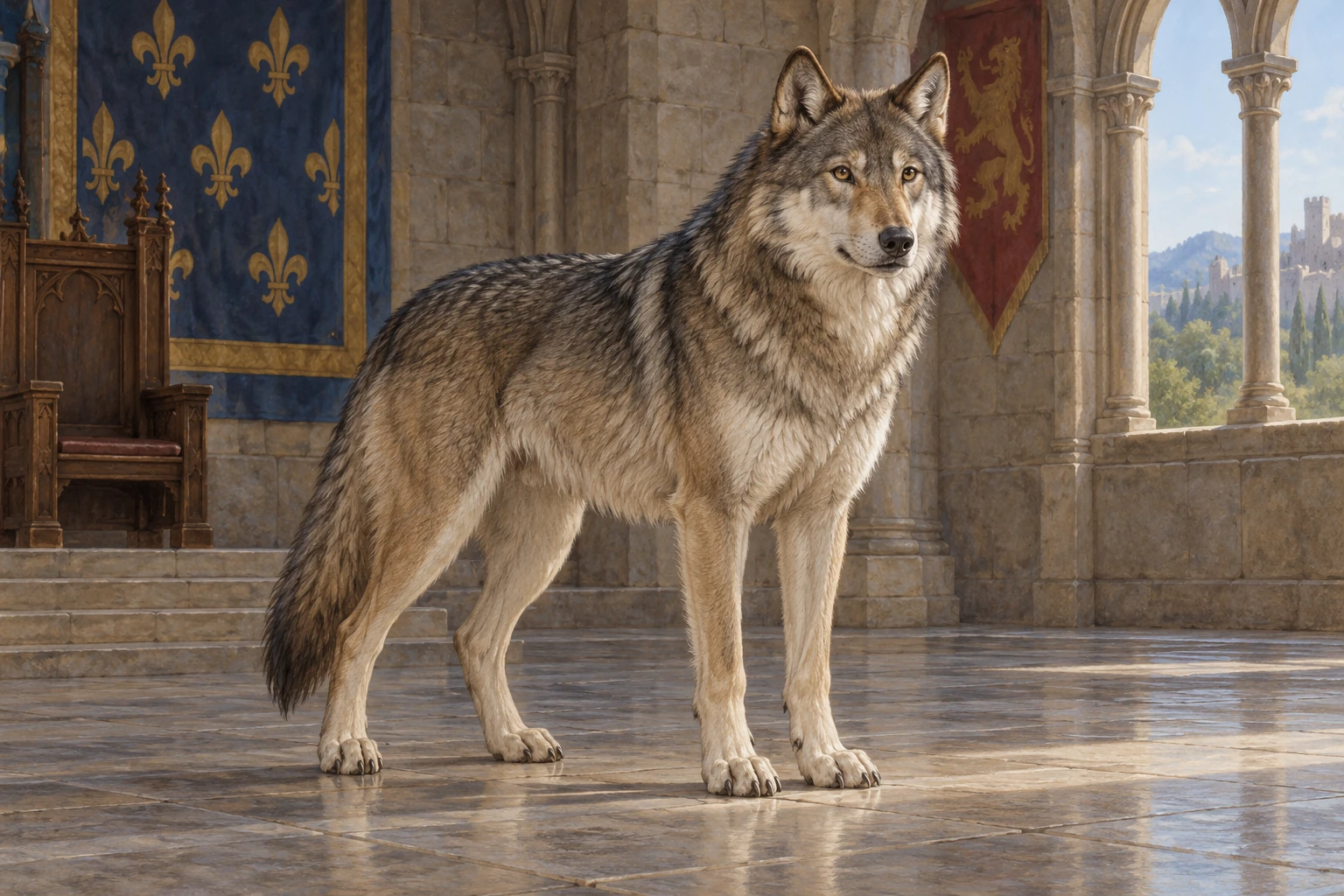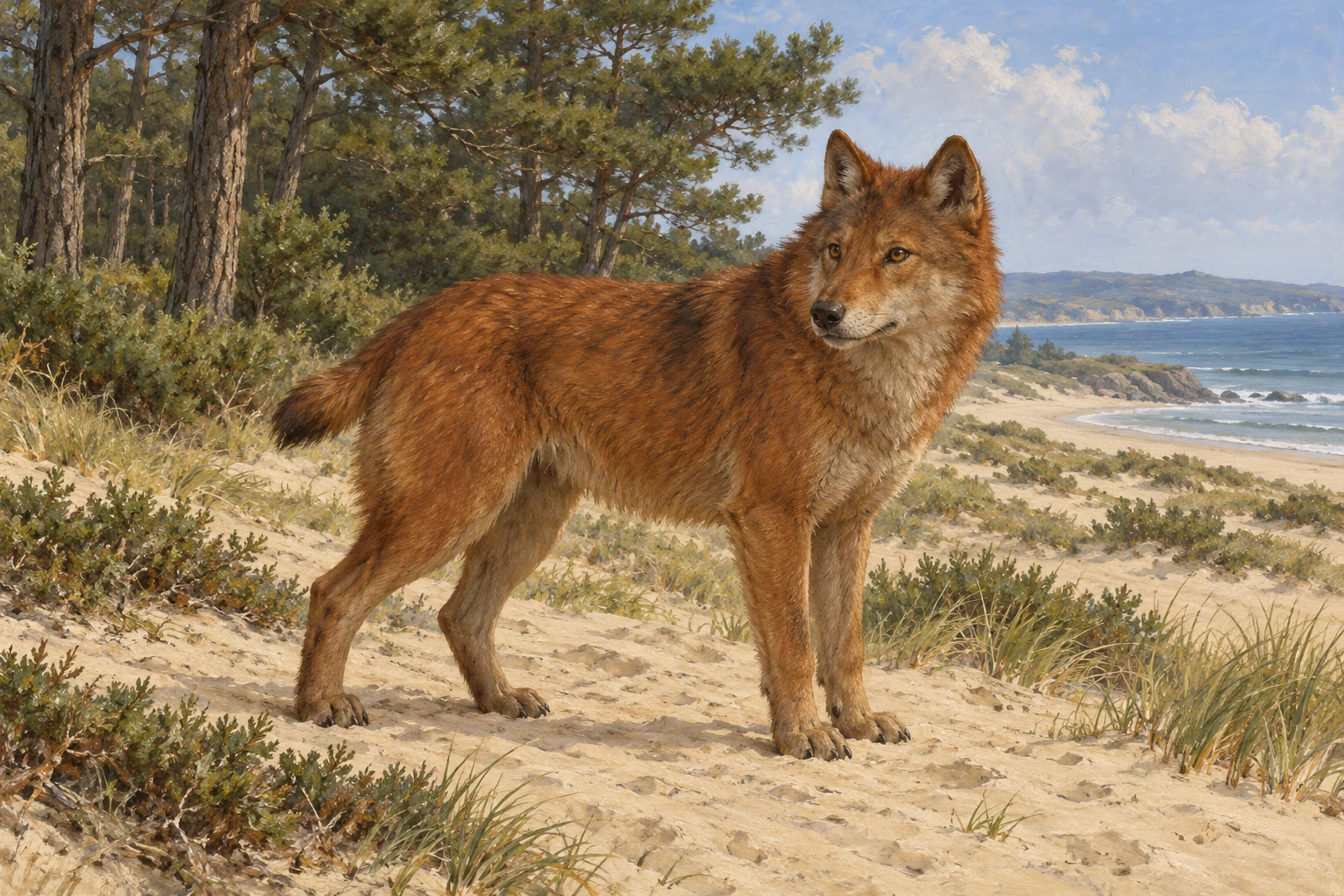
AI-generated interpretation of Marguerite Poirier’s reported animal description as transmitted by Baring-Gould: reddish fur, a relatively stout body, small head and short tail. Proportions and landscape are imagined. This is not a portrait of Jean Grenier, proof of transformation or documentary evidence of the alleged attacks.
Illustrates an attributed description rather than independently establishing an animal’s identity or a person’s guilt.
Overview
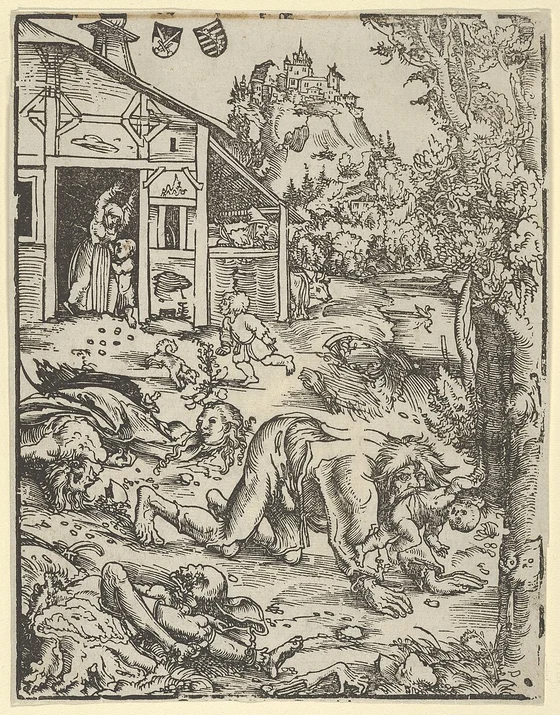
Baring-Gould devotes a complete chapter of his 1865 Book of Were-Wolves to Jean Grenier. The account introduces him as an impoverished thirteen-year-old who frightens young shepherds with claims that he sometimes becomes a wolf. Its elaborate dialogue and hostile physical portrait are part of the nineteenth-century narration, not an independently recorded interview or a reliable diagnosis from appearance. The chapter’s own retrospective source note cites Delancre’s Tableau de l’Inconstance.
Marguerite Poirier reports an attack while tending sheep. She says that a wolf-like animal tears her clothing and that she drives it away with her staff. Her description gives it red hair, a small head, a short tail and a stouter body than an ordinary wolf. Grenier’s earlier claims make the animal an object of suspicion. The narrated attack does not show her directly watching a human change shape, and the reported appearance is not a universal werewolf anatomy.
Before the Bordeaux court, Grenier is said to describe a supernatural patron, a wolf-skin and a salve, with his ordinary clothes left behind. His reported timetable includes daytime as well as night activity and is not a recurring full-moon rule. Baring-Gould recounts confessions to attacks and killings and says that investigators matched places, missing children and witnesses. Those assertions are transmitted through this later author; neither the original trial record nor the alleged crimes have been independently authenticated here. Accusations against Grenier’s father are explicitly rejected in the narrative.
The reported judgment separates alleged transformation from criminal responsibility and considers the defendant’s age, education and intellectual condition. He is sentenced to confinement in a Bordeaux monastery. The chapter continues beyond the court: Delancre is said to visit seven years later, hear Grenier repeat his claims and describe his continued confinement. It then reports his death at twenty. The author’s concluding medical explanation and prejudicial language remain historical interpretations, not current medicine or proof that mental illness causes violence. This is a complete mediated case narrative, distinct from the earlier saga of enchanted skins and from the rules of a modern fantasy character.
Origins & earliest records
Sabine Baring-Gould’s 1865 historical collection cites Delancre rather than presenting an independently inspected original court record. The selected chapter supplies no trial year. Confessions, dialogue and findings are presented as the author’s account.
Records & interpretation
Complete chapter VII, including its synopsis, case narrative, confinement and death, concluding commentary and single attached note, read from the retained historical text. The original court records and Delancre printing were not independently inspected.
Selected bibliography
Documented works and useful reading. This is not a list of every appearance.
- 01
The Book of Were-Wolves
Complete chapter VII, Jean Grenier, with note 1 citing Delancre, Tableau de l’Inconstance, p. 305. Original Delancre printing and trial records not inspected.
Family, evolution & connections
Werewolf
Baring-Gould’s northern saga material and his Grenier chapter represent different kinds of evidence. The saga narrates enchanted wolf skins and the actions of named literary characters; the Grenier chapter transmits accusations, confessions and a court’s response to a real defendant. A shared wolf-transformation theme does not authenticate the allegations or turn the author’s medical commentary into a modern diagnosis. Neither account establishes universal full-moon or contagious-bite rules.
Bisclavaret in Mason’s Marie de France translation
Both accounts connect claims of wolf form with clothing, but their narrative status and outcomes differ. Mason’s Bisclavaret is a literary lay in which stolen clothes prevent restoration and their recovery permits the baron’s return. Baring-Gould transmits Grenier’s claims about a supplied wolf-skin and discarded ordinary clothes within a reported trial and confinement. The comparison is between motifs in texts, not proof of bodily transformation, common historical guilt or direct transmission.
References
Sources supporting this profile. Linked pages have their own scope and editorial standards.
- Historical authored collection transmitting an attributed caseBaring-Gould, The Book of Were-Wolves (1865), chapter VII: Jean GrenierResearch access: 2026-10-26
Image credits
Modern interpretation of a historical literary accountAI-generated interpretation of Marguerite Poirier’s reported animal description as transmitted by Baring-Gould: reddish fur, a relatively stout body, small head and short tail. Proportions and landscape are imagined. This is not a portrait of Jean Grenier, proof of transformation or documentary evidence of the alleged attacks.
Illustrates an attributed description rather than independently establishing an animal’s identity or a person’s guilt.