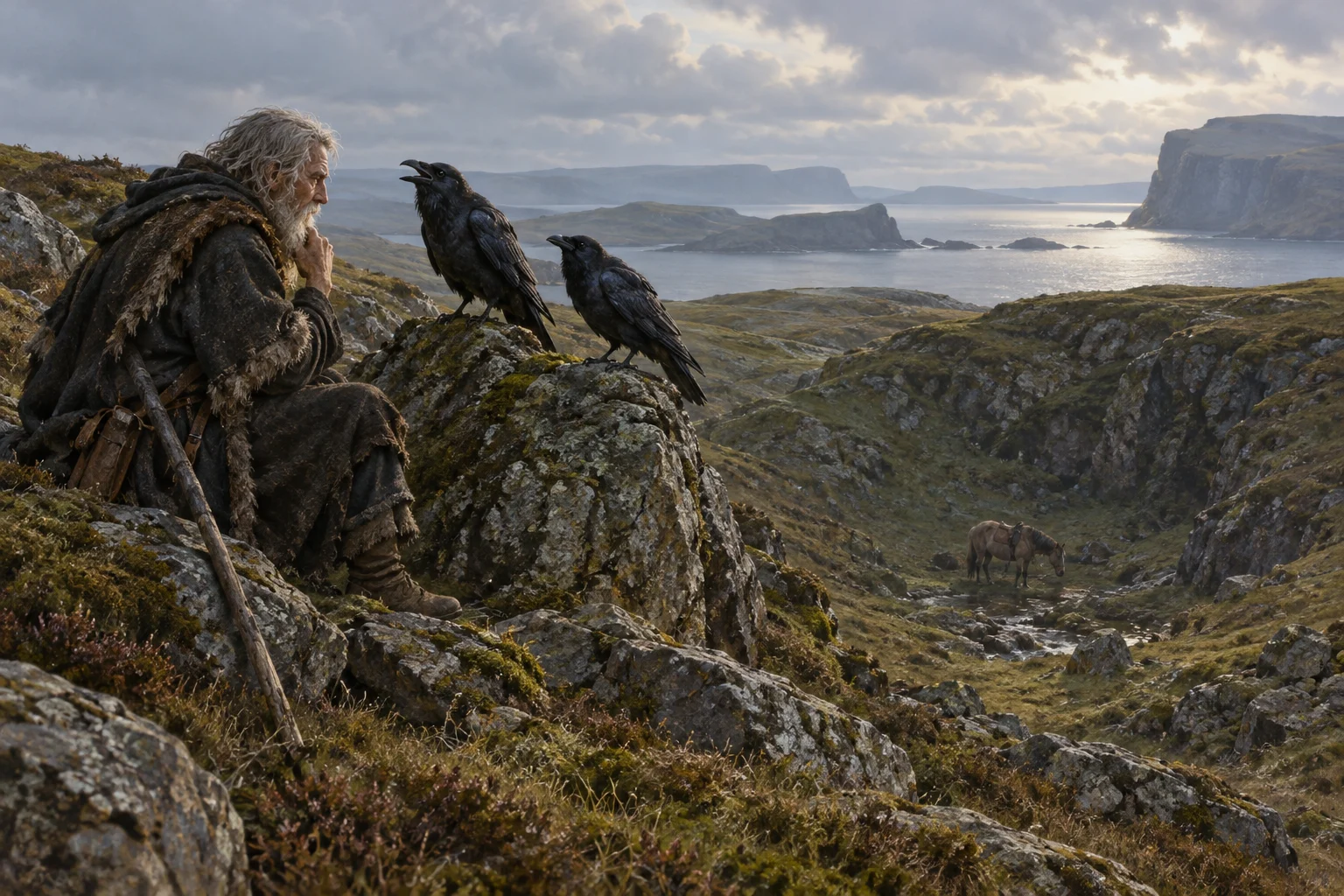
AI interpretation of a legendary man listening to two ravens about his lost horse.
AI-generated unofficial original narrative interpretation. Selected source-specific scene; unspecified appearance and setting imagined. Not a historical reconstruction or community portrait.
Overview
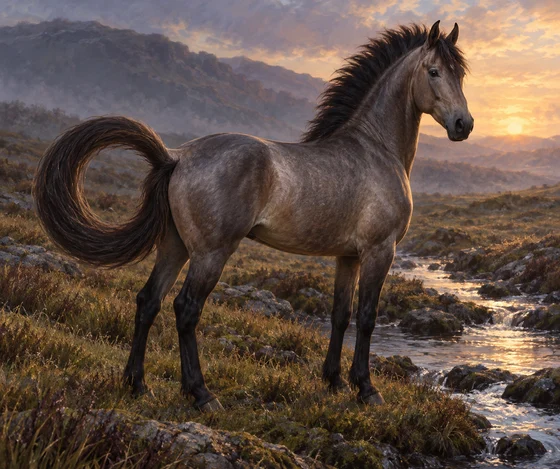
Spence records supernatural powers attributed to people locally called Finns or their supposed descendants. They become visible or invisible, take animal, bird or fish forms, and understand raven speech. One unnamed old man learns from two ravens where his lost horse has fallen. Other accounts attribute wind-raising and calming, rapid rowing between Unst and Bergen, and recovery of things lost at sea. In an Unst tale a father retrieves a turbot carrying the fishing attachment his sons had lost, returning before supper is ready.
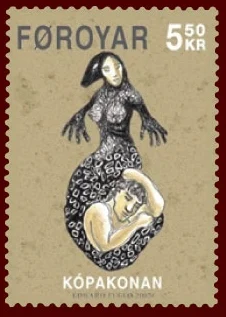
The Finns are said to be the only beings able to ride the Neugle safely. Men and women also possess seal-like garments enabling travel in water; losing the garment confines them to land. A Norway Finn who elopes with a woman scatters chips from an oar. Her pursuing father sees these as a whole escorting fleet and abandons the chase. These are distinct recorded capabilities and episodes, rather than evidence that every named participant performs every feat.
Spence interweaves these stories with speculative claims about Finnish settlement and Pictish origins. Those historical deductions are not established by the supernatural narratives and are not adopted here. This entry concerns his legendary figures and magical attributions; it does not characterise actual Finnish or Sámi people as supernatural. Nor does the shared sea association establish identity with every Orcadian Finfolk account or every separate seal-wife telling.
Origins & earliest records
John Spence, Shetland Folk-Lore (Lerwick: Johnson & Greig, 1899), The Picts and Their Brochs, selected Finn legends, pp.20–26.
Records & interpretation
Located historical collector’s narrative, with source-specific roles and explicit limits on bodily description.
3D model
An original procedural model made for the Mythscribe World Builder. It is an interpretation based on this entry, not a historical source or a depiction from the records cited here.
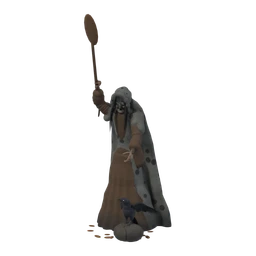
Procedural folklore creature kit · 29,644 triangles · 2.2 MB
Opens mythscribe.cloud in a new tab. Sign-in is required.
Selected bibliography
Documented works and useful reading. This is not a list of every appearance.
- 01
Shetland Folk-Lore: The Picts and Their Brochs, Finn legends
Original title and selected accounts; author’s ethnological conjectures explicitly separated from story evidence.
Family & connections
A source-supported family tree or inspiration record has not yet been compiled for this profile. Related reading below indicates a connection in subject matter, not a proven lineage or creative influence.
References
Sources supporting this profile. Linked pages have their own scope and editorial standards.
- Primary collected folklore narrativeShetland Folk-Lore: The Picts and Their Brochs, Finn legendsResearch access: 2026-10-05
Image credits
AI-generated interpretationAI interpretation of a legendary man listening to two ravens about his lost horse.
AI-generated unofficial original narrative interpretation. Selected source-specific scene; unspecified appearance and setting imagined. Not a historical reconstruction or community portrait.