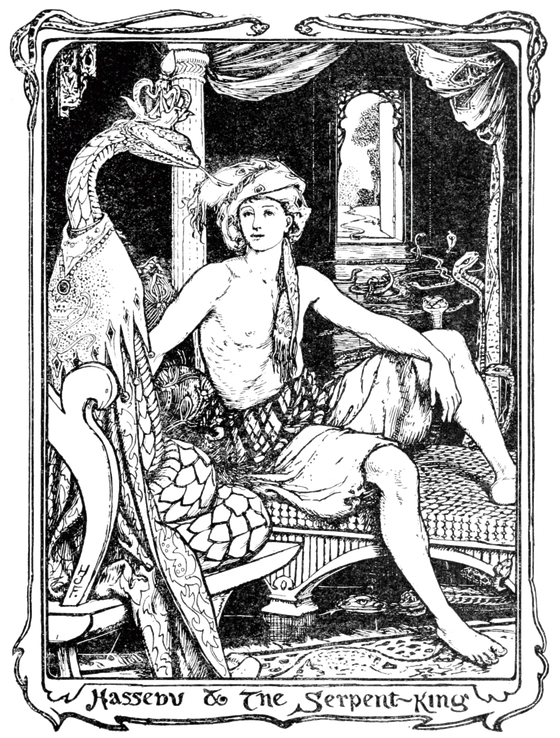
A sourced illustration has not yet been added. This gap is included in the coverage record.
Overview
Faaraasee is the surviving horse behind the seventh locked door in Mchaawee’s house. The other rooms Keejaanaa examines contain animal bones and human skulls. The horse speaks to the boy, rejects his belief that the magician is his father and explains the householder’s appetite. After learning the boy’s name, he gives his own and asks to be unfastened.
He directs Keejaanaa to reopen the room containing liquid gold, swallows all of it and goes to wait beneath a nearby large tree. Before leaving he predicts the intended trap: the teacher will heat a great pot of butter and suggest a swing game above it. His advice allows the boy to make the magician demonstrate instead and escape after reversing the scheme. The narration then confirms the sequence the horse predicted.
Faaraasee is already waiting when Keejaanaa runs to the tree. He invites the youth onto his back and carries him a great distance. Near a large town they decide to remain and build a house. The horse coughs up the stored gold, enabling purchases of enslaved people, cattle and other necessities. The narrative connects their conspicuous wealth to the local sultan’s visit and subsequent friendship with Keejaanaa.
The youth eventually marries the sultan’s daughter, and they have a son. The ending explicitly retains Keejaanaa’s love for Faaraasee rather than disposing of the helper after his service. Speech, precise protective knowledge and the swallowing and recovery of an entire room’s gold are the horse’s located extraordinary acts; neither wings nor a biological breed is described.
Origins & earliest records
Bateman presents these accounts as tales told to him in Zanzibar and translated from Swahili; individual narrators are not named in this edition.
Records & interpretation
IX, The Magician and the Sultan’s Son, complete pp. 183–194; horse discovery and gold swallowing pp. 187–189, rescue pp. 191–192, recovered wealth and lasting attachment pp. 193–194.
Selected bibliography
Documented works and useful reading. This is not a list of every appearance.
- 01
Zanzibar Tales
IX, The Magician and the Sultan’s Son, complete pp. 183–194; horse discovery and gold swallowing pp. 187–189, rescue pp. 191–192, recovered wealth and lasting attachment pp. 193–194.
- 02
Zanzibar Tales: Told by Natives of the East Coast of Africa
Chicago: A. C. McClurg & Co., 1901; George W. Bateman, translated from the original Swahili. Preface dated 1 August 1901; narrators are not individually named.
Family & connections
A source-supported family tree or inspiration record has not yet been compiled for this profile. Related reading below indicates a connection in subject matter, not a proven lineage or creative influence.
Located primary passages
Specific passages supporting details in this entry, grouped by their published witness.
Zanzibar Tales
Chicago: A. C. McClurg & Co., 1901; George W. Bateman, translated from the original Swahili. Preface dated 1 August 1901; narrators are not individually named.
- The speaking horse identifies the magician’s cannibalism, asks the prince to release it and explains how to reverse the proposed killing.
IX, The Magician and the Sultan’s Son; pp. 187–189, the captive horse reveals the danger
- Faaraasee swallows the liquid gold and waits outside while the prince carries out the escape plan, then bears him away.
IX, The Magician and the Sultan’s Son; pp. 188–192, gold and coordinated escape
- The horse disgorges the gold to fund the prince’s new household; the prince eventually marries a sultan’s daughter and continues to love the horse as his own soul.
IX, The Magician and the Sultan’s Son; pp. 192–195, settlement and lasting companionship
Entire chapter read. The author’s colonial framing and unnamed contributors limit provenance; no earliest-origin or exclusive regional claim inferred. Bateman’s lifespan remains unverified.
References
Sources supporting this profile. Linked pages have their own scope and editorial standards.
- Historical oral-tale translationThe Magician and the Sultan’s SonResearch access: 2026-10-05
Image credits
A sourced illustration has not yet been added. This gap is included in the coverage record.