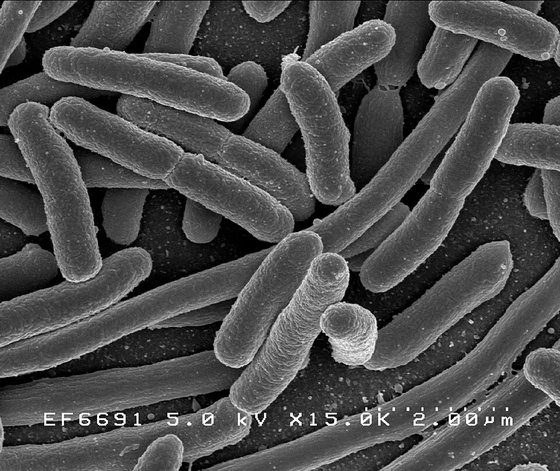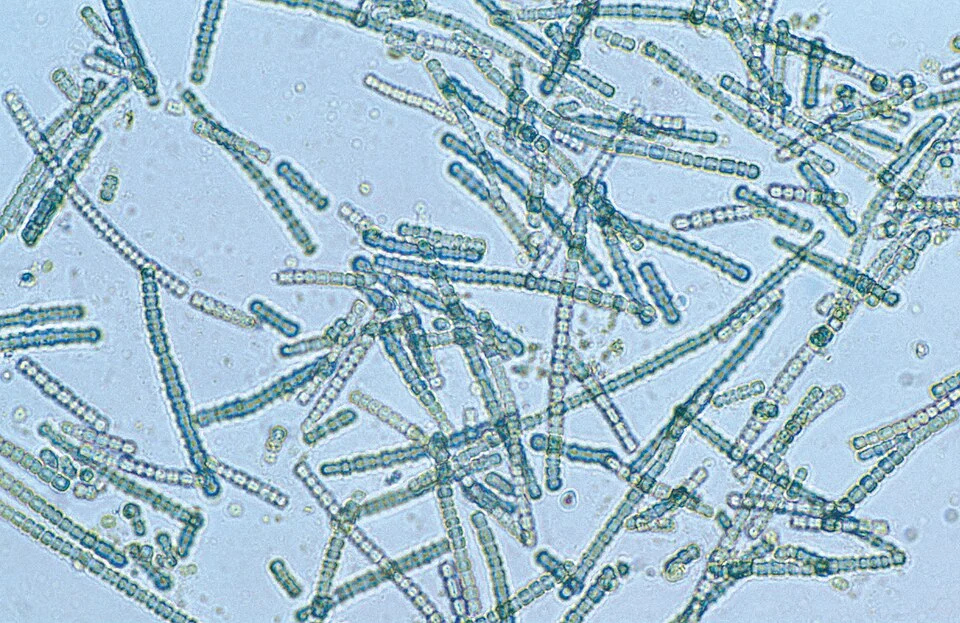
A blue-green algae species – Cylindrospermum sp – under magnification at the Adelaide laboratories of CSIRO Land and Water, 1993.
Illustration associated with the linked encyclopedia article. Refer to the file record for the subject and interpretation.
Overview
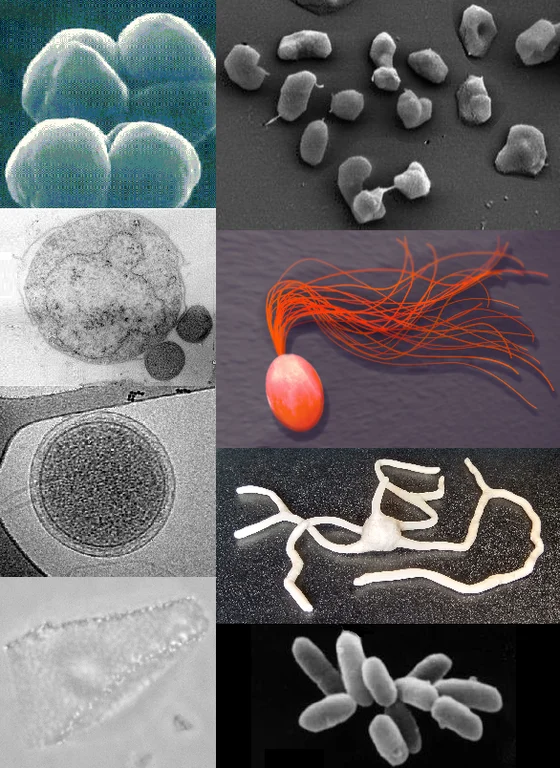
Cyanobacteria capture light energy and release oxygen through photosynthesis. Although often called blue-green algae, they belong to Bacteria rather than to the eukaryotic algae. Their forms include individual cells, colonies and filaments. They inhabit waters, moist surfaces and microbial mats, and their ecological roles cannot be reduced to the harmful blooms produced by some members.
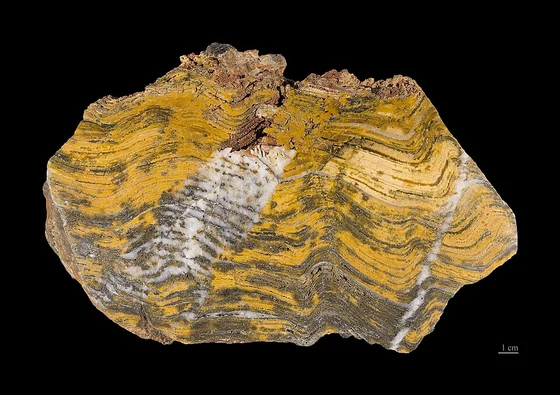
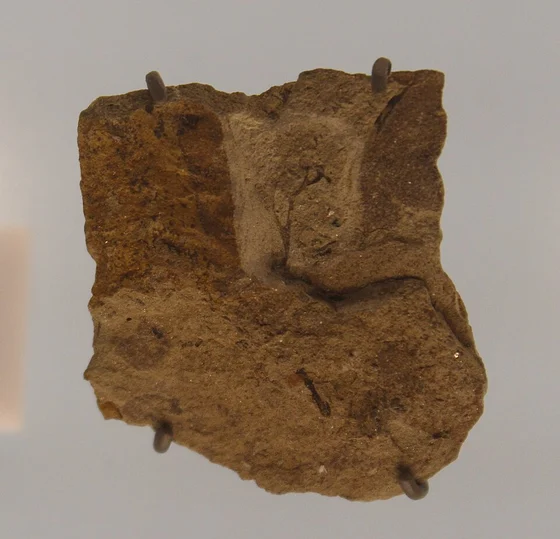
The history of atmospheric oxygen is closely connected with microbial photosynthesis, but the first origin of this process is difficult to date. Ancient layered structures and chemical changes provide indirect evidence, while convincing fossil identification requires more than a superficial resemblance to modern filaments. Research on cyanobacteria in the Rhynie chert illustrates how exceptional preservation can reveal microbial participation in early terrestrial ecosystems.
Gregory P. Fournier and colleagues addressed these dating difficulties in a 2021 molecular-clock study. They added genomes from modern benthic cyanobacteria, including microbial-mat material collected in Western Australia, to a tree based on 30 ribosomal proteins. Fossils were treated as minimum-age constraints for specified branches, rather than as preserved specimens of the exact ancestral organism. Coiled Obruchevella, endolithic Eohyella and colonial Eoentophysalis supplied different possible calibration points. Anatomical similarity and the placement of modern analogues guided those choices, but the authors retained uncertainty about some fossil affiliations.
The analysis tested alternative evolutionary-rate models, fossil sets and the inclusion of plastid lineages. These choices substantially changed estimated ages, so a single unqualified date would conceal the study's central result. The authors also identified 34 horizontal gene-transfer events representing 24 donor-recipient constraints. A transfer requires the relevant lineages to have coexisted; this supplies relative timing information rather than a fossil-like absolute date. Their preferred model, combined with fossil and selected transfer constraints, estimated the common ancestor of living cyanobacterial lineages at about 2.90 billion years ago, with a reported interval of approximately 2.96–2.77 billion years. This is a model-derived crown-group estimate, not a directly dated oldest cyanobacterial fossil.
Under that framework, oxygenic photosynthesis preceded the Great Oxygenation Event by hundreds of millions of years. The study did not reconstruct each intermediate physiological innovation or establish exactly when the first oxygen-producing cell appeared. A much older total-group estimate depended on a proposed relationship between the non-photosynthetic stem and the living oxygenic crown. The authors also estimated a far younger diversification of the modern marine Synechococcus–Prochlorococcus group, around 424 million years ago. Extinction and ecological succession therefore matter: today's abundant marine organisms need not represent the groups that occupied ancient seas, and the origin of a metabolism need not coincide with its later planetary impact.
Origins & earliest records
Cyanobacteria evolved long before humans named them, but their earliest identifiable fossil record remains a separate question from the origin of oxygenic photosynthesis. The cited museum account places widely accepted cyanobacterial fossils at roughly two billion years old. Older candidate evidence must retain its attribution and uncertainty.
Evidence & interpretation
Modern cultures and genomes establish oxygenic photosynthesis and bacterial identity. Ancient fossils can preserve cells and colonies, but their placement requires anatomical and contextual comparison. Oxygen-related geochemical records show environmental change; they do not, by themselves, identify the precise organisms responsible or the exact moment photosynthesis evolved.
Selected bibliography
Documented works and useful reading. This is not a list of every appearance.
- 01
Ancient bacteria species among the first of its kind to colonise land
Selected institutional scientific reading; not a complete bibliography.
- 02
The Archean origin of oxygenic photosynthesis and extant cyanobacterial lineages
Proceedings B 288:20210675; DOI 10.1098/rspb.2021.0675. Complete main report and Methods; CC BY 4.0.
Family, evolution & connections
Eight sampled cyanobacteria in a 2021 species-tree analysis
Eight explicitly named genome samples pruned from the published 199-cyanobacteria plus six-outgroup species tree. Historical sample names and strain identifiers are retained.
Scroll sideways to see all branches. With a keyboard, focus the tree and use the arrow keys.
- Selected cyanobacteria - published supplementary species tree
- Selected sampled lineages
- Gloeobacter kilaueensis JS1
- Gloeobacter violaceus PCC 7421
- Selected sampled lineages
- Thermosynechococcus elongatus BP-1
- Selected sampled lineages
- Selected sampled lineages
- Prochlorococcus marinus subsp. marinus str. CCMP1375
- Synechococcus elongatus PCC 7942
- Selected sampled lineages
- Arthrospira platensis NIES-39
- Selected sampled lineages
- Microcystis aeruginosa NIES-843
- Nostoc punctiforme PCC 73102
Rendering of the published supplementary Newick, not an original figure. A partitioned IQ-TREE analysis concatenated 14 single-copy gene families. The six named outgroups identify the rooting edge; omitted tips and resulting single-child nodes are suppressed deterministically. Names map through the supplied gene identifiers. This is one concatenated species-tree hypothesis. The study compares discordant gene histories and discusses horizontal transfer and rooting sensitivity, including the long SynPro branch. Internal numeric labels and substitution lengths are not interpreted here as confidence, dates or direct ancestry. Supplementary Figure S1 is a trait-agreement heatmap, not the source topology.
Taxonomic classification
A hierarchy of classified groups, not a chain of direct ancestors.
- kingdomBacteria
- phylumCyanobacteria
Gloeobacter and other sampled cyanobacteria
The 2021 analysis places the two sampled Gloeobacter genomes together apart from the other selected cyanobacteria. Its supplementary Newick supplies branching evidence; discordant gene histories and alternative rooting remain explicit limits. The sampled strains are not presented as direct ancestors.
Encyclopedia background
An additional attributed reference, separate from the editorial profile above.
Read the open encyclopedia overview
Cyanobacteria ( sy-AN-oh-bak-TEER-ee-ə) are a group of autotrophic gram-negative bacteria of the phylum Cyanobacteriota that can obtain biological energy via oxygenic photosynthesis. Cyanobacteria originated in a freshwater or terrestrial environment, and first appeared in the middle Archean eon. They are probably the most numerous taxon to have ever existed on Earth. The name "cyanobacteria" (from Ancient Greek κύανος (kúanos) 'blue') refers to their bluish green (cyan) color, which forms the basis of cyanobacteria's informal common name, blue-green algae.
Cyanobacteria are the first organisms known to have produced oxygen. Their photopigments can absorb the red- and blue-spectrum frequencies of sunlight (thus reflecting a greenish color) to split water molecules into hydrogen ions and oxygen. The hydrogen ions are used to react with carbon dioxide to produce complex organic compounds such as carbohydrates (a process known as carbon fixation), and the oxygen is released as a byproduct. By continuously producing and releasing oxygen over billions of years, cyanobacteria are thought to have converted the early Earth's anoxic, weakly reducing prebiotic atmosphere, into an oxidizing one...
Text from Wikipedia contributors, “Cyanobacteria”. CC BY-SA 4.0. Extracted introduction; formatting changed. Retrieved 5 October 2026. The source article may have changed since retrieval.
References
Sources supporting this profile. Linked pages have their own scope and editorial standards.
- MuseumAncient bacteria species among the first of its kind to colonise landResearch access: 2026-10-05
- ResearchFournier and colleagues 2021, primary clock-model study, CC BY 4.0Research access: 2026-10-05
Image credits
Reference imageA blue-green algae species – Cylindrospermum sp – under magnification at the Adelaide laboratories of CSIRO Land and Water, 1993.
Illustration associated with the linked encyclopedia article. Refer to the file record for the subject and interpretation.