Coyote (Nlaka’pamux)
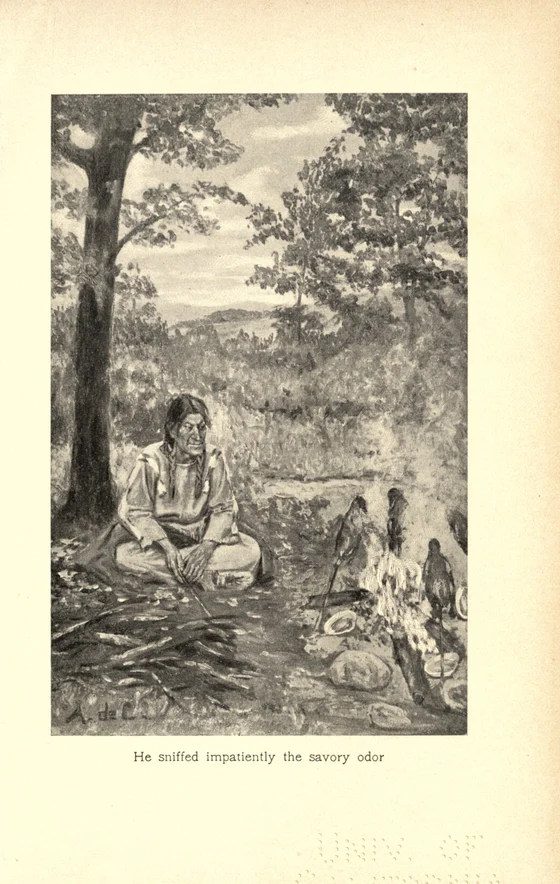
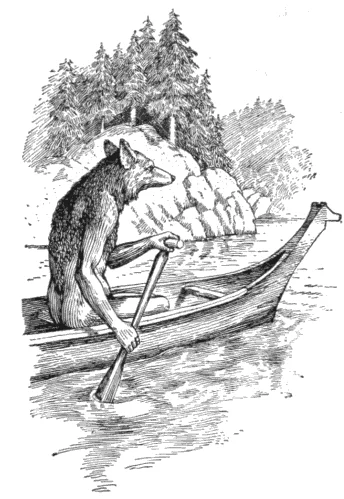
Image associated with the exact linked encyclopedia article; consult credited file description for its interpretation.
Overview
Coyote moves through a world where actions can change conditions for people and other beings. His ingenuity is inseparable from appetite, ambition and mistakes, so a story’s consequence may exceed his original intention. The figure cannot be summarized as a moral mascot, and narratives attributed to different communities should not be blended into one adventure.
Teit’s collection provides a historical route into Nlaka’pamux accounts, while its old title uses a regional English designation for the people. Place and narrative relationships remain crucial to interpretation. Public textual discussion should also respect that living communities maintain their own rules for storytelling and knowledge; the existence of a historic printed book does not erase those responsibilities.
The opening of Teit’s Coyote section presents Old Coyote as a powerful chief who cannot be killed, yet repeatedly fails when he imitates others or attempts too much. His abilities do not make him consistently wise or admirable. The collected characterization includes craft, selfishness, travel and marriages obtained through deception. A note also records differences in performance: Nkamtci’nEmux narrators commonly give his speeches in the neighboring Shuswap language, while other Nlaka’pamux narrators use their own language. The collector does not resolve whether that speech is imitation or the character’s natural language.
The first selected episode tells of a flood from which Coyote escapes by becoming a piece of wood. Three other survivors reach mountains in a canoe and are later transformed into stone. Coyote resumes his shape when the water recedes, takes trees as wives, and is connected with human descent in this particular account. Mountain lakes and their fish are explained through the receding flood. The notes preserve a different canoe escape for Coyote and admit uncertainty about his landing place. Neither the landscape explanation nor the descent claim is a biological genealogy.
The long second episode begins with Coyote’s attempts to make a son. A boy formed from clay dissolves after bathing, and one made from tree gum melts in the sun. A third, made from hard white stone, survives both tests and grows rapidly. The collector suggests quartz only as a possibility. This son, NLi’ksEntEm in the edition’s notation, marries daughters of Loon and Mallard in the main text; the notes give different bird parents in other versions. These alternatives are preserved rather than combined into one expanded set of in-laws.
Coveting the young man’s wives, Coyote makes a false eagle’s nest and sends his son up a tree that grows into the upper world. He then wears the son’s clothing and attempts to take his place. One wife accepts him and the other refuses. The son’s separate adventures among animated household implements, two blind women and Spider’s household explain his eventual return. Spider and his wife shelter him, and a basket lowers him back to earth. These encounters belong to the son’s journey and must not be transferred to Coyote as additional feats of his own.
After returning, the son secretly rejoins the wife who rejected Coyote and their child. His extraordinary hunting supplies meat carried home inside a glove and restored to its usual size when shaken out. Raven discovers the secret, but his children’s quarrels over the food eventually expose it to the hungry community. Coyote is shamed. A later gift of deer meat hangs from a deceptive packing strap made from entrails; when Coyote carries it across a log, the strap breaks and he falls into the current. He becomes a small board to survive his journey down the Thompson and Fraser rivers.
Two women take the board home and use it as a dish, but their fish keeps disappearing. When they throw it into the fire, it cries as an infant, and they retrieve and raise the boy. In this form Coyote breaks their fish dam, allowing salmon to ascend, and opens boxes releasing smoke and insects. His subsequent journeys distribute salmon through several river systems. A separately attributed Cawa’xamux paragraph connects a refusal of salmon with the creation of a barrier and the abundance of mountain sheep. These are situated narrative explanations of relations between places and food, not a scientific reconstruction of fish migration.
This cycle also includes conduct that the English main text partially disguises. Coyote harms a woman and later approaches in the guise of a healer. Notes 69 and 73 shift into Latin and describe sexual aggression and attempted abuse that the main prose compresses into illness and cure. The episode therefore does not simply show benevolent healing. Recording the edition’s treatment of the passage helps distinguish the printed English surface from the fuller editorial witness without reproducing the assault graphically.
The second episode closes with another deception. Coyote turns fish skins into salmon and willow material into berry-laden branches, then offers an apparent abundance to Grizzly Bear. He persuades her that they should eat her stores first. After those are consumed, he departs during the night, leaving the promised provisions changed back into skins and withered branches. The ending makes the temporary character of these transformations decisive: an impressive display of food is not a lasting gift.
In the short Coyote and Fox episode, attributed to Cawa’xamux, Fox flatters Coyote’s standing as a chief and offers to perform the work of boiling deer bones. Coyote assumes a dignified pose while Fox cools and steals the fat. The same tactic succeeds repeatedly until the supplies are gone. The story places Coyote in the role of the deceived character, using vanity rather than a contest of magical strength to explain his failure.
The fourth episode, Cukata’na; or, the Coyote’s Dog, concerns a cannibal accompanied by a huge dog. Coyote transforms his own excrement into a dog covered in arrowheads, stages a deceptive test of what each traveler eats, and arranges a fight. The arrowhead dog destroys its opponent. Coyote trades it for a staff that produces a deer carcass when struck once, but the dog reverts overnight. He then ignores the restriction on repeated strikes: accumulating deer bury him, revive and kick him senseless. When he wakes, both deer and staff have disappeared. His clever acquisition ends in loss through excess.
These four episodes occupy only the beginning of the 1898 Coyote cycle. The volume’s preface says the main narratives present prevalent versions while notes record variants, and Franz Boas identifies his comparative references as selective. The record consequently contains several layers: attributed community narratives, Teit’s collection and annotation, and Boas’s editorial comparisons. Later episodes, a complete comparison of all cited works and contemporary community interpretations have not been examined for this expansion.
Origins & earliest records
Selected printed witness: James A. Teit’s 1898 collection, with introduction and comparative editorial material by Franz Boas. This expansion covers the Coyote introduction and numbered episodes 1–4, printed pp.20–32, plus notes34–77, pp.102–105. Publication dates the English collecting project, not the beginning of Nlaka’pamux oral tradition.
Records & interpretation
Complete selected Coyote opening and episodes1–4, their notes34–77, and the preface read in the public digitized text; the opening of Boas’s introduction was also inspected. Narrative attributions, variant notes and the Latin editorial passages are distinguished. This is a text-based review, not original-language fieldwork, a complete reading of the volume, or evidence of supernatural events.
In the literature
“Beide wurden in Felsen verwandelt, die noch heute zu sehen sind.”
I. Shushwap, Kamloops; 2. Coyote, complete ten numbered episodes pp.5–9; episode10 p.9 · German witness by Boas; Shushwap recording mediated through an unnamed French-Indigenous intermediary; no independent translation claimed
Coyote and Buffalo transform each other’s appearance and rescue Buffalo’s two abducted wives. Coyote receives one wife, loses her after violating a condition and suffering repeated theft by Fox in old-woman guise; she revives and returns to Buffalo. After harming a bird mother’s children, Coyote survives their cliff retaliation. His stolen eyes are temporarily replaced by rose hips, then recovered by deception. Another episode ends when he bursts from excessive drinking. A returning kettle is finally stolen permanently. In the last episode Coyote exchanges the contents of his and Owl’s vomit to feign being the human-eater; both become open-mouthed rocks.
Selected bibliography
Documented works and useful reading. This is not a list of every appearance.
- 01
Traditions of the Thompson River Indians of British Columbia
Coyote opening and episodes1–4, pp.20–32; corresponding notes34–77, pp.102–105; complete preface. The rest of the cycle and the comparative bibliography have not all been examined.
Family & connections
A source-supported family tree or inspiration record has not yet been compiled for this profile. Related reading below indicates a connection in subject matter, not a proven lineage or creative influence.
References
Sources supporting this profile. Linked pages have their own scope and editorial standards.
- Primary textTraditions of the Thompson River Indians of British ColumbiaResearch access: 2026-10-05
- Historical ethnographic collectionTeit (1898), digitized edition and source textResearch access: 2026-10-05
Image credits
Reference illustrationCoyote (Nlaka’pamux)
Image associated with the exact linked encyclopedia article; consult credited file description for its interpretation.