A sourced illustration has not yet been added. This gap is included in the coverage record.
Overview
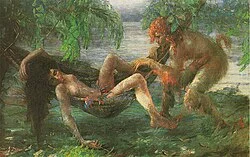
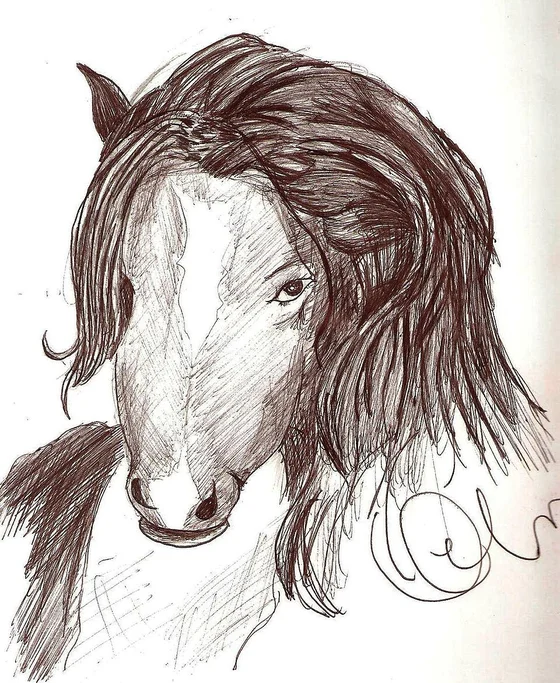
Backward-facing feet and long hair make the ciguapa recognizable in many Dominican accounts, but her character changes between tellers. The cultural survey preserved by Centro León describes an elusive woman in San Cristóbal who fears human contact; its northeastern account also calls her harmless. Francisco Javier Angulo Guridi's nineteenth-century La ciguapa offers another body and another kind of danger. Its concluding description includes male and female mountain-dwellers, about one vara tall, with dark eyes and abundant hair, sleeping in cedar crowns and eating fish, birds and fruit. They communicate by howling, run swiftly and escape into branches. That text does not give them reversed feet. Within the fictional explanation, an intensely jealous ciguapa who sees a loving couple dies and carries off the partner of the opposite sex.
Angulo Guridi frames this description through a traveler's meeting with a grieving young man, called Jacinto by the narrator, beside the Bajabonico River on the road from Santiago to Puerto Plata. Jacinto recalls his affection for Marcelina and their plans to marry. While the couple talks beneath a tree, a sharp cry sounds from the mountain and Marcelina cries that she has seen the ciguapa. She collapses, remains distressed and dies three days later; they bury her beneath the same tree where they imagined their future home. Jacinto's final explanation blames the force of an accepted belief, and the narrator's framing attacks superstition in the language of nineteenth-century progress. This is an authored story, rather than a recorded interview proving the creature's existence. In later reception, Ginetta Candelario studies the ciguapa's role in Dominican debates over belonging, race and gender, including feminist and antiracist uses. Those interpretations and the benign regional descriptions give the figure a wider history than a single predatory-monster image.
Origins & earliest records
Angulo Guridi's nineteenth-century story is an important written witness. Its narrative places the traveler's journey on 4 June 1860, which is a fictional setting date rather than a verified publication date. A 2014 edition is independently catalogued by UNIBE. The sources do not establish unchanged descent from precolonial Taíno belief.
Records & interpretation
The complete Angulo Guridi text was directly read in Albalearning's transcription, including Marcelina's death and Jacinto's concluding description. The transcription's underlying printed edition has not been checked against a facsimile. Centro León's previously inspected survey supplies regional contrasts; Candelario's public abstract supplies the modern interpretive context without substituting for the full article.
Selected bibliography
Documented works and useful reading. This is not a list of every appearance.
- 01
La ciguapa
UNIBE verifies the 2014 edition; the complete older story was separately read in Albalearning's public transcription, without claiming that transcription represents this edition.
- 02
La Ciguapa y el Ciguapeo: Myth and Dominican Feminist Method for Hispanic Caribbean Studies
Small Axe 20(3), 100–112; publisher's public abstract inspected.
Family & connections
A source-supported family tree or inspiration record has not yet been compiled for this profile. Related reading below indicates a connection in subject matter, not a proven lineage or creative influence.
References
Sources supporting this profile. Linked pages have their own scope and editorial standards.
- ResearchEstudio sobre las manifestaciones culturales y folklóricas para la producción artesanal en la República Dominicana, regional accountsResearch access: 2026-10-05
- ResearchSmall Axe 51: Candelario abstract and author biographyResearch access: 2026-10-05
- ReferenceAngulo Guridi: La ciguapa, complete public-domain transcriptionResearch access: 2026-10-05
Image credits
A sourced illustration has not yet been added. This gap is included in the coverage record.