Chonchón
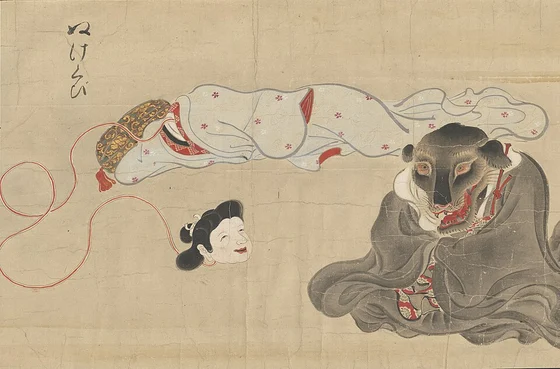
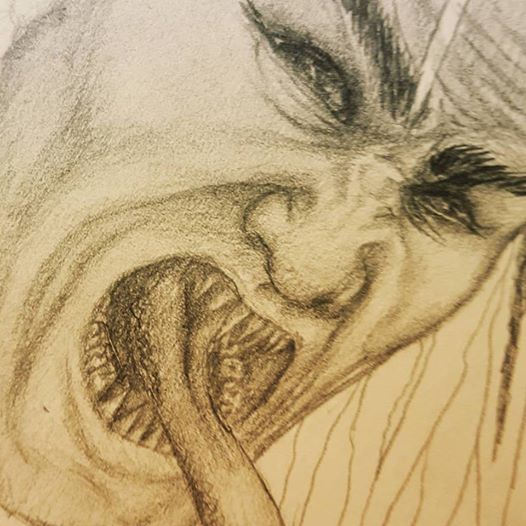
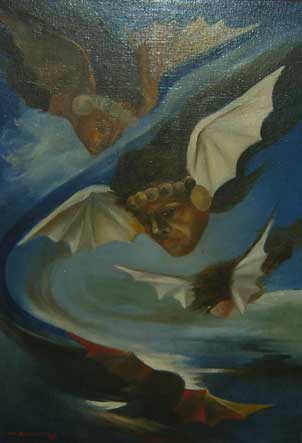
Image associated with the exact linked encyclopedia article; consult credited file description for its interpretation.
Overview
In familiar Chilean accounts, a transformed person’s head can fly with enlarged ears serving as wings. The nighttime call provides another means of recognition and gives the related name tué-tué its sound. Individual narratives differ, so these features should not be presented as an ordinary bird’s field-identification checklist.
The story is often discussed alongside beliefs about harmful practitioners, making social attribution especially sensitive. A compendium can describe the public motif without accusing anyone or treating a suspected birdcall as evidence of wrongdoing. The Chilean encyclopedia also distinguishes a real owl called chuncho from chonchón; that distinction is valuable when names, sounds and fear otherwise become confused.
An earlier, specifically attributed pair of narratives appears in Tomás Guevara’s Psicolojía del pueblo araucano (1908). In El hombre i la mujer chonchón, José María Longuitue of Pillanlelvun tells of a young man who visits his partner at night and unexpectedly finds her without a head. He hides near the house to discover how the head returns. At daybreak a bird identified in the printed Spanish as huerrufe or guairavo circles above the roof and disappears. When the man enters, her head is restored. He speaks to her only by day, then stops visiting because he is frightened. The account does not describe enlarged ears carrying the head, so that familiar feature cannot be transferred into this particular scene.
La mujer chonchon i su marido, also attributed to Longuitue, gives a different domestic outcome. A man has two wives. When one hears the other’s child crying and goes to wake its mother, she finds the woman headless and takes the child to her own bed. She tells the husband when he returns. He keeps a substantial fire burning and waits; a bird flaps at the doorway but does not enter while the fire remains. After he extinguishes it, a plaintive cry comes at dawn, and the wife is present again with scratches and bruises on her face. The husband conceals his knowledge, continues living with her and never publicly tells the story during her lifetime. This version centres secrecy and family fear, rather than ending with an exposed practitioner’s killing.
Guevara explains his collection method in a footnote at the opening of the chapter: narration was first given orally, written in Mapuche and then rendered into Spanish. Repetitions were reduced, the Spanish expression was made freer where possible, and the Mapuche original was omitted for lack of space. His printed bird identification and wider psychological commentary therefore belong to an edited historical witness. Longuitue’s named place and the two preserved endings make the variants concrete without using the collection’s colonial generalizations as an account of contemporary Mapuche people.
Two further Guevara witnesses make the differences sharper. Una mujer calcu, attributed to Pichun of Galvarino, follows a husband who discovers his wife headless after returning drunk from a feast. His interference with her body prevents its immediate restoration. A returning bird circles the house and appears disoriented, then takes the form of a dog and approaches him, seemingly asking for the body to be restored to its former position. The wife subsequently returns to human completeness and explains that she visits distant places at night. He does not disclose this while she lives. By contrast, Una mujer chonchon, attributed to Quilaqueo from the other side of the Cautín, gives a lover who flees and tells neighbours what he has seen. A gathered crowd and fire keep the returning head outside; it joins the body after the people leave and the fire is removed. The man dies the next day, with the telling attributing his death to disclosure. These versions respectively introduce a dog transformation and a dangerous consequence of public telling; neither outcome replaces Longuitue’s two domestic variants.
Origins & earliest records
Guevara’s 1908 collection supplies two narratives attributed to José María Longuitue of Pillanlelvun, preceding Vicuña Cifuentes’s 1915 collection. These publication dates establish written witnesses, not the beginning of oral transmission. Historical editorial labels and Chilean reference entries do not represent every Mapuche understanding.
Records & interpretation
Two named-narrator stories in the 1908 Spanish edition describe a headless person, a returning bird and restoration, with different domestic endings. Guevara’s method footnote identifies translation and editorial compression. The later Chilean reference account separately distinguishes the real owl called chuncho; neither bird terminology nor a heard call independently verifies a bodily transformation.
Selected bibliography
Documented works and useful reading. This is not a list of every appearance.
- 01
Mitos y supersticiones recogidos de la tradición oral chilena
Selected relevant primary or ethnographic work; the online source below is separate.
- 02
Psicolojía del pueblo araucano, chapter XV: Cuentos míticos
Santiago de Chile: Imprenta Cervantes. El hombre i la mujer chonchón, pp. 336–337; La mujer chonchon i su marido, p. 339. Collection-method footnote at chapter opening, p. 329. Further distinct witnesses: Pichun of Galvarino, Una mujer calcu, pp. 341–342; Quilaqueo across the Cautín, Una mujer chonchon, p. 343.
Family & connections
A source-supported family tree or inspiration record has not yet been compiled for this profile. Related reading below indicates a connection in subject matter, not a proven lineage or creative influence.
Encyclopedia background
An additional attributed reference, separate from the editorial profile above.
Read the open encyclopedia overview
The Chonchon (Spanish: chonchón from Mapudungun: chonchon), also known as the Tue-Tué, is a mythical creature found in Mapuche religion, as well as in the folk mythologies of Chile and southern Argentina.
Text from Wikipedia contributors, “Chonchon”. CC BY-SA 4.0. Extracted introduction; formatting changed. Retrieved 5 October 2026. The source article may have changed since retrieval.
References
Sources supporting this profile. Linked pages have their own scope and editorial standards.
- ReferenceEnciclopedia Chilena: Tue-tue, ElResearch access: 2026-10-05
- Primary textMemoria Chilena digitized Guevara 1908, pp. 329, 336–337, 339 and 341–343Research access: 2026-10-05
Image credits
Reference illustrationChonchón
Image associated with the exact linked encyclopedia article; consult credited file description for its interpretation.