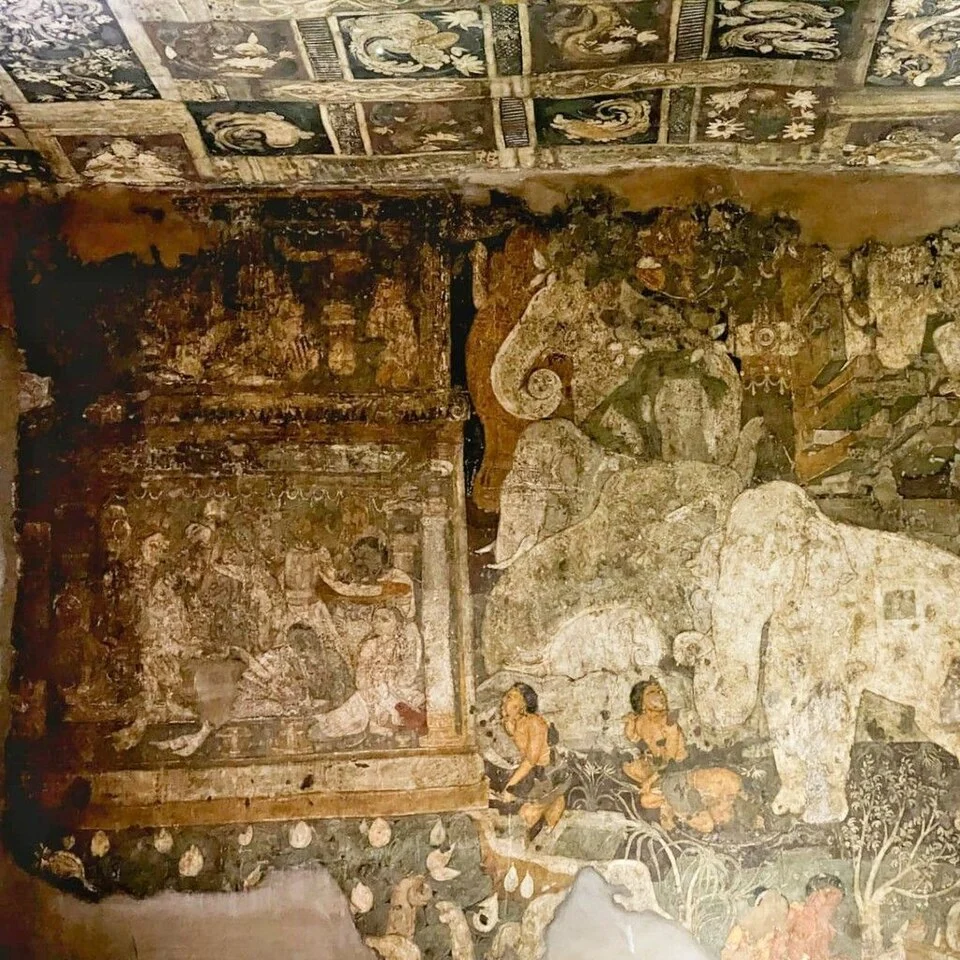
Chaddanta elephant narrative mural, Ajanta cave17,5th century
Actual weathered mural shows pale elephant above human figures; exact Chaddanta narrative identified in source. Damage and overlapping scenes prevent independently counting all six tusks. Photograph SpeakingArch2026 CC BY-SA4.0; underlying ancient mural public domain.
Overview
Chaddanta is a white elephant king with red face and feet in Jātaka 514. The story gives him immense dimensions, radiant tusks and a herd of eight thousand elephants capable of supernatural flight. He lives beside a Himalayan lake and honours paccekabuddhas. The queen’s verses describe him as six-tusked; the translation’s note also records an interpretive connection between six tusks and six colours.
His former queen, reborn as a human queen, sends Sonuttara to kill him after nursing resentment over perceived favouritism. Wounded by a poisoned arrow, Chaddanta assists the hunter in sawing off his tusks and grants him a swift return journey through their power. He dies before his herd returns. The queen receives the ivory but is overcome by remembrance and grief. The marvellous anatomy belongs to a narrative of jealousy, giving and the Bodhisatta’s pursuit of knowledge.
Origins & earliest records
South Asian Buddhist Jātaka narrative tradition
Records & interpretation
Directly read historical English primary-text translation, located by tale number and printed pages.
Selected bibliography
Documented works and useful reading. This is not a list of every appearance.
- 01
The Jātaka, Volume V
Jātaka 514, pp. 20–31; publication date of hosted volume not independently checked. Prose narrative and verse are presented together in the translated collection.
Family & connections
A source-supported family tree or inspiration record has not yet been compiled for this profile. Related reading below indicates a connection in subject matter, not a proven lineage or creative influence.
Primary records and illustrations
The Jātaka, Volume V
Volume V. Jātaka 514, pp. 20–31
Narrative directly read. Printed English pages distinguished from bracketed Pali-edition pagination; no plate image verified.
References
Sources supporting this profile. Linked pages have their own scope and editorial standards.
- Historical primary-text translationThe Jātaka, Volume V — Jātaka 514, pp. 20–31Research access: 2026-10-05
Image credits
Historical mural photographChaddanta elephant narrative mural, Ajanta cave17,5th century
Actual weathered mural shows pale elephant above human figures; exact Chaddanta narrative identified in source. Damage and overlapping scenes prevent independently counting all six tusks. Photograph SpeakingArch2026 CC BY-SA4.0; underlying ancient mural public domain.