
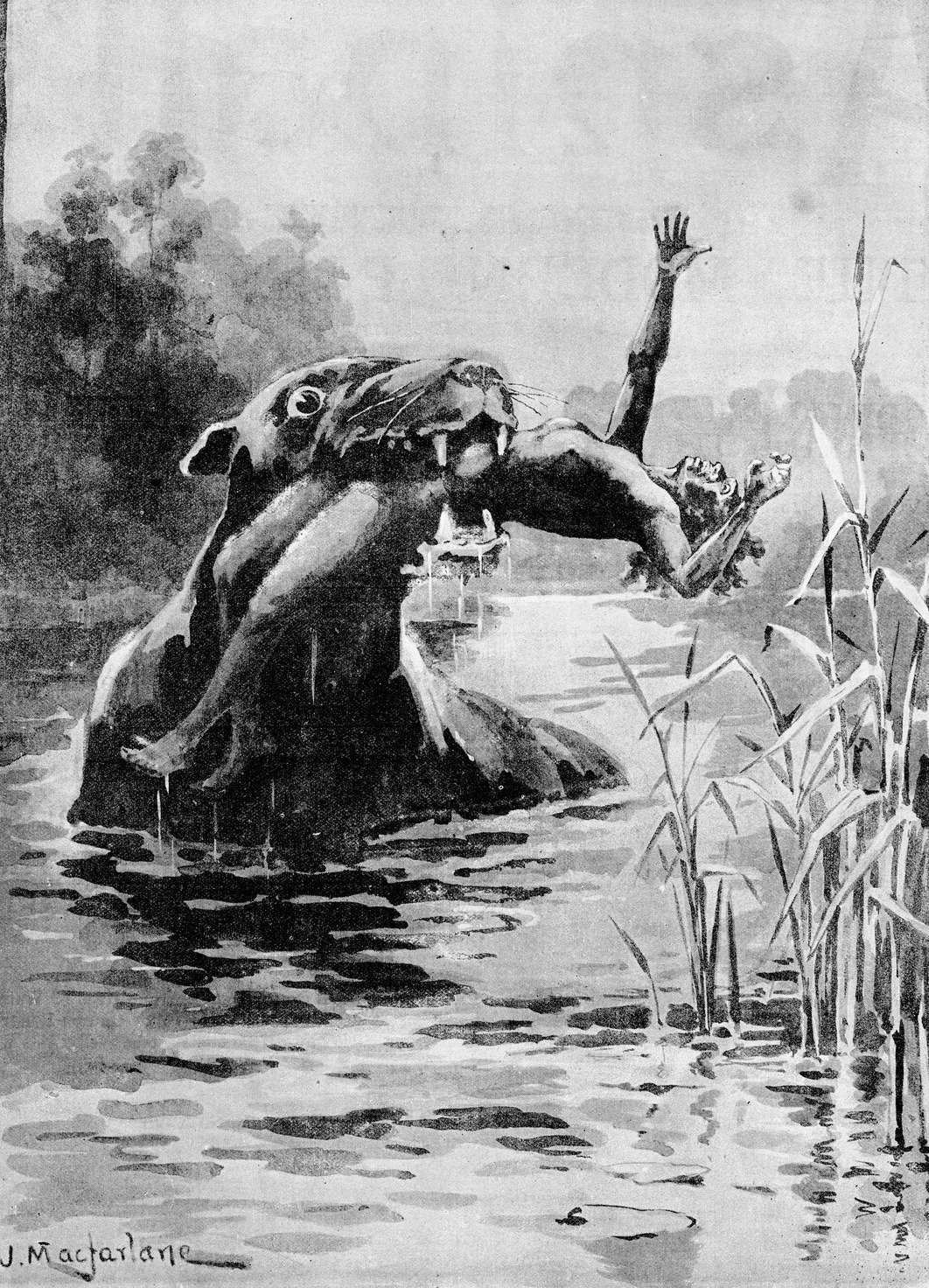
1890 Illustrated Australian News depiction of the Bunyip
Historical outsider illustration; not a definitive Indigenous representation.
Overview
The Pathfinder bunyip is an aquatic predator with the broad outline of a seal and the jaws of a shark. It inhabits freshwater inlets and sheltered coastal water rather than the open deep sea. The first-edition account describes territorial hunters with seasonal mating, brief maternal care and independently developing pups. It also allows considerable variation in fins and fur. This is a particular game creature, distinct from the many traditional Australian accounts using the same name. A 2008 Paizo description places bunyips among the dangerous animals of Riddleport harbour, where falling overboard can attract predators. That local setting supplies a story role beyond a generic aquatic encounter.
The 2010 Bestiary 2 and 2019 second-edition Bestiary give its violence different mechanical triggers. In the former, detecting blood in the water activates its rage; in the latter, inflicting bleeding starts a frenzy that increases damage while weakening defence. Its terrifying roar likewise uses each edition's own fear rules. The 2019 animal can alter its outline with a longer grasping tail or short crocodilelike legs, sacrificing the bleeding property of its bite while transformed. This limited change is not unrestricted shapeshifting into arbitrary species. That entry also describes elusive animals mistaken for mere local tales and particular coastal hunters exploiting waste near boats. Leftover possessions in a den come from victims, not a bunyip's deliberate treasure collecting.
First appearances & development
The selected Pathfinder witnesses include James Jacobs's 2008 Riddleport article, Bestiary 2 in 2010 and the second-edition Bestiary in 2019. These dates document the inspected game treatments, not the folklore name's origin. The later change-form ability and different rage triggers remain edition-specific rather than one accumulated universal stat block.
Canon & continuity
Both licensed archive entries were inspected, including ecology and special abilities. The publisher article supplies the Riddleport setting independently. The descriptions of territories, reproductive care, local skepticism and change-form mechanics are attributed to their respective entries; the creature's resemblance to two animals is visual description, not verified real-world hybrid ancestry.
Selected bibliography
Documented works and useful reading. This is not a list of every appearance.
- 01
Pathfinder RPG Bestiary 2
Creature entry, p. 50. First edition.
- 02
Pathfinder Bestiary
Creature entry, p. 49. Legacy second edition.
Family & connections
A source-supported family tree or inspiration record has not yet been compiled for this profile. Related reading below indicates a connection in subject matter, not a proven lineage or creative influence.
References
Sources supporting this profile. Linked pages have their own scope and editorial standards.
- Primary workArchives of Nethys: Bunyip — first editionResearch access: 2026-10-05
- Primary workArchives of Nethys: Bunyip — second editionResearch access: 2026-10-05
- OfficialJames Jacobs: Don't Go Near the Water!Research access: 2026-10-05
Image credits
Historical illustration1890 Illustrated Australian News depiction of the Bunyip
Historical outsider illustration; not a definitive Indigenous representation.