Zheng, named1667 historical plate
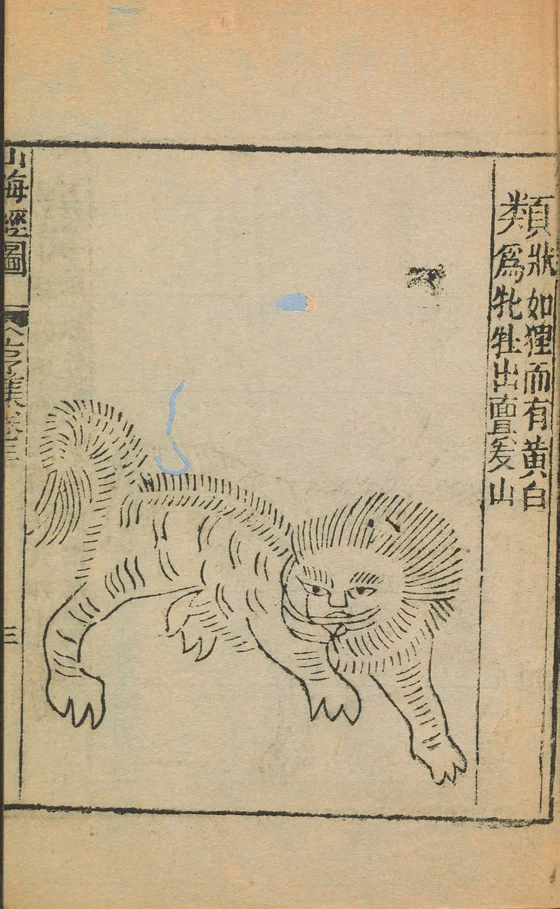
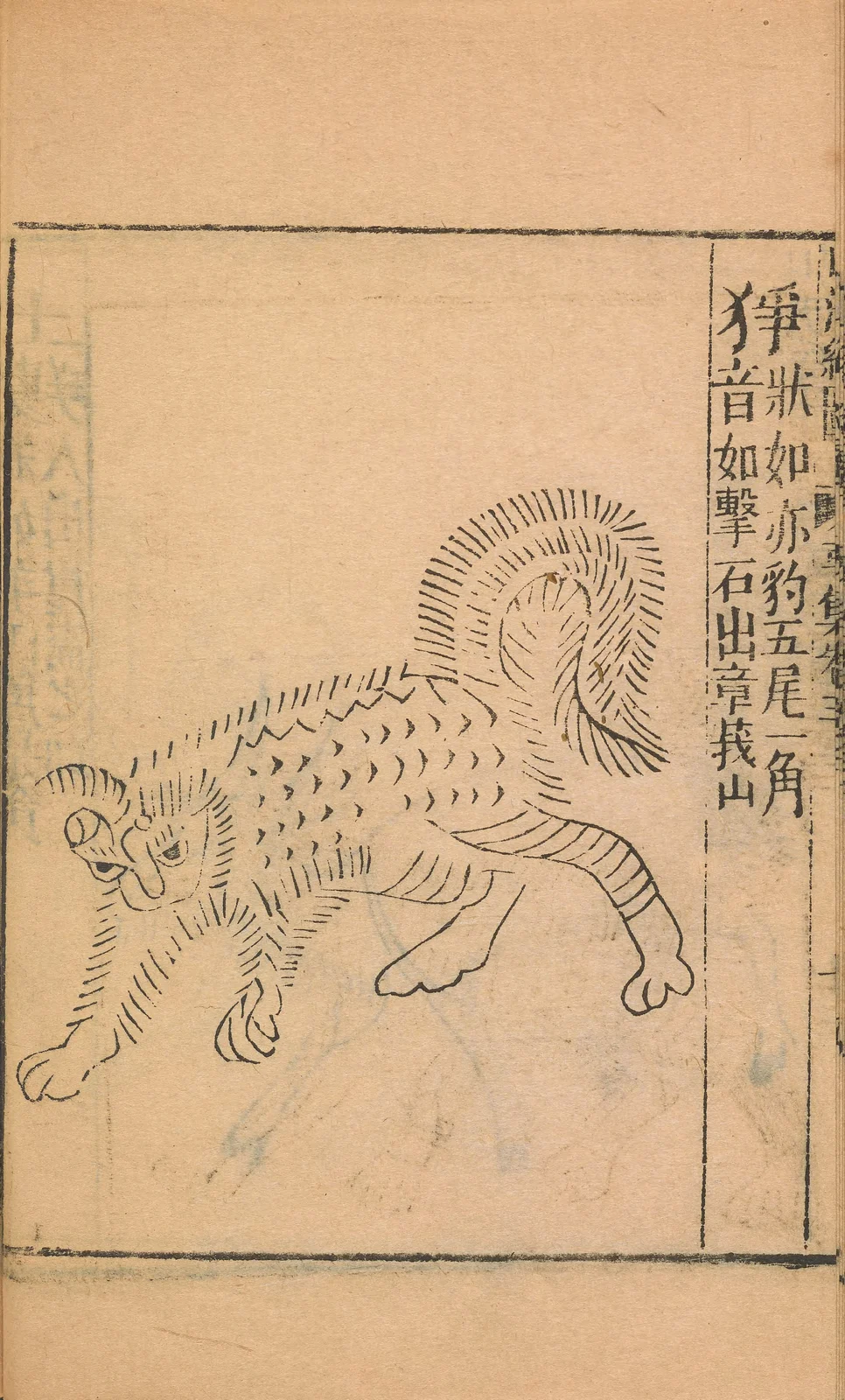
Actual 1000-pixel page image directly inspected. A patterned feline with a single horn; the caption identifies five tails and a stone-striking voice. Smithsonian-supplied Internet Archive catalog dates this physical volume 1667 and labels it public domain. This is the later printed illustration witness, not an image made in the ancient text’s composition period. Printed volume identification and canvas index are kept separate. Earlier directly read textual witness retained in additionalNarrativeSources.
Overview
Zheng appears on Mount Zhang’e in the third western itinerary of the Shanhaijing. Its body resembles a red leopard, but it has five tails and one horn. Its voice resembles stones striking one another. The passage introduces the mountain as especially strange, then gives Zheng and the one-legged Bifang as separate extraordinary creatures.
The mountain has no grass or trees but contains valuable stone. Zheng’s mineral-like voice does not mean that its body is made of stone, and its proximity to Bifang does not transfer the bird’s fire omen to the beast. This witness describes appearance and sound without stating that Zheng eats people or predicts warfare. Later narrative uses can be documented separately, while the exact mountain entry anchors the name and unusual anatomy.
In the Smithsonian digitized illustrated edition, catalogued as 1667, a patterned feline with a single horn; the caption identifies five tails and a stone-striking voice. The engraving is a later visual interpretation of the textual creature. Its labelled page helps establish the pictured subject without treating the illustrator’s choices as evidence of an ancient animal sighting.
Origins & earliest records
China; Shanhaijing, Western Mountains
Records & interpretation
Directly read Chinese primary-text transcription; exact section and geographical passage retained. No matched scan or illustration verified.
Selected bibliography
Documented works and useful reading. This is not a list of every appearance.
- 01
Shanhaijing: Western Mountains
Third western sequence; Mount Zhang’e 章莪山; bracketed commentary distinguished from base text.
Family & connections
A source-supported family tree or inspiration record has not yet been compiled for this profile. Related reading below indicates a connection in subject matter, not a proven lineage or creative influence.
Primary records and illustrations
Shan hai jing: er shi san juan (Smithsonian digitized edition)
Physical volume 2; Shan hai jing tu illustration sequence. IIIF canvas index 23 (zero based), labelled 猙; no printed page number asserted
Actual 1000-pixel page image directly inspected. A patterned feline with a single horn; the caption identifies five tails and a stone-striking voice. Smithsonian-supplied Internet Archive catalog dates this physical volume 1667 and labels it public domain. This is the later printed illustration witness, not an image made in the ancient text’s composition period. Printed volume identification and canvas index are kept separate. Earlier directly read textual witness retained in additionalNarrativeSources.
References
Sources supporting this profile. Linked pages have their own scope and editorial standards.
- Primary-text transcriptionShanhaijing, Western Mountains: Third western sequence; Mount Zhang’e 章莪山Research access: 2026-10-05
- Primary illustrated bookSmithsonian Libraries digitized Shan hai jing, v.2, canvas 23: 猙Research access: 2026-10-05
Image credits
Historical illustrationZheng, named1667 historical plate
Actual 1000-pixel page image directly inspected. A patterned feline with a single horn; the caption identifies five tails and a stone-striking voice. Smithsonian-supplied Internet Archive catalog dates this physical volume 1667 and labels it public domain. This is the later printed illustration witness, not an image made in the ancient text’s composition period. Printed volume identification and canvas index are kept separate. Earlier directly read textual witness retained in additionalNarrativeSources.