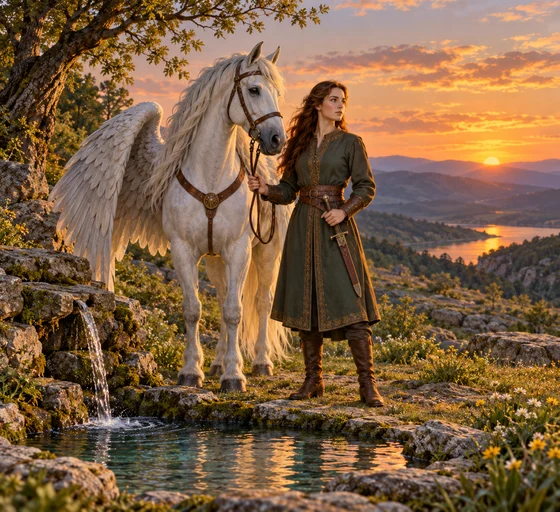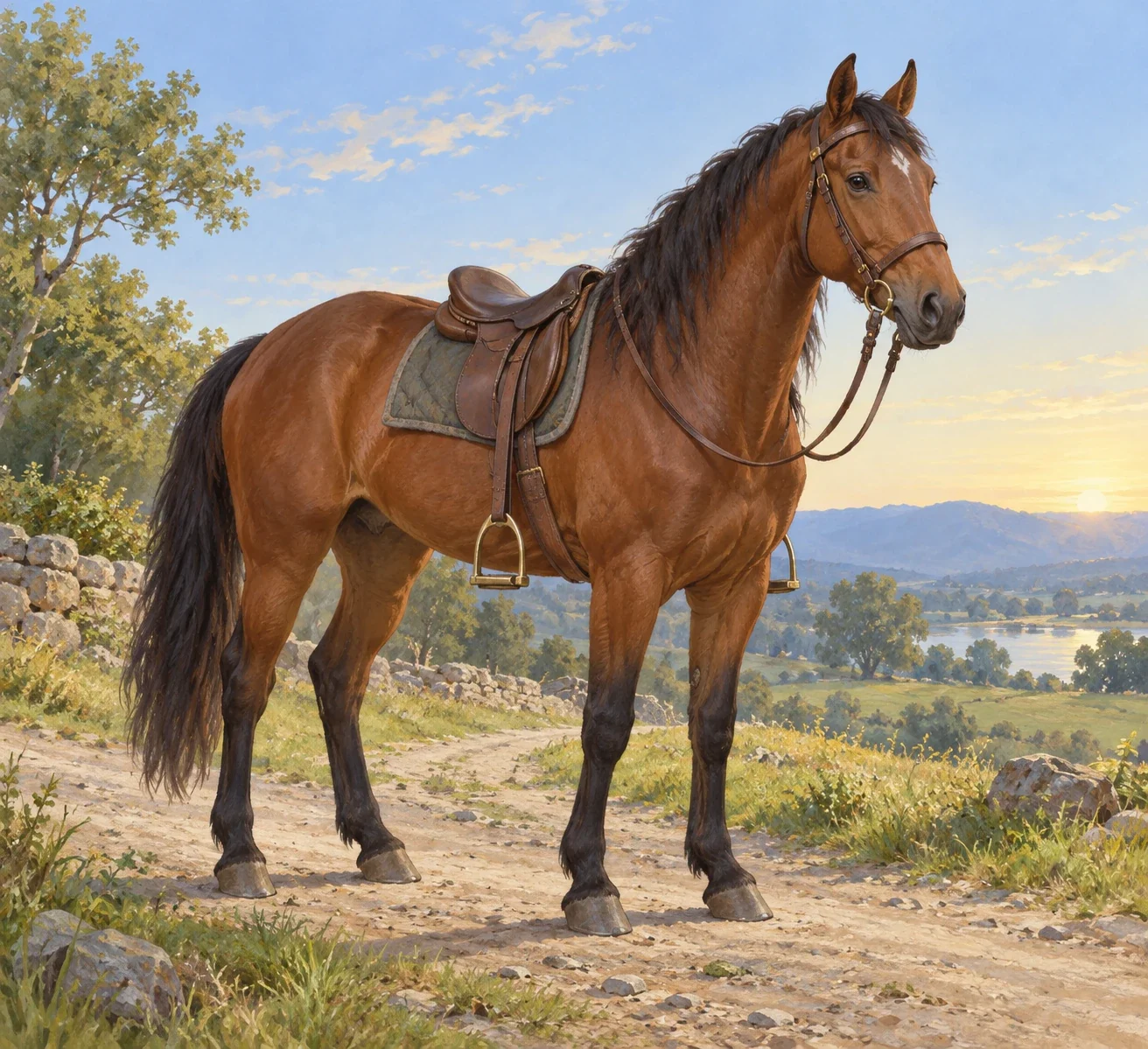
AI narrative interpretation of Speaking Horse of the Sun Race in Strausz’s Bulgarische Volksdichtungen (1895).
AI narrative interpretation of Strausz’s German song. Brown coat, natural horse proportions, tack construction and riderless quiet moment are invented; breed, biological sex and locality are unspecified.
Overview
A young unmarried man boasts that his horse is swift as lightning and can leave both the wind and the Sun behind. The Sun hears him and proposes a race: if the rider wins, he may have the Sun’s beautiful sister, described as a bright little star; if he loses, the Sun will take his horse. The man saddles and bridles his mount and rides to the starting place in the east.
The Sun follows its heavenly course while horse and rider travel below. The rider gets ahead, tethers his horse and lies down to sleep. The horse paws and stamps the ground, then speaks to wake him, warning that the Sun is about to set while they have stopped. The rider mounts again, and the horse overtakes the Sun and reaches its courtyard.
The poem magnifies the journey with a passage through eighty kadiluks and ninety vilajets; Strausz’s note explains these as judicial districts and governorates. They are poetic quantities and terms, not an itinerary established by this profile. At the court the rider lifts the Sun’s sister onto the horse and carries her away. When the Sun meets them, it allows him to keep what he has taken; no separate wedding ceremony is narrated.
The horse’s agency includes speech, vigilance and remarkable speed. The poem provides a saddle, bridle and stirrups but no wings, fixed coat color, breed or biological sex. This profile covers this particular complete German song and its printed contributor attribution, without identifying a modern Suhodol or combining the horse with other sun-horse traditions.
Origins & earliest records
Koleda song XIX, “Eines Jünglings Wette mit der Sonne,” printed pp. 143–146, in Adolf Strausz’s Bulgarische Volksdichtungen (Wien and Leipzig: Carl Graeser, 1895). The closing line credits Žot Ilkov in Suhodol.
Records & interpretation
Complete German Koleda XIX, pp. 143–146, all four native pages, closing contributor line and full relevant note inspected. Printed rubric says the song is sung to married men; its protagonist is unmarried. No Bulgarian-language collation or modern contributor-place identification asserted.
Selected bibliography
Documented works and useful reading. This is not a list of every appearance.
- 01
Bulgarische Volksdichtungen
Complete German Koleda XIX, pp. 143–146, all four native pages, closing contributor line and full relevant note inspected. Printed rubric says the song is sung to married men; its protagonist is unmarried. No Bulgarian-language collation or modern contributor-place identification asserted.
Family & connections
A source-supported family tree or inspiration record has not yet been compiled for this profile. Related reading below indicates a connection in subject matter, not a proven lineage or creative influence.
References
Sources supporting this profile. Linked pages have their own scope and editorial standards.
- Primary historical translationStrausz: complete original German song and native pagesResearch access: 2026-10-21
- Primary historical collectionBulgarische Volksdichtungen: original editionResearch access: 2026-10-21
Image credits
AI-generatedAI narrative interpretation of Speaking Horse of the Sun Race in Strausz’s Bulgarische Volksdichtungen (1895).
AI narrative interpretation of Strausz’s German song. Brown coat, natural horse proportions, tack construction and riderless quiet moment are invented; breed, biological sex and locality are unspecified.