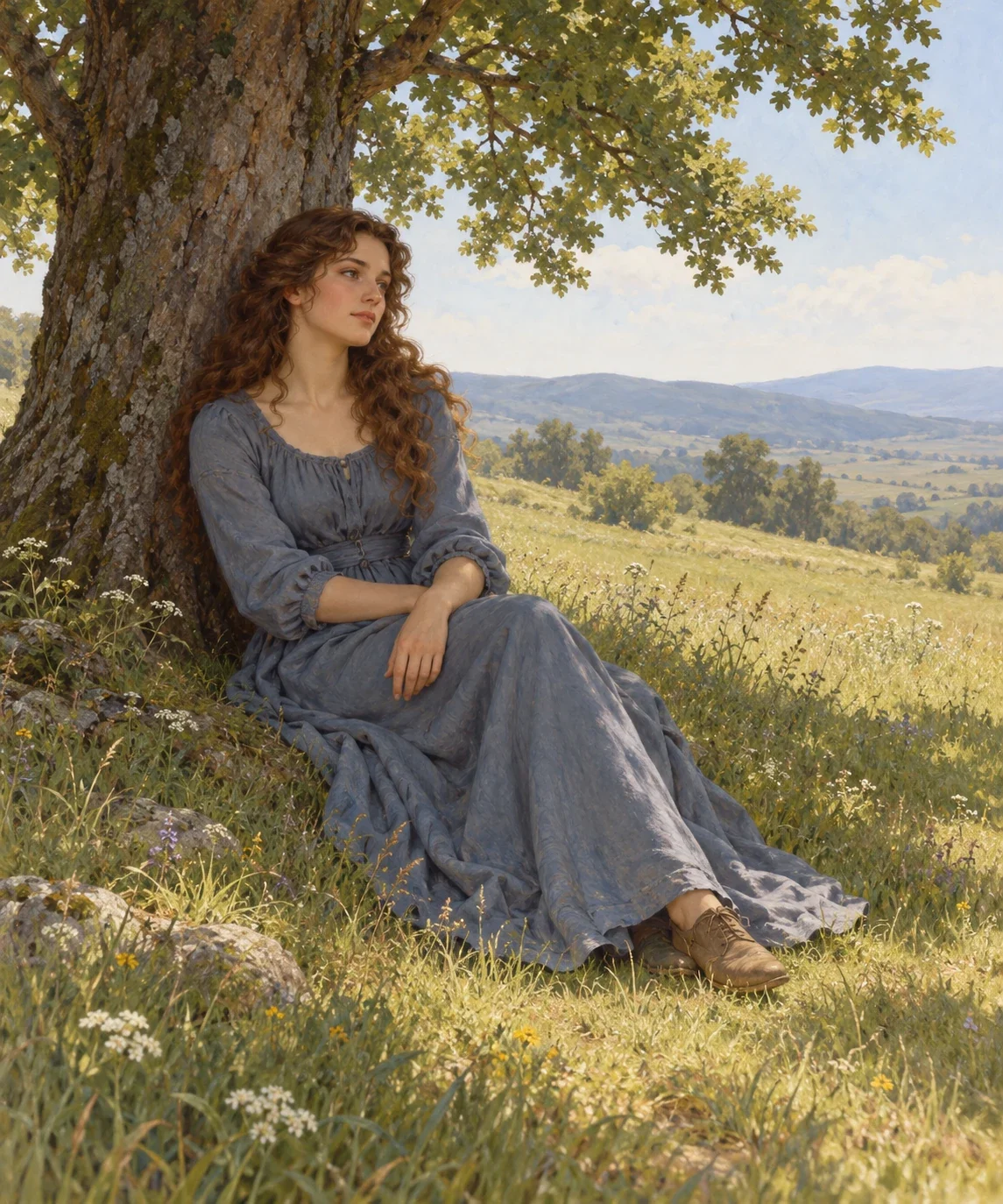
AI narrative interpretation of Sea Samovila in Angelina’s Song in Strausz’s Bulgarische Volksdichtungen (1895).
AI narrative interpretation of Strausz’s German song. Adult casting, humanoid form, clothing, colors and quiet solitary pose are invented; this is not a documented ethnic portrait or costume.
Overview
The song opens by addressing Angelina as a relative of samovilas and telling her not to gather flowers and healing herbs for her brother. It explains that a sea samovila is his old beloved and directs Angelina to a mountain height, from which she will see a tree in a field. Beneath the tree, her brother rests in the samovila’s lap and plays with her curls.
Angelina is instructed not to show fear or shed tears. Instead, she is to sing, smile, speak pleasantly and address the samovila as a sister-in-law while asking her to restore her brother’s freedom. This is an instruction spoken within the narrative, not evidence of a contemporary restriction on access to the printed song.
She goes to the height and sees the foretold scene. Rather than sing and smile, she weeps and calls out that her brother has been enchanted for nine years. The sea samovila becomes furious, hurls Angelina upward and kills her with supernatural violence. The song ends without narrating the brother’s release.
The title calls this figure a sea samovila, but the described encounter takes place beneath a tree in a field. Her curls and female social role are explicit; a fish tail, wings, clothing, facial appearance and exact stature are not. This profile follows Strausz’s complete German song, rather than establishing a general anatomy or biography for all samovilas.
Origins & earliest records
Koleda song VII, “Angelina und des Meeres Samovila,” printed pp. 120–122, in Adolf Strausz’s Bulgarische Volksdichtungen (Wien and Leipzig: Carl Graeser, 1895). No individual contributor line is attached to this song.
Records & interpretation
Complete German Koleda VII, pp. 120–122, all three native pages, relevant full notes and performance context inspected. No Bulgarian-language collation or full surviving introduction reading claimed. The Marko Čepenkov credit above VII belongs to preceding VI and is not assigned to this song.
Selected bibliography
Documented works and useful reading. This is not a list of every appearance.
- 01
Bulgarische Volksdichtungen
Complete German Koleda VII, pp. 120–122, all three native pages, relevant full notes and performance context inspected. No Bulgarian-language collation or full surviving introduction reading claimed. The Marko Čepenkov credit above VII belongs to preceding VI and is not assigned to this song.
Family & connections
A source-supported family tree or inspiration record has not yet been compiled for this profile. Related reading below indicates a connection in subject matter, not a proven lineage or creative influence.
References
Sources supporting this profile. Linked pages have their own scope and editorial standards.
- Primary historical translationStrausz: complete original German song and native pagesResearch access: 2026-10-21
- Primary historical collectionBulgarische Volksdichtungen: original editionResearch access: 2026-10-21
Image credits
AI-generatedAI narrative interpretation of Sea Samovila in Angelina’s Song in Strausz’s Bulgarische Volksdichtungen (1895).
AI narrative interpretation of Strausz’s German song. Adult casting, humanoid form, clothing, colors and quiet solitary pose are invented; this is not a documented ethnic portrait or costume.