
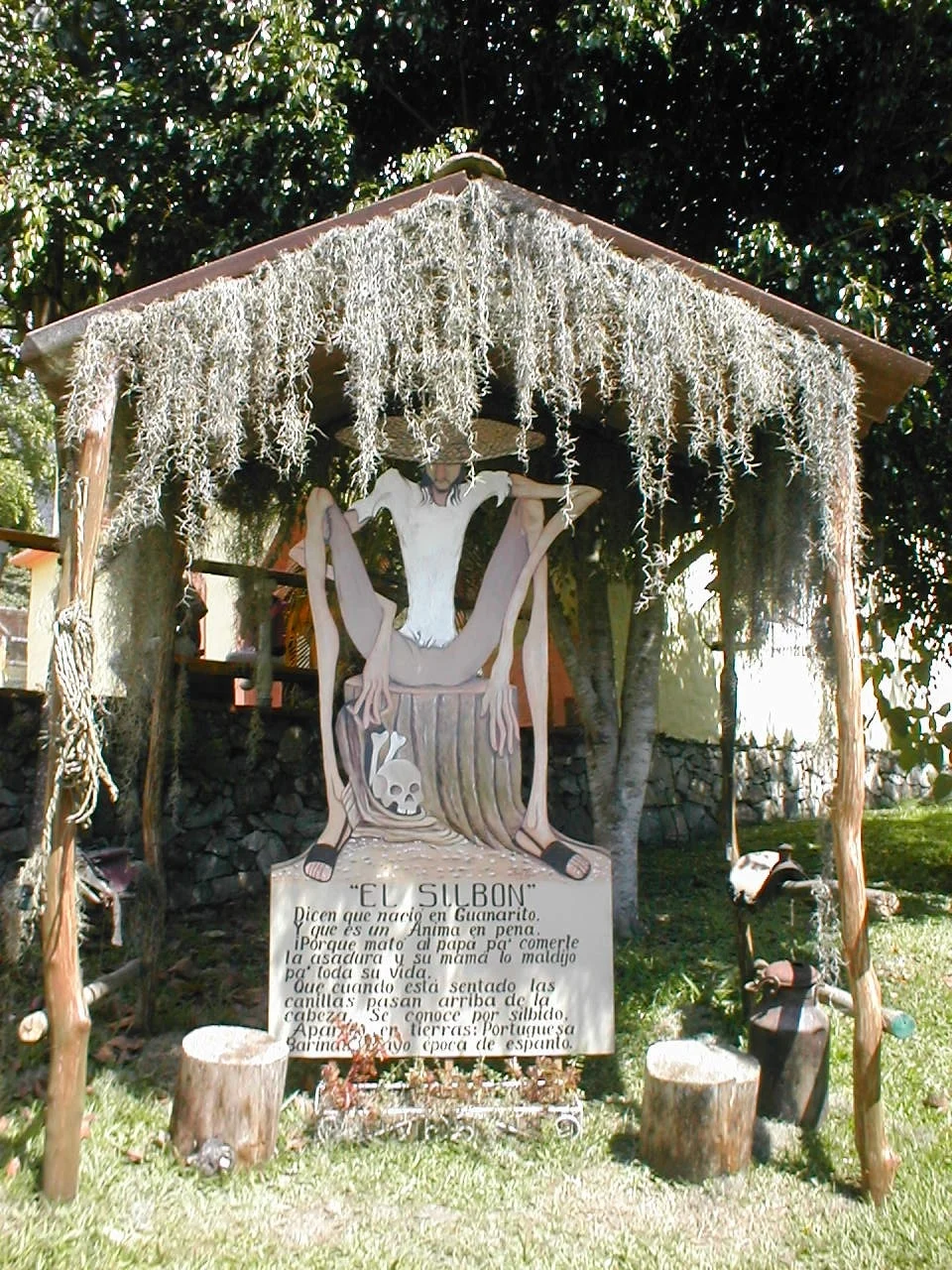
Silbón
Image associated with the exact linked encyclopedia article; consult credited file description for its interpretation.
Overview
A penetrating whistle gives the Silbón his name and signals his unsettling approach. In Prieto Osorno's retelling, a tall wanderer carries a sack of bones and deceives listeners: an apparently distant whistle means danger is close. Carmen Pérez Montero's Portuguesa collection preserves several accounts of a son who killed his father, together with different punishments and explanations for the wandering apparition.
The collection also shows how oral narrative becomes regional culture. Interviewees disagree between El Vijao and Guanarito, and the composer Dámaso Delgado helped circulate the story through a recording. Some narrators accept the supernatural account while others associate the sound with a bird. A profile should preserve those voices instead of assigning a confidently documented historical murderer or a single birthplace.
A different transmission appears in Nadiia Sas’s USC record posted on 30 April 2025. Its unnamed speaker learned a Venezuelan-labelled story in a Florida high-school Spanish class and explicitly was not Venezuelan. Here the boy kills both parents, carries both their bones, and is punished by his grandfather with whipping, garlic in the wounds and pursuing dogs. He dies but continues carrying the burden afterward. The deceptive near/far whistle remains, while dogs and garlic can protect a potential victim. These differences belong to a classroom-transmitted version, not another independently collected Guanarito family account. The contributor’s subsequent interpretation through colonial trauma is an analytical proposal rather than a remembered explanation supplied by the speaker.
Origins & earliest records
The legend's internal biography and disputed birthplace are not a securely dated historical event. Pérez Montero records how Dámaso Delgado's adaptation promoted a regional identification with Guanarito; her inspected edition appeared in 2014. Claims of a precise centuries-old beginning cannot be established from that collection or the later Cervantes essay alone.
Records & interpretation
The 2014 collection includes named local testimony and contrasting versions, making it useful for transmission and reception. Cervantes supplies the deceptive-distance whistle and bone-bearing image. The sources establish the narrative's circulation, not the literal existence of its alleged original killer. Exact recording chronology remains outside this verified profile.
Selected bibliography
Documented works and useful reading. This is not a list of every appearance.
- 01
Mitos y leyendas del estado Portuguesa
Inspected publisher edition and El Silbón chapter, printed pages 30 onward; named interviews and variant analysis.
- 02
Bestiario latinoamericano (XIV). El Silbón
Cervantes literary retelling, 31 March; not evidence for its asserted three-century age.
- 03
Tale of El Silbón
Complete telling and transmission context, posted 30 April 2025. Classroom reception distinguished from Venezuelan field testimony.
Family & connections
A source-supported family tree or inspiration record has not yet been compiled for this profile. Related reading below indicates a connection in subject matter, not a proven lineage or creative influence.
References
Sources supporting this profile. Linked pages have their own scope and editorial standards.
- ResearchFundación Empresas Polar: El Silbón, narrated versions and locality disputesResearch access: 2026-10-05
- ResearchFundación Empresas Polar: edition copyright page and introductionResearch access: 2026-10-05
- ReferenceCervantes: El SilbónResearch access: 2026-10-05
- Primary textTale of El SilbónResearch access: 2026-10-05
Image credits
Reference illustrationSilbón
Image associated with the exact linked encyclopedia article; consult credited file description for its interpretation.