Sharau and the rescued animals
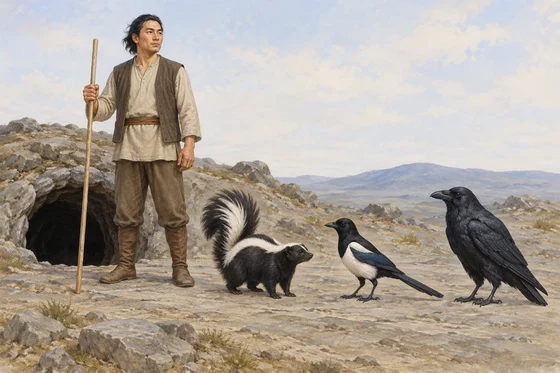
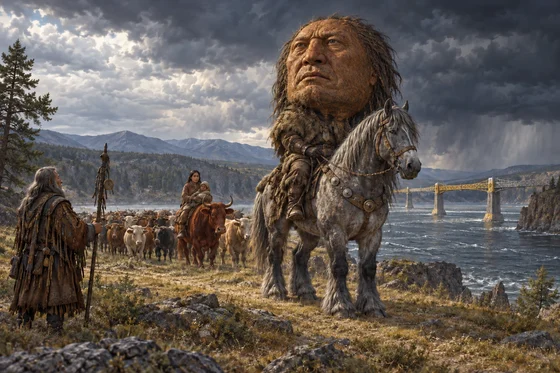
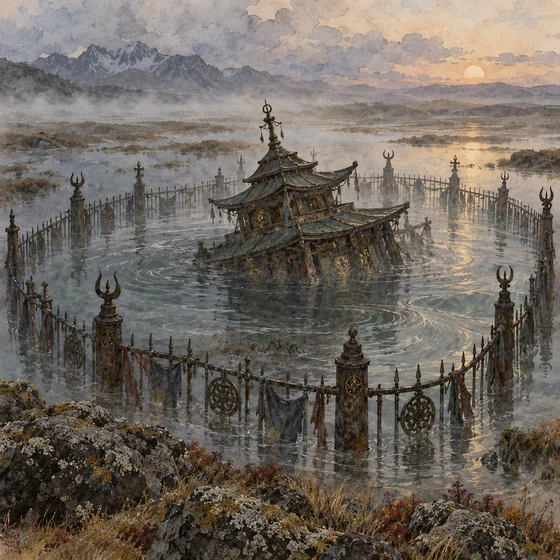
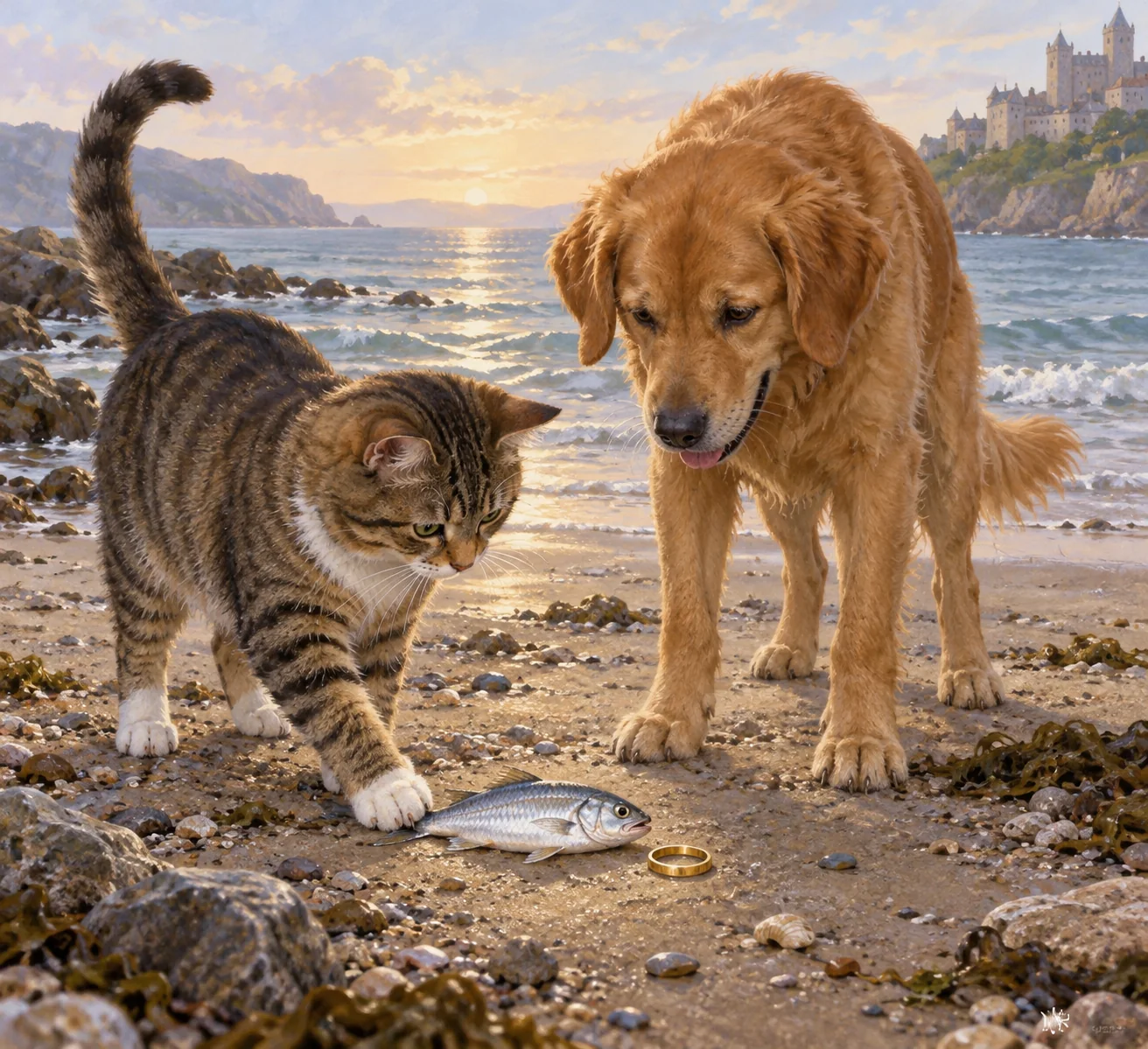
AI illustration of Sharau’s helpers and the recovered ring in a symbolic arrangement. Animal coloring, fish species, ring design and shoreline are imagined. Background architecture and signature-like marks are generated artifacts, not historical evidence or artist attribution.
Overview
Sharau appears as a young man who twice spends money entrusted by his mother to save an animal that its owner intends to kill: first a cat, then a dog. He conceals these purchases by claiming that he bought grain. Wanting to marry Sarung-gohung, daughter of Sazrai Khan, he faces a demand for a silver bridge and flees. The rescued dog gives him a wishing ring, activated by turning and making three circles toward the sun. The bridge wins the marriage.
The marriage does not secure his happiness. After repeatedly pressing Sharau to reveal the ring’s secret, Sarung-gohung takes it and wishes herself into her lover’s kingdom across the sea. Her father accuses Sharau of killing her and gives him seven days to produce her. The cat and dog undertake the recovery because he previously saved their lives. Across the sea, the cat threatens a mouse into helping; the mouse tickles the sleeping woman’s nose until she sneezes the gold ring from her mouth.
The return almost fails. The cat insists on carrying the ring because the dog keeps its larger mouth open, then wishes for a boat. A sneeze drops the ring into the sea. Once ashore, the animals catch fish, and the cat finds the ring in a fish it is eating. The dog hastens home and uses a wish at sunrise. The cat reaches Sharau on the afternoon of the seventh day and tells him that circles toward the west will work even inside his sunless dungeon.
Sharau escapes by wishing himself into the palace and then summons his wife and her lover as proof that she is alive. The khan executes both, imposing the punishment he had threatened against Sharau. The collection’s ending is punitive rather than a restored happy marriage. The story ties assistance to earlier mercy, but also includes deception, coercion and accidental loss; the animal helpers are active participants in an attributed tale, not evidence for actual supernatural animal behavior.
Origins & earliest records
Historical English collection of Buryat narratives
Records & interpretation
Complete retained historical English primary collection; XII, Sharau, pp.201–205
Selected bibliography
Documented works and useful reading. This is not a list of every appearance.
- 01
A Journey in Southern Siberia: The Mongols, Their Religion and Their Myths
XII, Sharau, pp.201–205
Family & connections
A source-supported family tree or inspiration record has not yet been compiled for this profile. Related reading below indicates a connection in subject matter, not a proven lineage or creative influence.
References
Sources supporting this profile. Linked pages have their own scope and editorial standards.
- Complete retained historical English primary collectionCurtin1909 — XII, Sharau, pp.201–205
Image credits
AI narrative interpretationSharau and the rescued animals
AI illustration of Sharau’s helpers and the recovered ring in a symbolic arrangement. Animal coloring, fish species, ring design and shoreline are imagined. Background architecture and signature-like marks are generated artifacts, not historical evidence or artist attribution.