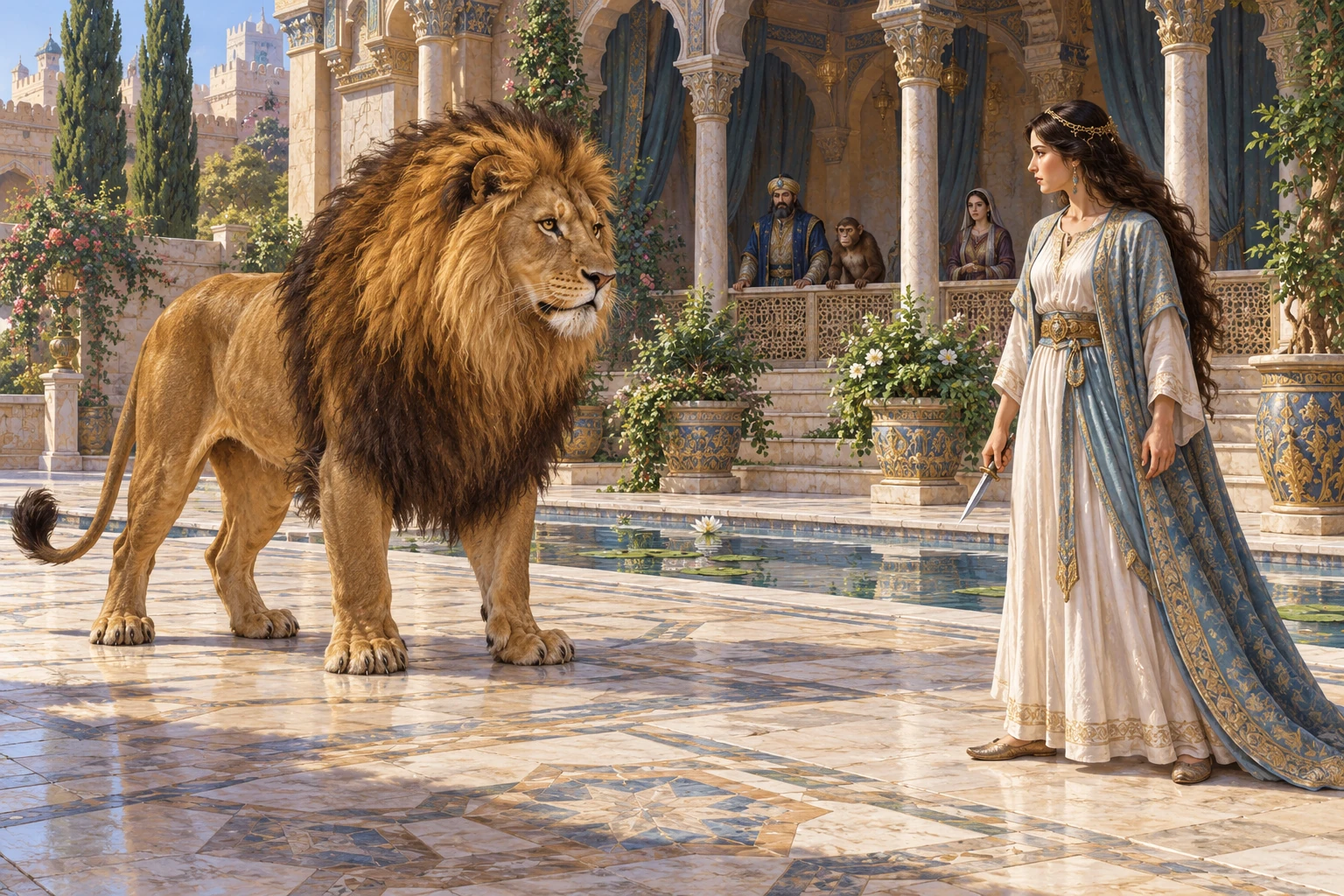
Unofficial AI interpretation of the genius’s colossal lion form at the opening of the Second Calender’s duel. The princess, enchanted ape and court witnesses follow the narrative; appearance and courtyard design are imagined. No later transformation or injury is depicted. Witness arrangement and identity details are simplified artistic choices.
Unofficial AI interpretation of the genius’s colossal lion form at the opening of the Second Calender’s duel. The princess, enchanted ape and court witnesses follow the narrative; appearance and courtyard design are imagined. No later transformation or injury is depicted. Witness arrangement and identity details are simplified artistic choices.
Overview
The Second Calender tells Zobeida how he became a wandering prince with one eye. Working as a woodcutter after a robbery, he discovers a princess held for twenty-five years in an underground palace. She says a genius abducted her on her wedding day and visits every tenth day, with a talisman available to summon him sooner. The prince recklessly breaks that object despite her warning and escapes, leaving identifying possessions behind.
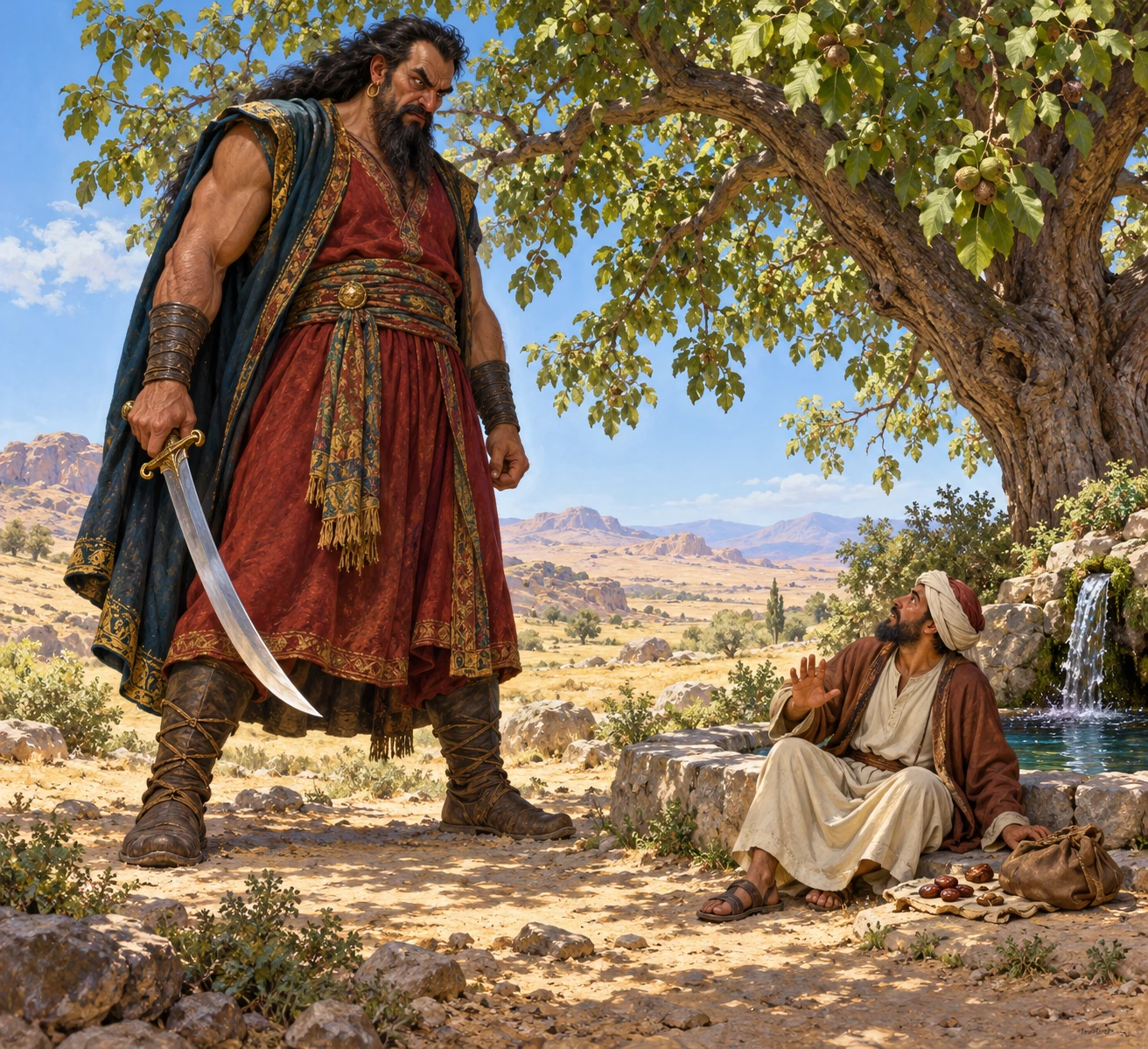
The genius follows those traces in the form of an old man, identifies himself through descent from Eblis, and carries the prince back underground. He violently punishes the captive princess and demands that the pair execute one another. Both refuse. The prince then tells an embedded story in which a wronged dervish forgives and rewards his enemy, hoping to obtain a similar pardon. The genius hears the appeal but refuses to imitate it. He instead takes the prince to a mountain and transforms him into an ape by casting earth over him.
The enchanted prince retains his skill in writing and eventually reaches a royal court. The ruler’s daughter, Queen of Beauty, recognizes his human identity and undertakes to release him. Her adversary first appears as a colossal lion. The contest proceeds through changing animal forms, a worm concealed inside a pomegranate, scattered seeds and a fish that escapes into a canal. These are stages of a particular pursuit rather than a catalogue of appearances shared by every genius.
The surviving seed prevents the princess from ending the contest safely. The opponents resort to fire; the genius becomes ashes, but the princess receives a fatal injury. She restores the prince’s human shape before dying. A spark has already destroyed his sight in one eye, another witness dies, and the grieving ruler sends him away. Magical victory therefore brings neither a marriage nor an uncomplicated restoration: the prince’s eventual calender identity is inseparable from loss.
Origins & earliest records
The retained Gutenberg title identifies Longmans, Green and Co., 1918 (1898). Lang’s preface declares French Galland mediation, abridgment and omitted verse; the collective Fairy Book translators are credited without a named translator for this tale. This is a historical English literary adaptation, not a direct Arabic manuscript edition or a statement of present-day religious belief.
Records & interpretation
Complete chapters12–13, including the full Second Calender frame, embedded Envious Man story, return to the captor’s refusal, ape transformation, royal recognition, duel, death/restoration and final departure. The embedded genius Maimoum son of Dimdim is a different being from the main captor; the two are not merged. Scriptural references remain part of the literary narration, with no held modern translation consulted.
Selected bibliography
Documented works and useful reading. This is not a list of every appearance.
- 01
The Arabian Nights Entertainments: Second Calender with the Envious Man story
Complete chap12–13 cluster and ending; Maimoum in the embedded tale is not the main antagonist.
Family, evolution & connections
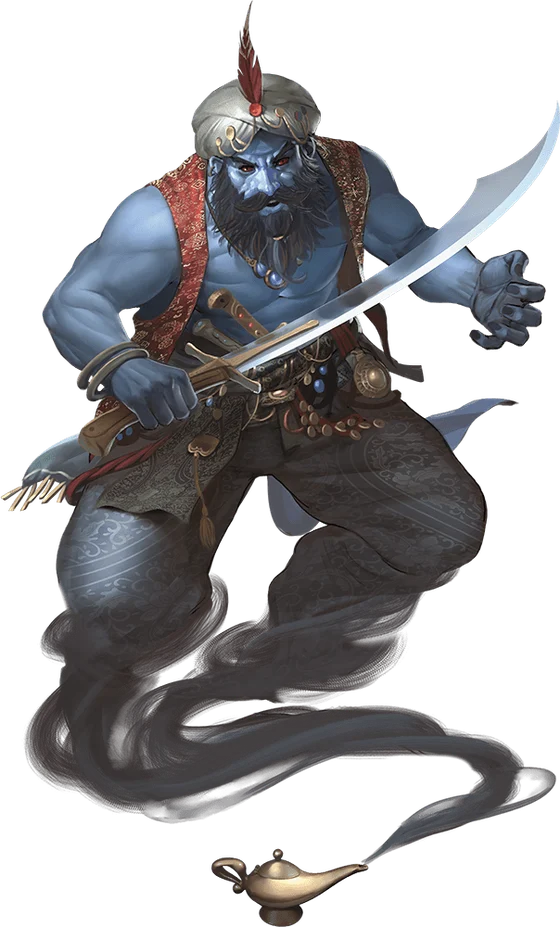
Djinni (Dungeons & Dragons)
Lang's unnamed captor and transformation duel supply historical literary context for the broader genie category. The tale's lion, ape enchantment and fatal contest are not the game's elemental taxonomy, and no direct adaptation or creator consultation is established.
References
Sources supporting this profile. Linked pages have their own scope and editorial standards.
- Historical English literary adaptationLang’s Second Calender, complete tale and embedded narrativeResearch access: 2026-10-26
Image credits
Unofficial modern AI interpretationUnofficial AI interpretation of the genius’s colossal lion form at the opening of the Second Calender’s duel. The princess, enchanted ape and court witnesses follow the narrative; appearance and courtyard design are imagined. No later transformation or injury is depicted. Witness arrangement and identity details are simplified artistic choices.
Unofficial AI interpretation of the genius’s colossal lion form at the opening of the Second Calender’s duel. The princess, enchanted ape and court witnesses follow the narrative; appearance and courtyard design are imagined. No later transformation or injury is depicted. Witness arrangement and identity details are simplified artistic choices.