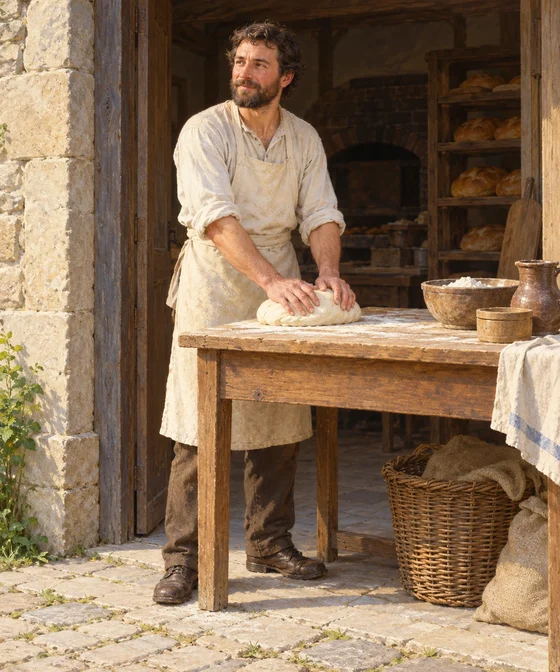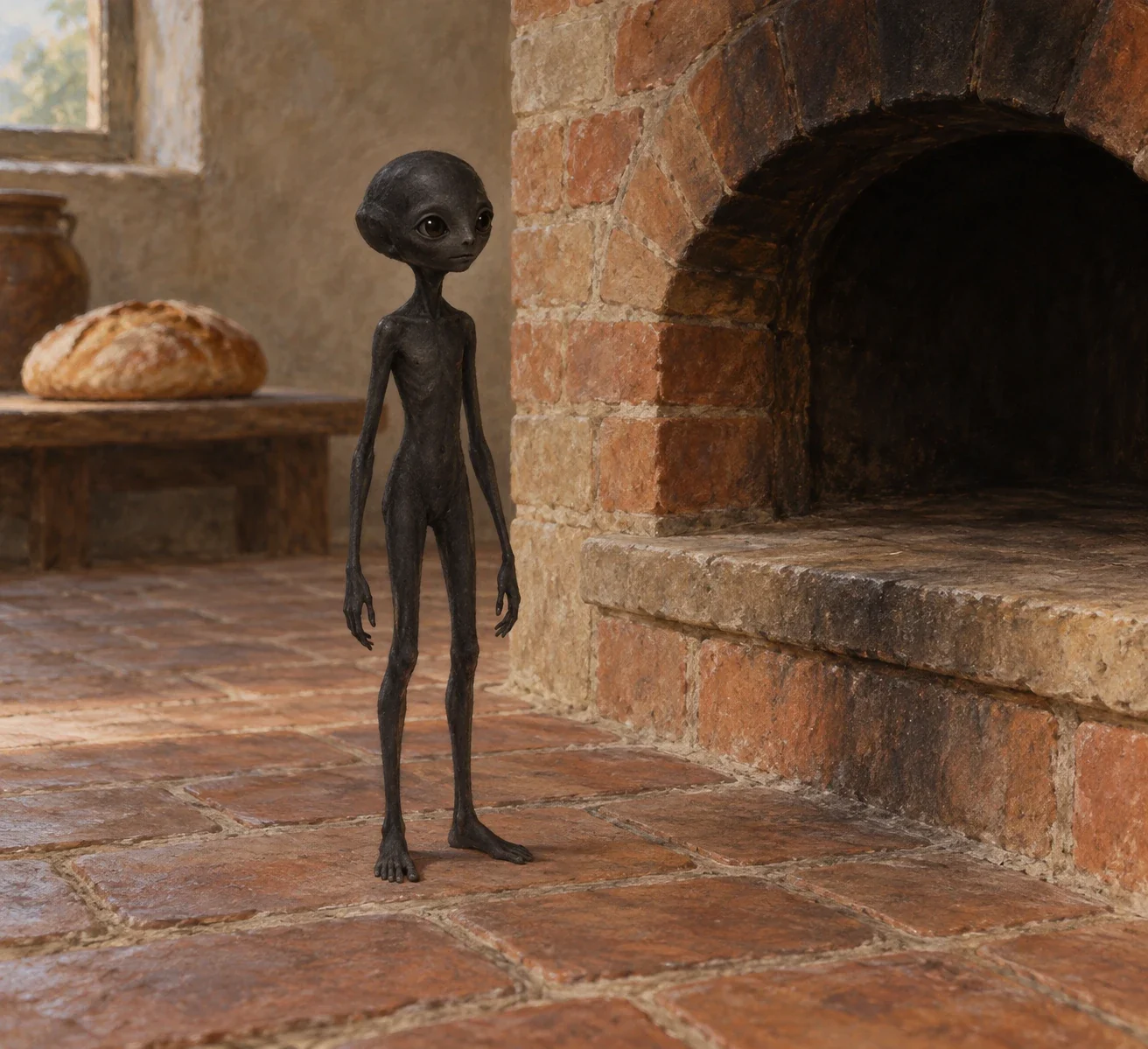
AI interpretation of De Morgan’s tiny dark oven imp beside an unlit bread oven.
Overview
The imp crawls out of a particularly blackened loaf when the angry baker breaks it. De Morgan describes a tiny, exceedingly thin dark humanoid with long arms and legs; the narrative calls it an imp and also an elf. It offers a precise exchange: a home in the oven for bread that never spoils. Its warning separates taste from effect. Customers will like the bread, but eating it will make them think themselves unfortunate regardless of their actual circumstances. The baker’s agreement lets it curl into the darkness at the back of the oven, after which the loaves bake perfectly without careful timing.
The resulting bread changes how the villagers interpret good fortune. An inheritance becomes too small or too late, a doctor doubts a successful cure, newlyweds fear future misery, and prosperous farmers find faults in their house and family. The imp is not shown issuing further instructions or controlling each speech; those examples demonstrate the advertised enchantment. Anger eventually concentrates on the cheerful baker. During the attack on his premises, the oven’s door and sides are broken, and the imp slips away unseen. Its departure immediately ends the spell over the people, even those away from the bakery. The baker later repairs the oven, his bread becomes ordinary and the imp is never heard of again. The source provides no destination, hidden motive or further career for it.
First appearances & development
The unnamed imp in The Bread of Discontent, pp.140–156 of Mary De Morgan’s1880 collection.
Canon & continuity
The Bread of Discontent is an authored story in Mary De Morgan’s The Necklace of Princess Fiorimonde and Other Stories, London: Macmillan & Co.,1880. The complete selected narrative, pp.140–156, and original title, dedication, contents and illustration list were read in the existing cached edition. The selected witness is authored literary fiction.
Selected bibliography
Documented works and useful reading. This is not a list of every appearance.
- 01
The Necklace of Princess Fiorimonde and Other Stories
The Bread of Discontent, complete pp.140–156. No separate traditional source or supernatural taxonomy supplied.
Family & connections
A source-supported family tree or inspiration record has not yet been compiled for this profile. Related reading below indicates a connection in subject matter, not a proven lineage or creative influence.
References
Sources supporting this profile. Linked pages have their own scope and editorial standards.
- Historical public-domain authored literary narrativeDe Morgan1880 — complete Bread of Discontent and original collection framingResearch access: 2026-10-23
Image credits
AI-generated literary interpretationAI interpretation of De Morgan’s tiny dark oven imp beside an unlit bread oven.