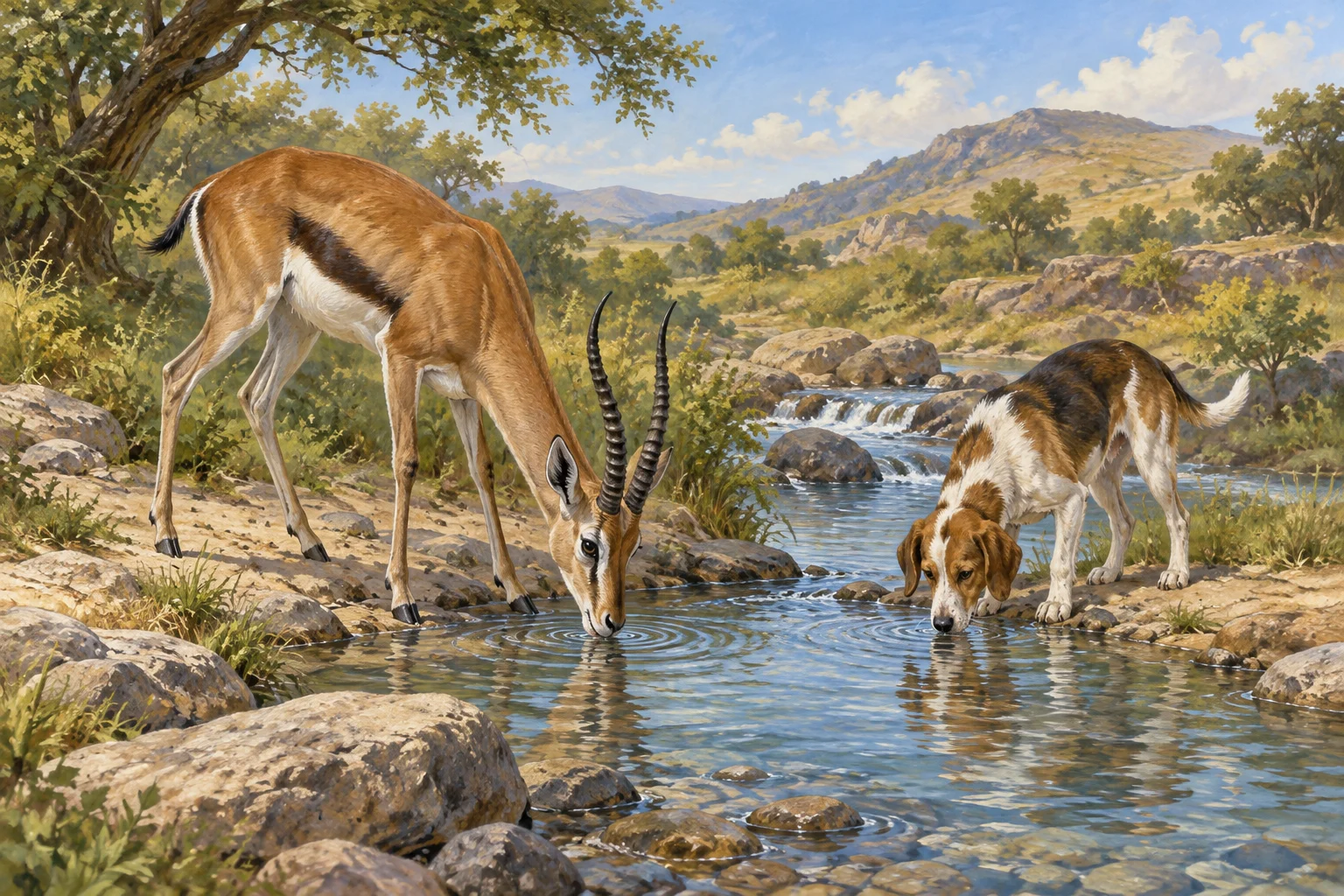
A gazelle and a dog lower their heads to drink clear water after a celebration.
AI-generated interpretation of Nsassi and his dog drinking at the clear water after the dance, just before both find they have forgotten the daughters’ names, in How Nsassi (Gazelle) Got Married, Dennett (1898). The shared drinking after the celebration is textual; Nsassi’s gazelle form (from the title), species, coats, stream and poses are artistic choices. Original composition based on the selected historical prose, with no source artwork copied. Retained edition: Richard Edward Dennett, Notes on the Folklore of the Fjort (French Congo), London: David Nutt, 1898. Modern interpretation, not historical evidence or a portrait of a present community. Compressed for display.
Overview
Nenpetro's daughters, Lunga and Lenga, may marry only a suitor who knows their names. Nsassi, a gazelle presented as a prince, fails and leaves disappointed. His loyal dog stays behind and overhears the father calling the daughters by name. On the way back, though, the dog forgets the names twice: first after eating a kitten, and then after drinking from a stream. Once the daughters themselves give it food and drink, it finally reaches its master still remembering. It asks for payment before telling, and is given a pig.
The singing and dancing that follow leave both master and dog thirsty. Both drink on the road and forget the names. This is their one shared lapse, following the dog’s two earlier failures. The dog goes back and learns them once more, and this time neither of them eats or drinks on the journey. Nsassi names the daughters correctly and marries them. A rival antelope then declares war, and Nsassi defeats it, kills it and eats it.
Dennett’s footnote gives Nsassi as the Musurongo form and Nsessi as the Cabenda and Loango form of the name. The faithful dog supplies the decisive knowledge, but the dog twice forgets alone and both companions later forget together after drinking. The text identifies the suitor as a gazelle without specifying a zoological species.
Origins & earliest records
The earliest source inspected here is Dennett's 1898 printed collection, which includes his note on the dialect forms of the name. This dates the attestation, not the oral origin.
Records & interpretation
Notes on the Folklore of the Fjort (1898), chapter IV, 'How Nsassi (Gazelle) Got Married', pp. 35–38; read from the Internet Archive OCR text.
Selected bibliography
Documented works and useful reading. This is not a list of every appearance.
- 01
Notes on the Folklore of the Fjort (French Congo)
Selected bibliography; chapter IV, pp. 35–38.
Family & connections
A source-supported family tree or inspiration record has not yet been compiled for this profile. Related reading below indicates a connection in subject matter, not a proven lineage or creative influence.
References
Sources supporting this profile. Linked pages have their own scope and editorial standards.
- Primary source (digitised text)Notes on the Folklore of the Fjort (French Congo) — full OCR textResearch access: 2026-10-07
- Catalogue metadataInternet Archive metadata: cu31924006487999Research access: 2026-10-07
Image credits
AI-generated interpretationA gazelle and a dog lower their heads to drink clear water after a celebration.
AI-generated interpretation of Nsassi and his dog drinking at the clear water after the dance, just before both find they have forgotten the daughters’ names, in How Nsassi (Gazelle) Got Married, Dennett (1898). The shared drinking after the celebration is textual; Nsassi’s gazelle form (from the title), species, coats, stream and poses are artistic choices. Original composition based on the selected historical prose, with no source artwork copied. Retained edition: Richard Edward Dennett, Notes on the Folklore of the Fjort (French Congo), London: David Nutt, 1898. Modern interpretation, not historical evidence or a portrait of a present community. Compressed for display.