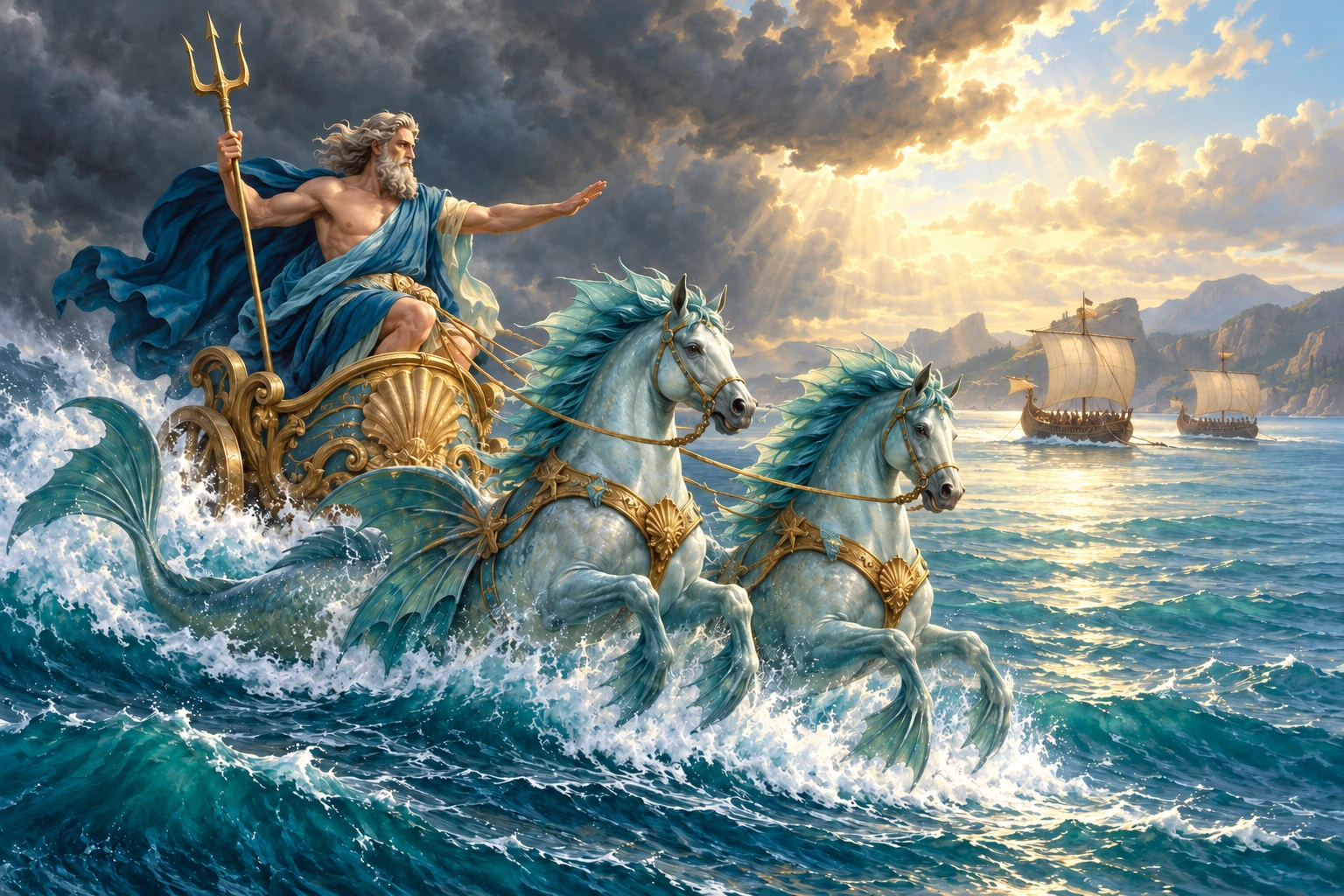
AI-generated interpretation of Neptune calming the sea in Dryden’s Aeneid I. His face, draped clothing, chariot ornament, marine-horse anatomy and landscape are imagined. This is not an ancient cult image, archaeological reconstruction or depiction of the Resident Evil shark.
In this episode Juno and Aeolus raise the storm; Neptune restores calm and helps free the ships. The illustration keeps that distinction. Sea horses are artistic interpretations of the poetic chariot team.
Overview
Juno’s attack on the Trojan fleet sets the episode in motion. She asks Aeolus to release the winds against the voyagers and offers him Deiopeia in marriage. Aeolus agrees and opens their prison. The winds drive ships onto rocks and sandbanks, sink a vessel carrying the Lycians and scatter people and possessions across the water. Aeneas laments that he did not die among the warriors at Troy. This is the danger into which Neptune enters; the poem does not make him the author of this particular storm.
Neptune hears the waves and rises above the sea. He sees the dispersed fleet and recognizes his sister’s hostility. Summoning winds before him, he challenges their unauthorized disturbance of his domain. His interrupted threat gives way to the immediate task of quieting the water. He tells them to carry a message back to Aeolus: the sea and its trident belong to Neptune, while Aeolus should govern the winds in their cavern. The speech presents a dispute over divine command within this episode rather than a statement that every classical tradition assigns the gods identical powers.
The sea becomes smooth and daylight returns. Cymothoe, Triton and sea nymphs help clear vessels from the rocks. Neptune uses his trident to open the deep and spread the sand, freeing ships caught on the shoals. He then rides across the water behind his marine horses. Dryden’s closing civic comparison likens the settling waves to an angry crowd silenced by a respected speaker. That comparison interprets the scene; it is not another battle or a separate historical event.
This profile concerns Neptune as named in one Roman epic episode through Dryden’s historical English translation. It does not supply a comprehensive Roman cult history, establish a universal identity with every Greek Poseidon account or present the storm as an observed event. Modern fictional uses of the name can be compared separately without giving a shark, machine or other namesake the god’s identity or powers.
Origins & earliest records
Virgil, Aeneid I, John Dryden translation: complete selected storm episode from Juno’s departure for Aeolus through Neptune’s restoration of calm, before the Trojans’ landing. Dryden’s Virgil translation was first published in London in 1697; the retained Gutenberg 228 transcription does not identify the exact print edition underlying its text.
Records & interpretation
Selected episode read in full. No attached note references occur in the retained episode. No Latin collation, original 1697-print inspection or whole-book reading is claimed.
Selected bibliography
Documented works and useful reading. This is not a list of every appearance.
- 01
Aeneid, Book I: the storm and Neptune’s pacification
Complete contiguous episode and all included speeches read; complete Book I retained for context but not claimed newly read. Exact underlying Gutenberg print edition unspecified.
Family, evolution & connections
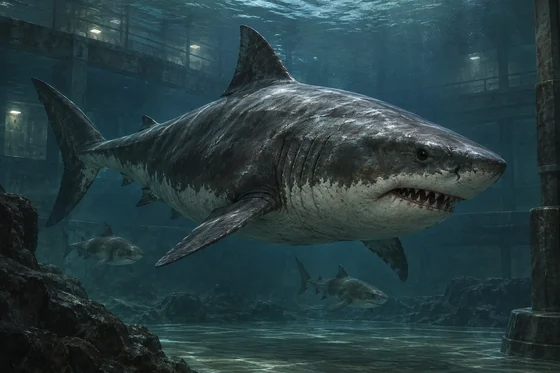
Neptune (Resident Evil)
In Dryden’s Aeneid I storm episode, Neptune rebukes the winds, frees stranded ships and restores calm. This is historical literary context for the name beside the separate fictional Neptune. The comparison does not identify a shark bioweapon with a Roman deity, transfer divine powers or establish that Capcom consulted Virgil or Dryden.
References
Sources supporting this profile. Linked pages have their own scope and editorial standards.
- Primary historical literary translationVirgil, Aeneid I, retained John Dryden translation, complete selected episodeResearch access: 2026-10-25
Image credits
Modern interpretation of a historical literary accountAI-generated interpretation of Neptune calming the sea in Dryden’s Aeneid I. His face, draped clothing, chariot ornament, marine-horse anatomy and landscape are imagined. This is not an ancient cult image, archaeological reconstruction or depiction of the Resident Evil shark.
In this episode Juno and Aeolus raise the storm; Neptune restores calm and helps free the ships. The illustration keeps that distinction. Sea horses are artistic interpretations of the poetic chariot team.